


Black-necked Pheasant Pigeon rediscovered after 140 years
Scientists leading an expedition in eastern Papua New Guinea have made a stunning avian discovery.
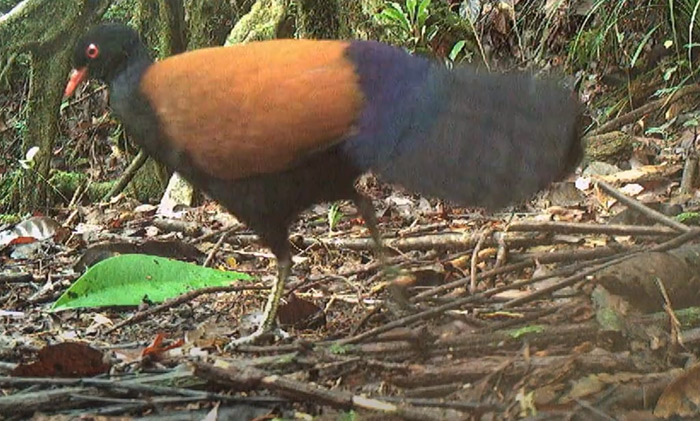
A previous search on Fergusson Island in 2019 drew a blank. Their 2022 expedition was heading in the same direction until the team reached the villages on the western slope of Mount Kilkerran – the Island’s highest peak.
Hunters in the area had said they had seen and hear the bird in the forests nearby. One local in particular offered up a very promising lead. He reported seeing the pheasant-pigeon several times in an area with steep ridges and valleys and described hearing the bird's distinctive calls.
Remote cameras were set up, and just days before the team were due to leave the island, they had the first ever video footage of the species and the first documented sighting since 1882.
Co-leader of the expedition Jordan Boersma said “As I was scrolling through the photos, I was stunned by this photo of this bird walking right past our camera,"
John C. Mittermeier, director of the Search for Lost Birds project at American Bird Conservancy, said; “After a month of searching, seeing those first photos of the pheasant pigeon felt like finding a unicorn. It’s the kind of moment you dream about your entire life as a conservationist and birdwatcher.
Almost nothing is known of the Black-naped Pheasant Pigeon apart from two specimens collected in 1882. There are no recordings of its sounds. The researchers think it would likely sound similar to a different pheasant pigeon species on mainland Papua New Guinea
It was an experience of a lifetime working with Fergusson Islanders to find the pheasant pigeon and giving talks at schools and villages about our search was a highlight,” said Jason Gregg, a co-leader of the expedition. “Kids were whispering the local name of the bird – Auwo – and everyone was talking about it. I’m so happy we know this species survives, and it opens opportunities to learn even more about the bird and its incredible home”.
The expedition was funded by American Bird Conservancy and the Search for Lost Birds, a collaboration between Re:wild, BirdLife International and American Bird Conservancy, with a grant from Cosmo Le Breton
18 November 2022
Share this story






