Bitterns breed in West Midlands for the first time over 100 years
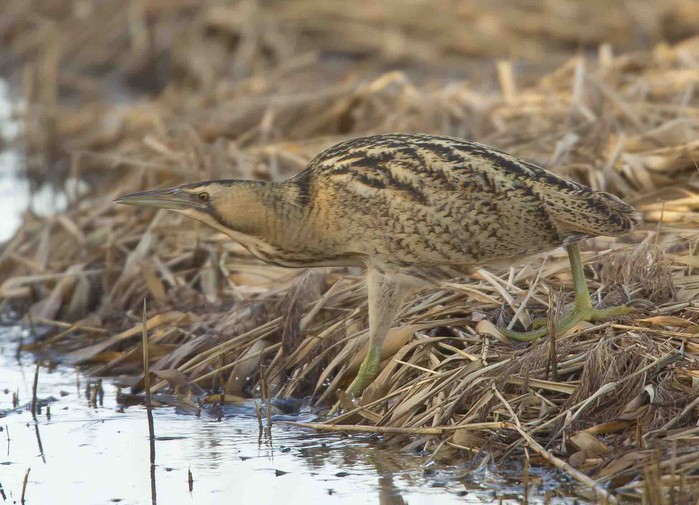
At RSPB Middleton Lakes, Bitterns have successfully raised five young, marking the first recorded breeding success of this species in the West Midlands for more than 100 years. The last known breeding record is from Sutton Park in 1886, however, this record has been labelled unreliable.
The rare, heron-like birds normally nest in large reedbeds. Yet incredibly, not one, but two female Bitterns chose to nest in a small section of restored reedbed at the RSPB Middleton Lakes reserve, allowing visitors to enjoy fantastic views of this normally secretive species.
Kate Thorpe, Site Manager at RSPB Middleton Lakes, said: “We were delighted to hear our first ever booming Bittern on the reserve in March and have been monitoring the site to see if it found a mate. We were amazed when we realised we had two successful nests in the restored reedbed – one on either side of the county borders. It really goes to show the impact good habitat management can have for threatened species. The work our expert staff and dedicated volunteers have done to bring these birds back to the reserve is incredible.”
RSPB Middleton Lakes is one of the charity’s newest reserves and in just 14 years has become regionally important for overwintering wildfowl including tufted duck, teal and shoveler. SITA – now Suez Community Trust (via the Landfill Community Fund), the Environment Agency and the National Lottery Heritage Fund’s Tame Valley project have all supported work to make a better home for nature at the former sand and gravel quarry.
Central to habitat restoration plans at Middleton Lakes has been the creation of a six hectare reedbed. Willow scrub was removed and the area reprofiled before volunteers planted 10,000 reed plugs brought in from RSPB Langford Lowfields, Nottinghamshire. The reedbed pool has provided the perfect nesting habitat for this year’s breeding Bitterns, while a separate new reedbed on the reserve has become an important feeding area.
Booming Across Britain
Elsewhere across Britain the Bittern bounce-back has continued. RSPB Burton Mere Wetlands on the Dee Estuary near Chester attracted a pair of breeding Bitterns for the very first time this year. An incredible six booming males were heard at RSPB Leighton Moss near Carnforth this spring – the largest number recorded on the reserve since the 1990s.
In Yorkshire, at RSPB St Aidan’s near Leeds, four booming males were heard this season and four nests have been confirmed on site – the highest number of ‘boomers’ since 2014 and the highest number of nests ever. At RSPB Dearne Valley – Old Moor, south east of Barnsley, up to four booming males were recorded, along with early regular sightings of a matriarch female on her third season. Reserve staff have confirmed one successful breeding so far, with at least two juvenile bitterns.
RSPB Ouse Fen near Cambridge has also enjoyed a record-breaking year, with 12 booming bitterns on site in 2021. The reserve is part of an ambitious 30-year landscape-scale conservation scheme to covert a working sand and gravel quarry into a wildlife-rich wetland habitat that will cover an area equivalent to 980 football pitches by 2030.
A total of three ‘boomers’ were heard across RSPB reserves in the Mid-Yare Valley, Norfolk, with one confirmed successful nest. In Suffolk, at RSPB Dingle Marshes and RSPB Minsmere, 10 booming males were recorded earlier this year and there are nine confirmed nests across both sites.
At RSPB Dungeness in Kent, staff and volunteers carry out extensive habitat work each winter to help create the right conditions for bitterns. Their efforts are paying off as six booming males were heard at the reserve this year, believed to be a county record.
Meanwhile, across Somerset, a total of 34 male bitterns were recorded this year – 16 of them at RSPB Ham Wall near Glastonbury. Other boomers were heard at the RSPB’s West Sedgemoor and Greylake reserves, and at Natural England and Somerset Wildlife Trust reserves.
20 August 2021
Share this story