Red Knots plummet by 25% in a year
For a while, it looked like they might actually be in recovery. But this year’s census of the American subspecies, the rufa Red Knot, found that numbers have plummeted to an all-time low. The likely cause? Food shortages in Delaware Bay, a crucial feeding stopover site on their migration.
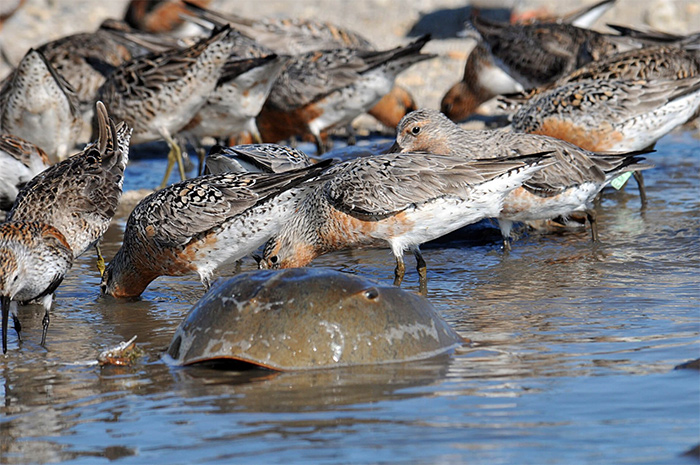
This January, surveyors flying over Tierra del Fuego, South America, beheld a sorry sight: the view from the helicopter windows told a dramatically different story to the same time last year. It wasn’t hard to see that the number of rufa Red Knots overwintering at this site had fallen dramatically – to a shocking 9,840 birds. This is a 25% decrease on the number recorded in January 2017 (13,127), marginally the lowest recorded since surveys began (the previous low was 9,850 birds in 2011).
And it had all been going so well. The conservationists of the Western Hemisphere Shorebird Reserve Network, who have been conducting this ongoing study, had been quietly hopeful that the promising increase of 15% between 2016 and 2017 would continue. But, sadly, this was not to be. For such a small population, and one that tends to stick together and move as one major flock, it’s not surprising that one setback will impact them all. And that’s what’s happened in this case.
To pinpoint the cause, we need to travel over 10,000 km to Delaware Bay on the Atlantic coast of the USA – which is actually a stopover point on the rufa Red knot’s migration back from Tierra del Fuego, to its Spring breeding grounds in the Arctic. And it’s a crucially important one. This is the last chance the Red Knots will get to feed before they set off on their long flight to the frozen North. They therefore need to make sure that they put on enough weight to fuel not only their marathon journey, but also their breeding activity when they arrive. Birds that don’t gain enough weight have far lower survival and breeding rates.
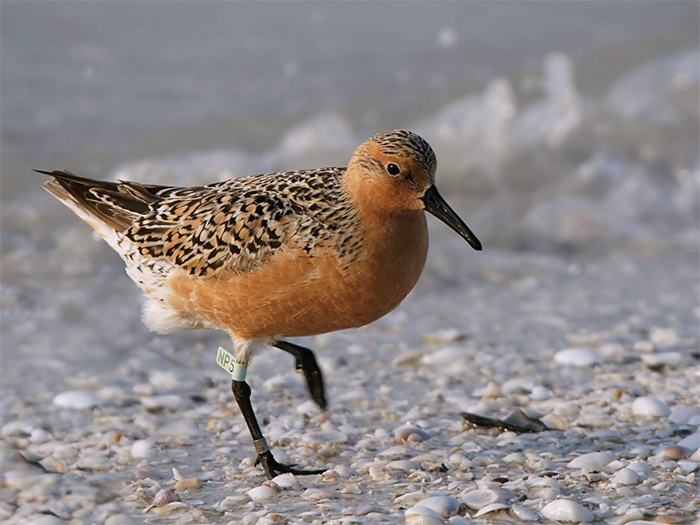
At Delaware Bay, Red Knots customarily gorge themselves on Horseshoe Crab eggs, ideally doubling in weight. But in In May 2017, low water temperatures delayed the Crabs’ journey ashore to breed, so the Red Knots’ food just wasn’t there in time. This mirrors the previous plummet of the early 2000s, which was also caused by similar egg shortages – probably exacerbated by climate change, and the harvesting of the crabs by humans. Attempts have since been made to control the latter practice.
But it’s not an isolated problem. Isadora Angarita-Martínez, BirdLife’s Biodiversity Conservation Manager for Flyways, advocates the importance of a joined-up approach, linking together all the sites that migratory birds use along their routes. “By working together along all sectors and regions, we can protect networks of sites such IBAs (Important Bird and Biodiversity Areas), which are key stopovers or breeding areas for migratory shorebirds. This is the time to act together.”
Jessica Law for Birdlife International
27 March 2018
Share this story