New to Britain: halimodendri Lesser Whitethroat
The British Ornithologists’ Union Records Committee (BOURC) has added the following sub-species to the British List:
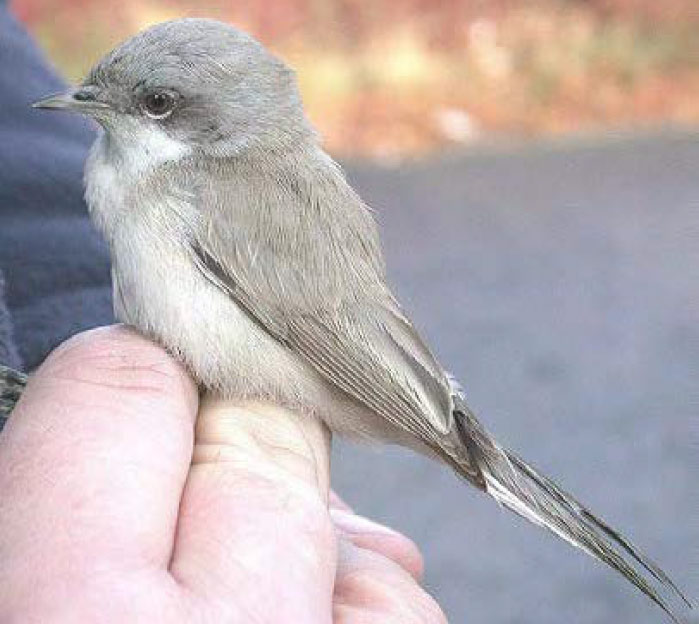
Lesser Whitethroat Sylvia curruca halimodendri
First-calendar-year or older, North Ronaldsay, Orkney, 16 October 2003 (photographed, trapped, DNA analysis).
First-calendar-year, Aberdeen, North-east Scotland, 5-21 December 2004 (photographed, trapped, DNA analysis).
These two records, which showed plumage features consistent with the taxon, were considered by BOURC as the analysis of their DNA suggested that though both were subspecies halimodendri, each belonged to one of two ‘subclades’ currently classed within that subspecies (Molecular Phylogenetics and Evolution 67: 72–85), with the North Ronaldsay bird in subclade 2b and the Aberdeen bird in subclade 2a. It seemed pragmatic to consider both records and formally accept them in case future research results in a taxonomic revision.
This subspecies of Lesser Whitethroat breeds in south-east Russia, Kazakhstan, Uzbekistan and Turkmenistan to north-west Mongolia. Winters south-west Asia.
Other decisions
Azorean Yellow-legged Gull Larus michahellis atlantis
New first record: near-adult, Barra, Outer Hebrides, 10 September 2005 (photographed) pre-dates the previously accepted first record of this subspecies, and is therefore accepted as the first British record.
This subspecies of Yellow-legged Gull breeds on northern Atlantic islands including the Azores, Canaries and Madeira.
These changes will be published as part of the BOURC’s 50th report due to be published in IBIS in October 2019. Upon publication of this change, the British List remains at 618 species (Category A = 600; Category B = 8; Category C = 10).
18 December 2018
Share this story