


AviList updated for 2026
An updated version of the first unified global checklist of the world’s bird species is available now, with annual revisions to follow.
Following its launch in 2025 as a consensus-formed taxonomy for every species of bird found on planet Earth, the AviList checklist has now been released in a revised v2026 version. This is the first in what is set to be an annual update each October.
Upon its release, AviList provided the first-ever unified checklist of the world’s birds, superseding the International Ornithological Community and Clements?lists and better connecting major conservation initiatives. This alignment removes confusion and uncertainty from major efforts such as the IUCN Red List, BirdLife’s DataZone, tools such as eBird, Birds of the World and field guides. That only benefits conservation, as we increase our shared understanding of birds’ distributions, ecology and threats.
This update brings all of these resources closer together, with the major effort being BirdLife and the Cornell Lab of Ornithology working to adjust our datasets to bring them further in line with the AviList taxonomy. This matches the various ‘splits’ and ‘lumps’ resulting in AviList’s reclassification of our understanding of bird species.
Among the headline changes in AviList v2026 are:
The split of Willet (Tringa semipalmata) subspecies into two monotypic species: Saltmarsh Willet (Tringa semipalmata) and Prairie Willet (Tringa inornata).
The split of Warbling Vireo (Vireo gilvus) into Eastern (Vireo gilvus) and Western (Vireo swainsoni) Warbling Vireos.
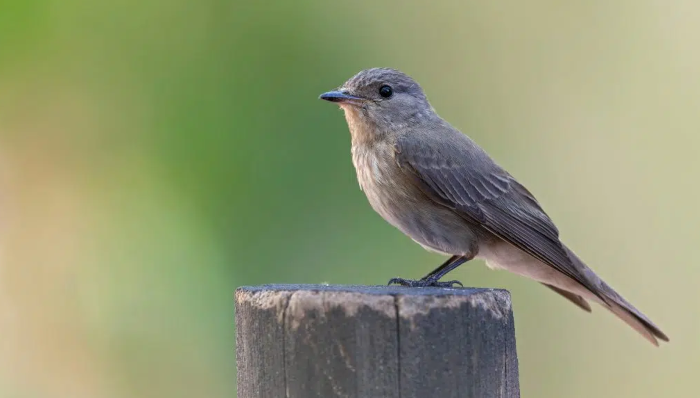
Recognising the subspecies of Spotted Flycatcher (Muscicapa striata) found on the Balearic Islands and adjacent mainland as a full species: Mediterranean Flycatcher (Muscicapa tyrrhenica).
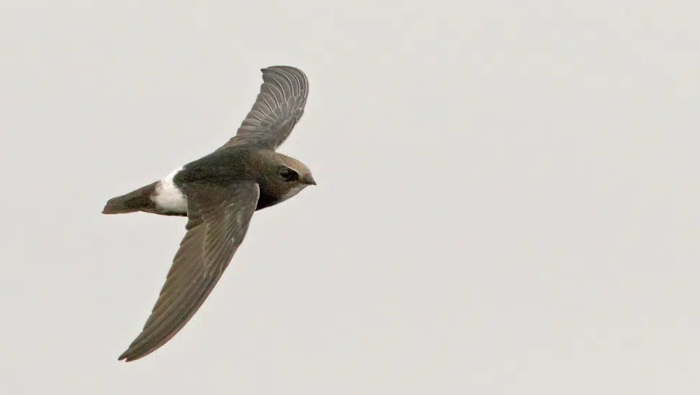
The ‘lump’ of House Swift (Apus nipalensis) with Little Swift (Apus affinis) under the latter common and scientific names.
With this update, AviList species are in 97.7% alignment with eBird; the Cornell Lab for Ornithology will update its eBird checklist later in October, with the remaining gaps a priority for the future.
At BirdLife, we will release our 2026 Red List update later in the year, including many revisions resulting from our efforts to align with AviList. However, the huge datasets and conservation impacts of our role as the global Red List authority for birds, and the public consultation process we undertake for species’ undergoing revisions to their Red List category means it will take us a couple more years to reach full (or as close as can be) alignment with AviList. Doing so remains a priority for our science team.
AviList v2026 is available in several formats:
Formatted Excel spreadsheets in both extended (containing extra nomenclature, bibliographic and taxonomic information) and short (core fields) formats.
Via the interactive Checklist Explorer, which is easily searchable and filterable by rank, order, family, genus and IUCN Red List category.
A CSV download from the Checklist Explorer that provides a customised version, containing any filters applied by the user, in extended or short formats.
Find out more and download AviList v2026 at www.avilist.org. For more information on BirdLife’s taxonomic work, visit datazone.birdlife.org/about-our-science/taxonomy.
Birdlife
22nd October 2026

Full changes to the British List
Scientific name changes
- Wren Troglodytes troglodytes changes to Nannus troglodytes
- Pallas's Reed Bunting Emberiza pallasi changes to Schoeniclus pallasi
- Reed Bunting Emberiza schoeniclus changes to Schoeniclus schoeniclus
- Yellow-browed Bunting Emberiza chrysophrys changes to Schoeniclus chrysophrys
- Chestnut Bunting Emberiza rutila changes to Schoeniclus rutilus
- Yellow-breasted Bunting Emberiza aureola changes to Schoeniclus aureolus
- Little Bunting Emberiza pusilla changes to Schoeniclus pusillus
- Rustic Bunting Emberiza rustica changes to Schoeniclus rusticus
- Black-faced Bunting Emberiza spodocephala changes to Schoeniclus spodocephalus
- Black-headed Bunting Emberiza melanocephala changes to Melophus melanocephalus
- Red-headed Bunting Emberiza bruniceps changes to Melophus bruniceps
Full changes to the Western Palearctic List
Splits
- Prairie Willet Tringa inornata is split from Saltmarsh Willet Tringa semipalmata
- Mediterranean Flycatcher Muscicapa tyrrhenica is split from Spotted Flycatcher Muscicapa striata
- Canary Islands Robin Erithacus superbus is split from Robin Erithacus rubecula
- Maghreb Wheatear Oenanthe halophila is split from Mourning Wheatear Oenanthe lugens
Scientific name changes
- Striated Bunting Emberiza striolata changes to Fringillaria striolata
- House Bunting Emberiza sahari changes to Fringillaria sahari
Further changes relating to species on the Western Palearctic List
Splits
- Western Warbling Vireo Vireo swainsoni is split from Eastern Warbling Vireo Vireo gilvus
Lumps
- House Swift Apus nipalensis is lumped with Little Swift Apus affinis
Get Breaking Birdnews First
Get all the latest breaking bird news as it happens, download BirdAlertPRO for a 30-day free trial. No payment details required and get exclusive first-time subscriber offers.




