


Abernethy wildfire remains active after burning 10 square kilometres
Firefighters have made substantial progress at RSPB Abernethy, but hotspots remain, wildlife impacts are still being assessed and affected areas remain closed.
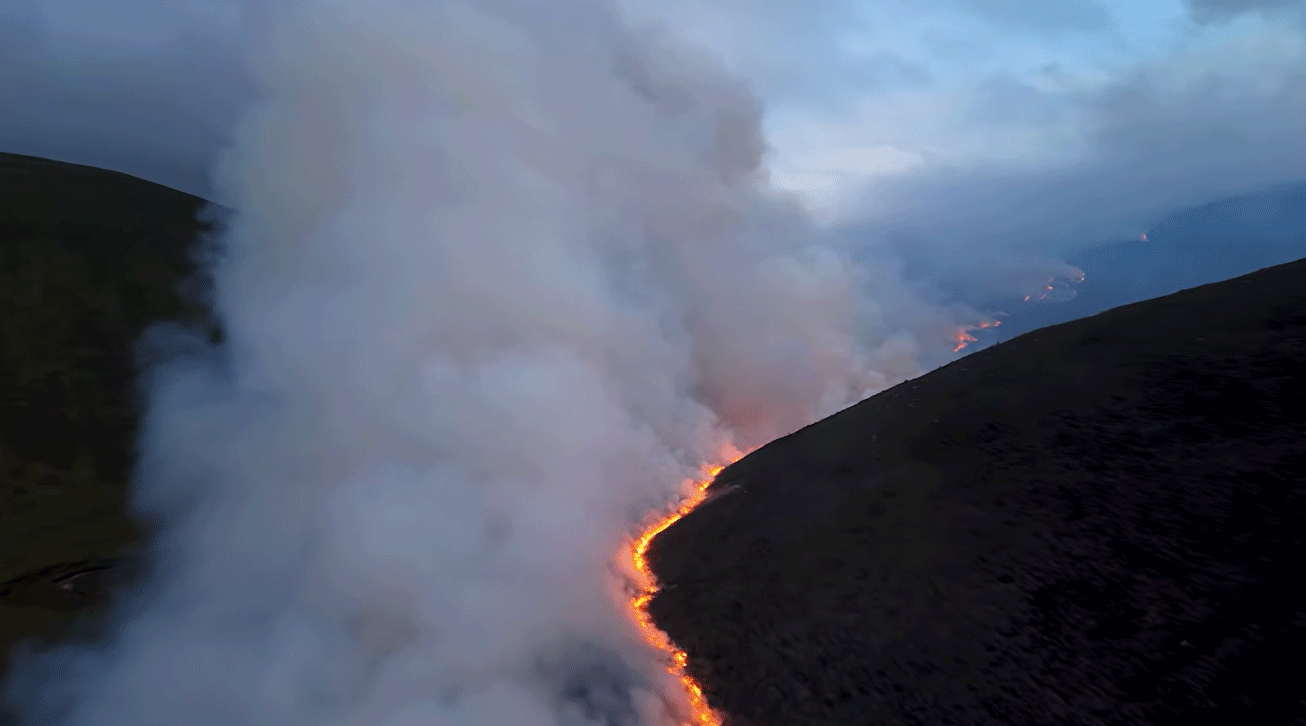
A major wildfire at RSPB Loch Garten, Abernethy has affected around 10 square kilometres of the Cairngorms National Park, with firefighters continuing to tackle substantial hotspots more than a week after the blaze began.
The fire was reported shortly before noon on Wednesday 15 July near Ryvoan Bothy, between Abernethy and Glenmore. It spread rapidly through dry heather, young trees and other vegetation, driven by prolonged warm conditions and changing winds.
Properties, campsites and visitor facilities around Glenmore and Loch Morlich were evacuated as a precaution, while roads, forest tracks and walking routes were closed to allow emergency crews to work safely.
RSPB staff and volunteers joined the response from its earliest stages. Around 27 members of the charity’s team initially helped to fight the blaze using all-terrain vehicles carrying water, backpack hoses, shovels and other equipment.
RSPB rangers also used a drone to monitor the fire and provide information to those coordinating the operation. The charity worked alongside the Scottish Fire and Rescue Service, Police Scotland, Forestry and Land Scotland, the Cairngorms National Park Authority, neighbouring landowners, gamekeepers, farmers and local contractors.
During the first phase of the emergency, the RSPB called for urgent aerial support as the fire moved across remote and difficult terrain. Helicopters subsequently joined the operation, carrying out repeated water-bombing runs to support crews and land managers working on the ground.
More than 100 firefighters have been mobilised during the incident, supported by specialist wildfire units, all-terrain vehicles and a high-volume pump drawing water from Loch Morlich. Firebreaks have also been created and maintained to prevent the flames spreading into further areas of forest and towards nearby communities.
The RSPB described watching parts of Abernethy burn as “unbelievably difficult”. The fire occurred during the breeding season and is expected to have affected ground-nesting birds, including Black Grouse, as well as invertebrates and Common Lizards.
The full ecological consequences will not be known until the affected ground is safe enough to survey. The wider Abernethy reserve supports nationally important populations of Capercaillie, Scottish Crossbill and Crested Tit, together with Ospreys, Red Squirrels and other wildlife associated with the Caledonian pine forest and surrounding moorland.
As of Thursday 23 July, the Scottish Fire and Rescue Service said significant progress had been made and the overall situation was improving. However, substantial hotspots continued to burn across a large and complex area, with helicopters and ground crews expected to remain at the scene through the weekend and into the following week.
Strong winds could still reignite hotspots or carry fire into previously unaffected ground. Emergency services have therefore warned visitors not to bypass road closures, signs or police cordons.
Paths around Glenmore, Loch Morlich and Badaguish remain closed, together with routes leading towards Cairngorm Mountain, the Northern Corries, Meall a’ Bhuachaille, the Green Loch, Strath Nethy and Bynack More. Routes through Abernethy Forest south of Forest Lodge towards Ryvoan Bothy are also closed.
The Loch Garten Nature Centre remains shut because of the continuing emergency response. The cause of the fire has not yet been officially confirmed, and the RSPB will assess the damage to habitats and wildlife once access to the affected area is considered safe.
July 2026
Get Breaking Birdnews First
Get all the latest breaking bird news as it happens,
download BirdAlertPRO
for a 30-day free trial. No payment details required and get exclusive first-time subscriber offers.
Share this story




