Major study of India's birds shows significant declines
The first ever full report on the state of India’s birds was released this week, made using data collected from over 15,000 birdwatchers across the country. Increases in Indian Peafowl and declines in raptors are among the major findings.
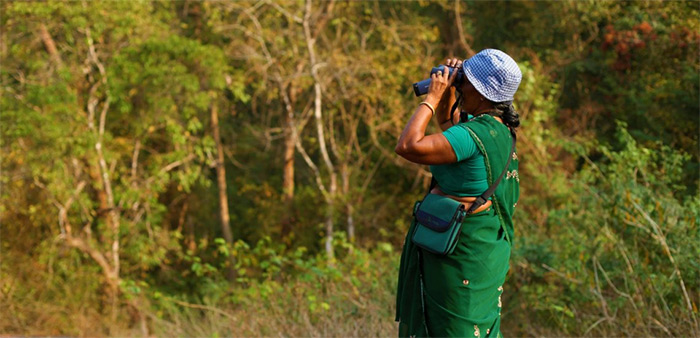
India loves its birds. From the vultures widespread in historical Mughal art, to the Sarus Crane as a modern symbol of fidelity, birds have always been a part of Indian culture. And it’s no surprise: India’s vast and varied landscape is home to over a thousand bird species, 78 found nowhere else. You may therefore be surprised to learn that there has never been a comprehensive scientific review of the distribution and abundance of the nation’s birds: until today. Thanks to more than 10 million observations contributed by over 15,500 birdwatchers through the eBird app, scientists have been able to assess the status of 867 Indian species over the past 25 years.
“Gathering such information across a huge country like India is impossible without the participation of birdwatchers,” says Dr Girish Jathar of the Bombay Natural History Society (BirdLife in India).
The report, State of India’s Birds, was put together through a collaboration of ten research and conservation organisations* across the country, and released at the Convention on Migratory Species conference of parties this week.
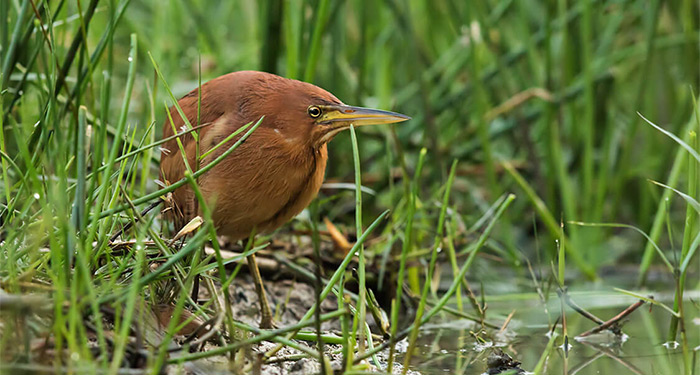
Overall, the findings show that roughly half of India’s bird species have experienced population declines over the past 25 years. According to the report, 101 of these species are in need of urgent conservation action. Some of them, like the Cinnamon Bittern Ixobrychus cinnamomeus, are considered familiar and widespread.
“The report highlights common species that are declining sharply; these need conservation attention before their numbers reduce further,” says Dr R Jayapal, Sálim Ali Centre for Ornithology and Natural History.
Since birds are good indicators of the health of the environment as a whole, this presents a bleak outlook for India’s wildlife. However, thanks to the report, we have a better understanding of where to focus our action, and can back our decisions with science.
The new information has allowed us to bust some common myths. Despite the widespread belief that House Sparrow Passer domesticus populations are declining across India, the species was found to be roughly stable as a whole, although declining in the major cities. The lack of urban sightings could have been behind the rumours of its decline – proving that day-to-day anecdotes are no substitute for hard data.
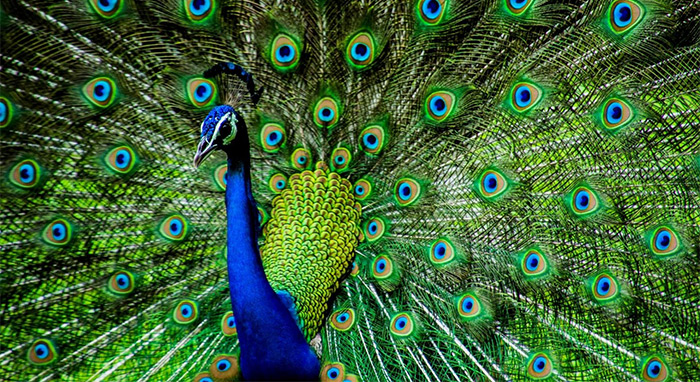
The Indian Peafowl Pavo cristatus, India’s national bird, is both increasing in population and spreading out to new areas. Although the exact reasons are not yet known, we do know that the species prefers habitats that are not too dry, and not to wet. Therefore, expansion into the state of Kerala may be the result of an overall drying trend, while expansion into the Thar desert seems to have accompanied the spread of canals and irrigation. Since this species is under the highest level of legal protection in the country, it’s no surprise that it’s been given space to flourish.
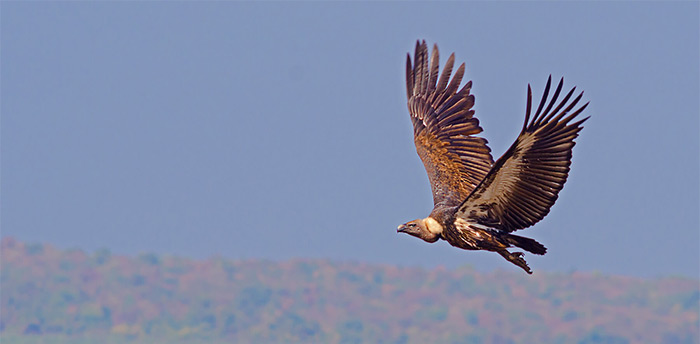
In their role as top predators, birds of prey are highly sensitive to environmental change. Habitat specialists may be hit hard if the ecosystem they depend on is degraded or destroyed. Raptors are often the victim of bioaccumulation, where toxic herbicides or pesticides build up in the food chain, with fatal consequences for those at the top.
The results of the report reflect this precarious position: overall, there has been a clear decline in raptors over the past 25 years. Within these, generalist species (which occupy a range of habitats, including human ones), have declined less steeply; whereas open country specialists show strong declines, as do scavengers.
We have long been aware of the catastrophic plummet in vultures since the 1990s, due to accidental poisoning by livestock drug Diclofenac. In this report, it was useful to see that results sourced from birdwatchers mirror the results obtained by more traditional methods.
“This is important proof that the citizen science approach is consistent with other techniques, so trends for other species obtained by this method should also be taken seriously,” says Chris Bowden, Programme Manager for SAVE Vultures.
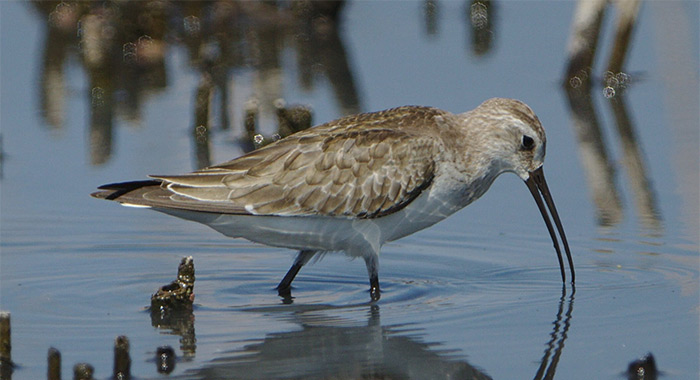
After vultures, migratory shorebirds show the second highest declines – although whether the threats they face occur at their arctic breeding grounds, rest stops or Indian wintering grounds remains unknown. At this week’s conference, India will be stepping forward to lead the protection of the Central Asian Flyway – the only major migration route in the world lacking an institutional framework for conservation. Through this collaboration, we may soon discover and tackle the dangers facing migratory shorebirds.
It’s easy to get discouraged by some of these results. But we must remember that knowledge is power: and State of India’s Birds can allow us to focus our actions like never before. If nothing else, the sheer presence of 15,000 bird lovers in the country suggests that there is huge potential for the public to get involved, not just in monitoring, but in helping to safeguard India’s extraordinary bounty of bird species for future generations.
Jessica Law, Birdlife
19 FebruaryShare this story