12 Rares of Christmas 2017: Day 2
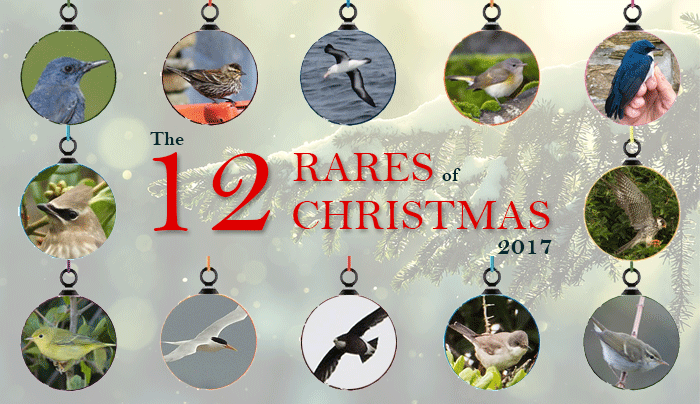
We’re off and running in the 12 Rares of Christmas 2017 and following on from the general fun and games (and no little intrigue) of yesterday’s opening offering, today its away to the Northern Isles for 2017’s first exceptional vagrant, a bird that had folk rushing for their bins and scopes as the light aircraft revved their engines for the debut island hopping twitch of the year.
The late throws of April had been a classic mixed bag of both birds and weather. The start of the month’s final week began with a continuing run of winds that largely originated somewhere to the north of west, bringing in a mix of classic conditions for the time of year as sunshine and showers took equal billing centre-stage.
At the time, the smart money favoured an arrival from the Nearctic as being the source of any major surprises and, sure enough, during the middle of a ok-birdwise Saturday, that’s precisely what happened…
Orkney’s most northerly isle laid claim to spring’s top prize, in the very best style imaginable, as North Ronaldsay swept all aside to plunder the ultimate birding accolade, the always longed for national first.
Such an event always comes as a surprise these days (given the wealth of species on the British and Irish lists) but perhaps the bigger surprise was that we were dealing with a female Red-winged Blackbird as the gold medal contender. It would have taken a brave soul to select that particular species as the one that would, almost four full months in to 2017, enliven the birding scene, but that’s exactly what was happening as April drew to a close.
Given that there’d been a rather dandy Hermit Thrush on Shetland only a week before and with the favourable weather discussed above, it did seem more than acceptable to be thinking along the lines of North American passerine arriving on one of the Northern Isles, but few could ever have seen this one coming; a right out of left-field occurrence, here was a oft forgotten potential British & Irish 1st ~ not the longed-for luminous, eye-popping wood-warbler that so many hold dear as a “wishlist” find (who wouldn’t want to see a spring male Cerulean Warbler in a wood somewhere?) but a rather low key female Red-winged Blackbird…
…of course, she wasn’t low key at all.

This was a quite sensational find for the Bird Observatory staff on North Ronaldsay and this also wasn’t the dowdy beastie that some would have you believe. Travellers to the American continent probably won’t have spent a huge amount of time inspecting the finery of female Red-winged Blackbirds but this one-off vagrant actually made you look at the photos (if you didn’t take the boat or plane to see her in the flesh) and when the images were looked at properly, you’d see a rather striking bird that oozed field marks; surprisingly far from subtle with dashes of colour around the face and the breast, well defined bright markings above and below, with a unique shape (in terms of anything else we see here). She was anything but dowdy.

A behavioural pattern was swiftly established ~ the Red-winged Blackbird spent much of her time in the iris beds at Garso, Easting, sometimes taking a visit to the nearby stone walls and gas canisters that stood close by.
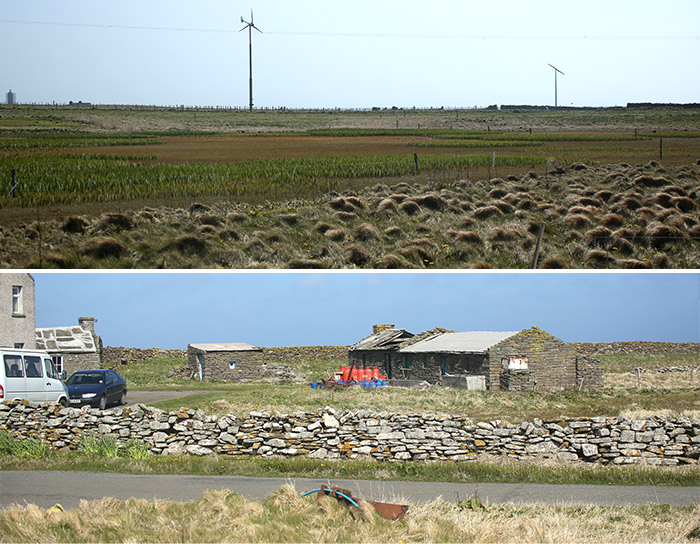
Those who headed north on that first long weekend came away happy in the knowledge that the time and money invested on those flights on Orkney weren’t in vain, the Red-winged Blackbird played furtive games of hide-and-seek and cat-and-mouse but the important thing was that she was still present and was all the way through the next couple of weeks, until the middle of the following month, last noted on May 15th.
Almost right from the get-go, the understandable online discussions regarding the vagrancy potential of Red-winged Blackbird was an interesting topic to follow. Many US field guides and natural history books list the species as being less than a massive long range migrant. That said, a bird from the northern part of the range could easily do something along the lines of the North Ronaldsay bird ~ they, as with other perhaps unlikely, yet already accepted vagrants, do migrate over a sizeable part of the continent and the weather was pretty good to draw one out in to the Atlantic too…
The feel-good factor for this one was exceedingly strong ~ this bird had everything going for it ~ a good northerly island location, an excellent time of year for a displaced Nearctic vagrant coupled with an impressive little weather system that followed on from the one that had already dropped Noss with that aforementioned Hermit Thrush.
The whole ship-assistance argument also loomed large and no one has anyway of knowing, 100%, if the Red-winged Blackbird took a boat ride for part of or the whole of her Atlantic crossing but unless it’s a Yellow-billed Sheathbill or some such, then a discussion on the likelihood of ship-assistance from North American seems a little tired and lame nowadays. Logic dictates that even if that may have been the case, it is no barrier to a place on Category A of the British List.

It is perhaps worth re-iterating points made around these parts at the time regarding the compare and contrast of the Red-winged Blackbird and Britain’s first record of Brown-headed Cowbird. Is there any difference between the two occurrences? Similar-ish species, arriving on Scottish islands towards the end of April (the Cowbird arriving on Islay on April 24th 1988). No, no differences at all really (Britain’s second Brown-headed Cowbird was also a late April bird too of course, seen in Northumberland, on April 25th 2009). Examine too, if you will, quite how those springtime American and Canadian sparrows may get here ~ do they all get here under their own steam? Quite sensibly, the BOURC have often acknowledged that ship-assistance isn’t necessarily a hindrance to acceptance on to the British List (tell that to fans of the Cornish House Finch though…but all committees make mistakes).
Historically, this was a species which was noted as having been imported in to the country in some number through the 19th Century ~ in the excellent reference Rare Birds in Britain, 1800-1990, Lee Evans cited at least 18 records between 1824-1885, spread widely across the country and seen across all parts of the year too. One bird is listed as having the potential to have been a genuine vagrant, a male captured on the Nash lighthouse, on the Welsh side of the Bristol Channel at 3am on October 27th 1866 ~ and you can see why, on paper, folks from the days of yore may have thought that that record was ok.
Again, whilst the Red-winged Blackbird was still in-situ, mention was made of just how predictable the species actually was. Delving back to one of the most influential and ground-breaking papers of the time, written by the late Chandler S. Robbins, “Predictions of future landbird vagrants to Europe” (British Birds; 73; 448-457, October 1980) he placed Red-winged Blackbird in Group Two (of four) as the 12th most likely species to make it to Britain or Ireland (out of 38 species in all).
Five of the eleven species that were, statistically, more likely to make it to Britain and/or Ireland have done so (including Wood Thrush, Eastern Kingbird and Alder Flycatcher) while 11 of the species that lie below it have also appeared (including Blue-winged Warbler, Savannah Sparrow and Cedar Waxwing). Other species listed both above and below have been recorded elsewhere within the Western Palearctic ~ Robbins was pretty accurate in his work and just because one took 37 years is, arguably, neither here nor there; it was predicted and now that prediction (and the statistics) have finally been borne out.
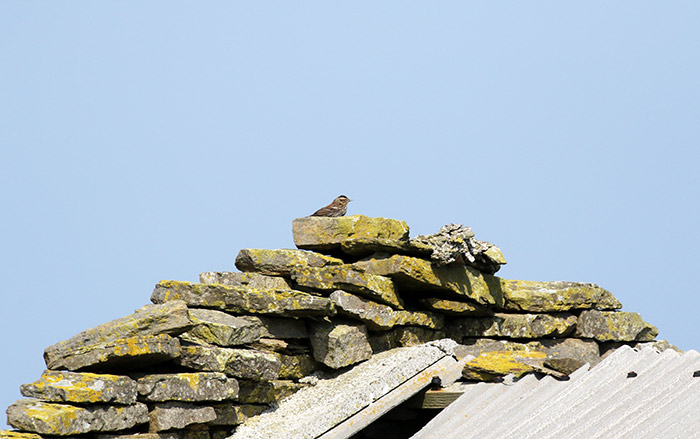
So, all the evidence points squarely at the Red-winged Blackbird being, without doubt, an outstanding candidate (a shoe-in) for Category A. Surely it would actually be more of a surprise if this rather unconventional and apparently unfashionable First for Britain doesn’t make it…
Tomorrow its another hurrah for an annual seabird that still won’t do the right thing here, certainly not in the manner that we’re becoming accustomed to elsewhere.
Mark Golley
22 December 2017
More from 12 Rares of Christmas 2017 series
Day 1 - Blue Rock Thrush
Day 2 - Red-winged Blackbird
Day 3 - Black-browed Albatross
Day 4 - American Redstart
Day 5 - Siberian Blue Robin
Day 6 - Scilly megas
Day 7 - Amur Falcon
Day 8 - Yellow Warblers
Day 9 - Elegant Tern
Day 10 - White-throated Needletail
Day 11 - Eastern Orphean Warbler
Day 12 - Two-barred Greenish Warbler
Share this story