12 Rares of Christmas 2017: Day 11
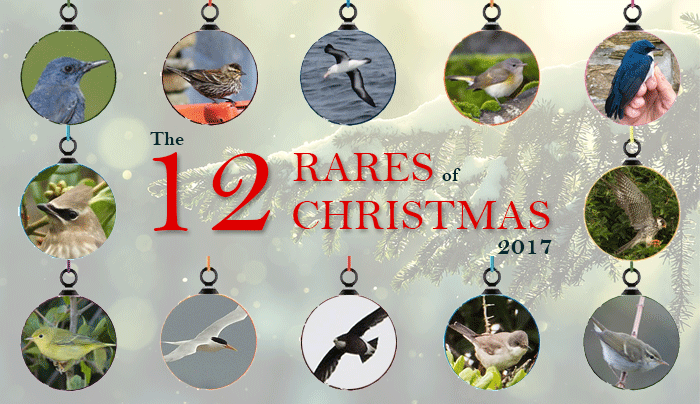
New Year’s Eve has arrived and before you know it, the recorded chimes of the Great Bell (Big Ben to you and I) will reverberate across the land as we wave 2017 farewell and welcome in another year with who knows what around the corner.
The birding reminiscences of the past 12 months will surely include some of the birds mentioned here across the past 10 days but until now, only one of those has been a national (British Isles) first.
Today we come to the second of the two Birds New to Britain (and Ireland) that 2017 has been kind enough to throw in to the listing melting pot, but this was far more of a challenge than the North Ronaldsay Red-winged Blackbird. This was a record that took a mighty team effort to crack a particularly interesting ornithological nut; one that relied heavily on in-field intuition, plenty of gumption to question a rather hasty specific identification and, of course, the numerous ‘togs who came up with the crucial selection of images that would seal the deal.

For quite some while now, the misguided consensus has been that Scilly has lost its mojo. The allure of the most exquisite islands in Britain has worn away to such a degree that the once-fabled autumn season there has a “petered out” feeling to it, as numbers of active birders scanning the pittosporum hedgerows, bulb fields, pools, elm copses, golf course greens and trimmed airfield sward has dropped well below the dizzying heights of the “peak years” where 1200+ birders could gather at any given bush almost in an instant.
This year, with a late September gush of western weather that careered across the Atlantic helpfully plopping the Grosbeak, Swallow and Waxwing mentioned in “12 Rares…Day 6” around the islands within less than a week of each other, Scilly was (joyously) celebrating. And it was delight to see.

The biggest surprise of all was still to come though and it wasn’t a Nearctic superstar that was going steal the show. Taking centre stage was a bird that came from closer to home but, through a combination of factors, it was a few days after it’s mid-October departure that the identification of Britain’s first Eastern Orphean Warbler was finally secured.
A week they say is a long time in politics and it is also a fair old time in birding spheres too and the intriguing resolution to this entertaining identification conundrum lasted for not far short of seven days.
This particular enthralling Scilly story began on October 12th when birding twins Neil and Paul Wright headed off on their last afternoon on St. Agnes to settle up the milk bill before they departed the islands the following day. As they returned from their errand they met up with another autumn Agnes birder, Martin Finch and headed along the path from the lighthouse to the church. As they went, some Blackcaps flew across on of the open fields, with an accompanying larger bird. The trio mused on whether they’d just seen a Barred Warbler but plainly something in their collective psyche said “no”. Other birders came along and joined the search and for a further hour, they all drew a blank. Neil remained for a short time after most had left and just as he was considering packing up for good a large warbler materialised overhead as it flew towards a nearby hedge…perched in the open, the first views were revelatory, it was an Orphean Warbler!
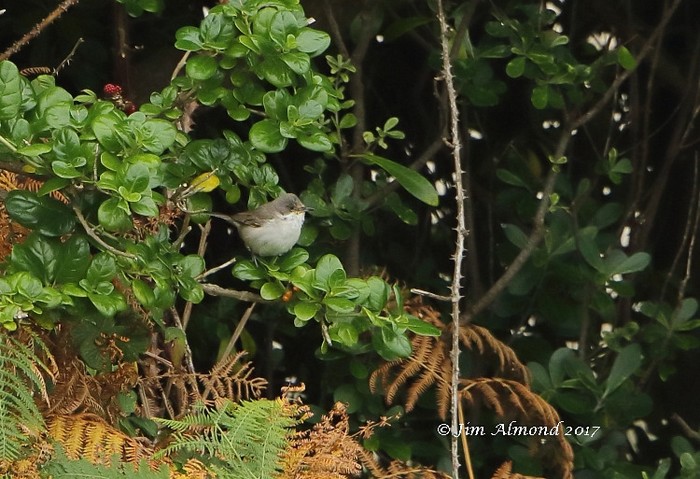
Neil’s view was the best of the afternoon and little more was seen of it as dusk approached. Further frustrating flight views followed the next morning but eventually the bird showed better in the afternoon. From the 13th the bird information services reported Western Orphean Warbler. By the 14th, importantly, a number of useful photos had been taken, sometimes in the open, sometimes diving in to cover, and ‘one photo’ appearing to show a rather startling feature…
Photos were posted online, but that crucial ‘one photo’ was on a private blog unbeknown to some birders. Features and names were mentioned here, there and everywhere. Several extremely experienced birders were convinced they had seen Eastern undertail coverts but the bird was still broadcast as Western and remained so through the remainder of its stay (seen to 17th and reported once more on 20th) and it continued to be elusive at times too.
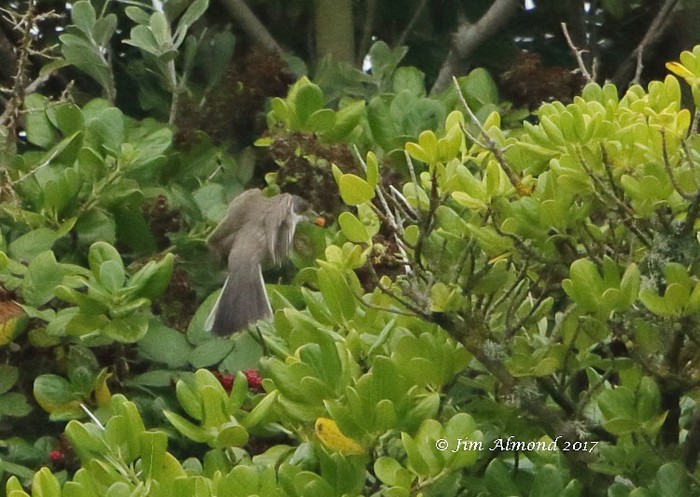
The photos Ashley Fisher and Bob Flood had seen barely confirmed the in-field observation of Eastern undertail-coverts that they were certain about and it wasn’t until late in the day on the 21st that they became aware of the ‘one photo’ that showed the undertail coverts that eventually screamed Eastern.
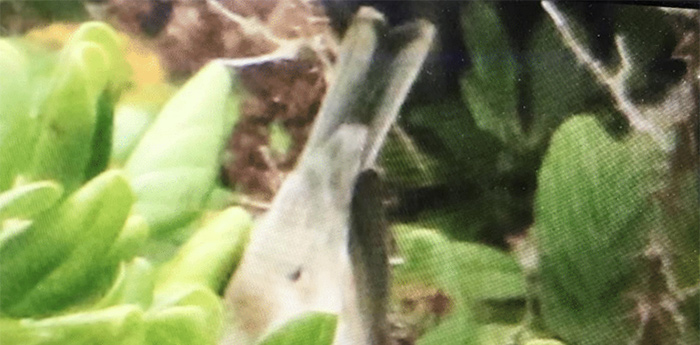
They took the bull by the horns and resolved to examine the issue as best and as quick as they could, especially given that the bird may still be in place on the island. Their worries that the undertail pattern they’d both seen flew in the face of the pronounced Western identification was clearly at the forefront of their minds.
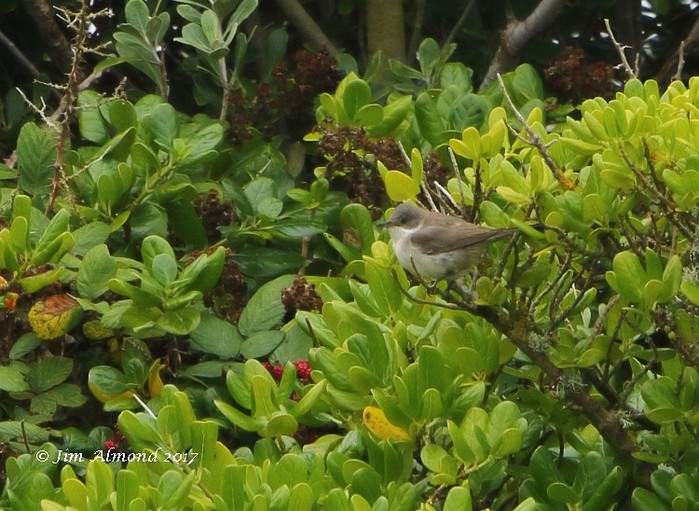
Ashley and Bob began to undertake some brilliant work on the much discussed tail pattern of the St. Agnes bird and established that, in the better shots available, the pattern (described by Lars Svensson as having a “narrow overlap zone” within the two species) could certainly be seen as a fit for Eastern Orphean Warbler. Coupled with the undertail covert pattern evidence, now captured to a much greater degree of satisfaction, they felt compelled to raise these important features to a wider audience, hoping to generate further discussion as to the bird’s specific identity (it continued to be broadcast as a Western throughout its stay).
Remarkably the informative and, arguably, definitive blog post regarding the rarer option and the bird’s true identity sparked little response (a sad indictment of the rarity scene in some ways). Bob emailed Lars Svensson asking for his opinion, stating that he and Ash had identified the bird as Eastern Orphean Warbler, but didn’t mind being corrected. Lars’ unequivocal answer was swift and to the point. Eastern Orphean Warbler.
Svensson immediately homed in on that undertail pattern, undoubtedly that of an Eastern and agreed that the pattern shown on R6 was also one that can be matched by that species too. Britain’s first Eastern Orphean Warbler had Lars’ seal of approval.
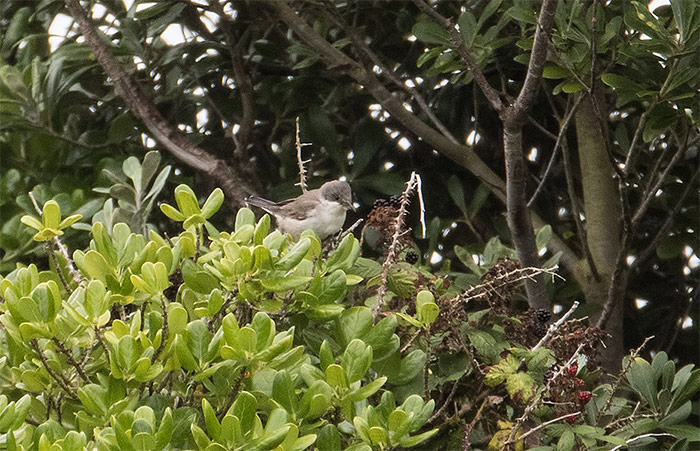
It was a done deal and all credit within this fascinating process to conclusively prove a new bird for the British List must go to Bob Flood and Ashley Fisher for their persistence in pursuing their hunch to the end game of the correct Eastern conclusion, to the photographers who enabled any analysis in the first place and, of course, to the perceptive and tenacious Wright brothers and Martin Finch for not quitting the scene after that first brief flight view.
The Scilly Eastern Orphean Warbler will glide gracefully through both committee stages (you’d think) and become the newest addition to the British List. Four of our Orphean Warblers weren’t specifically identified to form (two in Cornwall, in October 1967 and May 1982; Aberdeenshire in October 1982 and the famous Scilly bird from October 1981).

The first accepted Western was trapped at Portland in September 1955 and then came the quite extraordinary run of records in the last five years ~ singles seen (and photographed) at Hartlepool in May 2012, St. Brides in November and December 2013 and both Shetland and Orkney in October 2016.

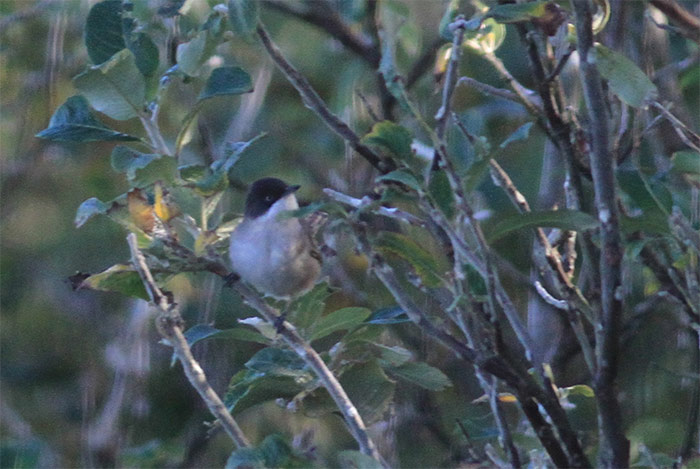
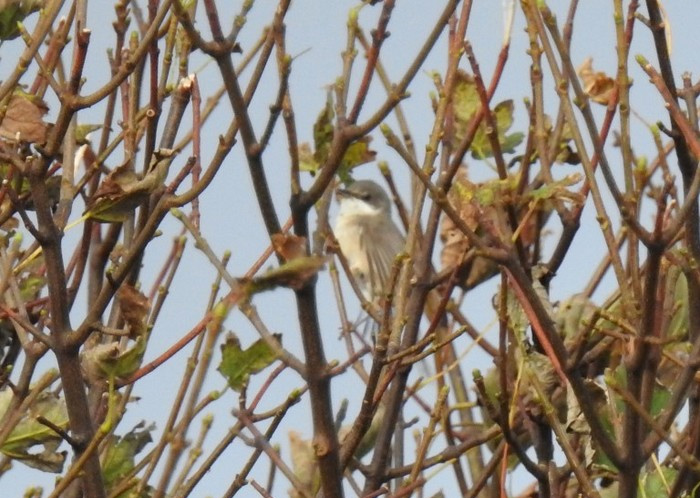
Now we have another Orphean to continue this amazing surge in records, but a rarer one still…whatever does it all mean?
So an autumn Scilly season that started with a flurry of Nearctic superstars was concluded with a British first (as indeed did the previous October) but from an all-together different compass point. The very best thing (from my Norfolk vantage point at least) was that it was marvellous to see the Grand Old Lady pull another “1st” out of the bag; I make it 12 new birds for the British List in the last 30 years (including the EOW) which is quite some return for an island group that many declared as “finished”.
To say Scilly is finished, over the hill and burnt out seems just plain daft and, ummm all a bit silly.
2018 is knocking on the door rather loudly now and the “12 Rares…” series draws to close with something that takes on a whole new significance once midnight strike ~ a species which, with a little planning, is also one of those birds that Scilly proudly owns the 1st British record for.
Mark Golley
31 December 2017
With special thanks to Bob Flood for his helpful and instructive comments on today’s article.
More from 12 Rares of Christmas 2017 series
Day 1 - Blue Rock Thrush
Day 2 - Red-winged Blackbird
Day 3 - Black-browed Albatross
Day 4 - American Redstart
Day 5 - Siberian Blue Robin
Day 6 - Scilly megas
Day 7 - Amur Falcon
Day 8 - Yellow Warblers
Day 9 - Elegant Tern
Day 10 - White-throated Needletail
Day 11 - Eastern Orphean Warbler
Day 12 - Two-barred Greenish Warbler
Share this story