12 Rares of Christmas 2017: Best of the Rest
There’s always to be a little contention as to which birds were actually the “best” ones of the year and the past 12 days has tried to offer up a broad cross-section of some of the undoubted highlights of 2017.
Some species, and some events, had to fall by the way side and were sat on the “long list” and so today’s bonus “12 Rares…” ~ a Lucky Thirteen as it were ~ aims to cast a broader eye on some more of the rarest or most noteworthy rarities of the last 12 months.
Whilst there’s still no room for the significant breeding successes of Black-winged Stilt, Cattle Egret and, in particular, Night Heron (2017 seeing the first breeding pair in Britain raise young on the exceptional Somerset Levels) and no room for the likes of Scilly’s Yellow-billed Cuckoo or Wilson’s Snipe, Shetland’s Swinhoe’s Storm-petrel or Upland Sandpiper or Mayo’s returning Semipalmated Plover, what follows is a reprise of a selection of the very best of the rest from the class of ’17…
…a 12 months which, despite plenty of ups and downs, held a number of surprises and quiet moments too, but still managed to rattle in a heck of year-end log call.
Settle down then for one last look back at what piqued the interest for 2017.

The amazing events of October and November 2016 will live long in the memory of all those who paid homage to one (or more) of the 13 Siberian Accentors that alighted on our northern shores in what will remain one of the most exceptional rare bird events ever encountered in Britain. Many thought that there may be a few more discovered as the winter kicked in but, despite the numbers both here and on the continent, there was just one bird located. And it took until the second month of the year to discover, found at a private site near Invergordon, in Highland in the second week of February. That its location was kept to just a tiny handful local birders didn’t hurt too much, given the numbers available the previous autumn, that handsome Easington individual in particular drawing the crowds, and the Invergordon bird became the second record for the expansive region, the first being trapped and ringed at Avoch, on the Black Isle, in early November 2016. Who knows, it could be our last for a very long time.
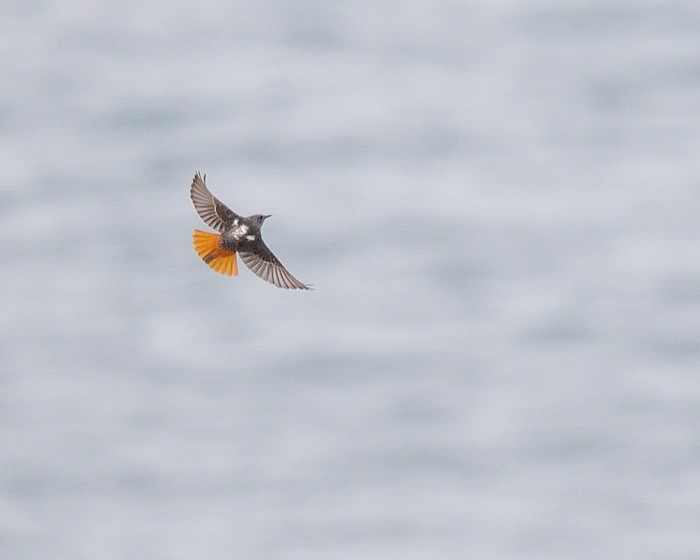
Two-for-the-price now as spring and then autumn offered up examples of the always welcome Rock Thrush. Getting the ball rolling, and coming as a significant surprise, was the beautiful male that frequented the equally beautifully named Bread & Cheese Cove on St. Martin’s, Isles of Scilly in early to mid April; first known about on 10th, it was swiftly established that it was present the day before and eventually, the arrival date was confirmed as 6th. A stay of around four days would have been about right for an overshoot such as this but happily for all those who journeyed to the far southwest, this springtime showstopper performed for a further five days, often singing too for a little bit of extra panache. This was Scilly’s fifth record and the first since September 1996.

Rock Thrush #2 stayed for much longer and was even more popular than the St. Martin’s male of six months earlier; a twitchable and increasingly showy individual will always draw a crowd and that was certainly the case for the winter male that performed around the Pwll du Quarry, near Blorenge in Gwent throughout the middle half of October and on into the early part of November. Furtive at first, the lure of mealworms quickly tamed the bird’s natural instincts as photographers had a field day with this 3rd for Wales. Views were incredible and all those who made the trek went home exceedingly happy. All good things come to an end though and eventually the mealworms stopped coming and the Rock Thrush took his leave of the Welsh countryside.

The rather brisk westerly airflow of mid-April saw everything pointing to a Nearctic species or two topping the bill and during the 19th we had an answer to the inevitable question “what’s it going to be?”; the answer came from the Catharus stable in the russet form of a super Hermit Thrush that was located on Shetland, in the East Punds Geo across on Noss ~ the 14th occurrence of this perky little thrush for Britain and Ireland and the fifth spring bird to date (four of those have been on Shetland) ~ Britain’s first was found on Fair Isle, in early June 1975 and others have followed on Fetlar in late April 1998 and Fair Isle again, in May 2014. Despite an upturn in records of Hermit Thrush there are still only two mainland occurrences, split between Britain and Ireland (on Cork’s Galley Head in 1998 and at Cornwall’s Porthgwarra in 2013).

Short and sweet with this one; the same rough weather that had gifted Shetland another Hermit Thrush must have given those hardy surveyors on the R.V. Celtic Explorer good reason to reach for the Quells or Stugeron but they seemed to be having a fine old time of it way out west from the Galway coast. Those on-board the vessel offered up some big news as April’s third week came along ~ what appeared to be an outstanding candidate for a Zino’s Petrel has been photographed from the decks and the accompanying images all went a long way towards backing up the claim; the bill shape and thickness, the face pattern and the patterns on the wings all strongly suggested that this was a Zino’s. Interestingly there it was seen at a time of year that is completely clear of any accepted records of Fea’s Petrels and it was only three springs previously that Niall Keogh photographed that Bermuda Petrel from the very same survey ship, some 200 miles off the coast of County Kerry. Black-capped Petrel or better must must surely be those salty seadogs sight’s now.

Few active field birders would argue that the in-field identification of a female Lesser Kestrel is one of the toughest vagrant ID’s you may ever enter into here ~ it would take outstanding views, a lot of knowledge of the species and a little bit of chutzpah to name one on your daily rounds and perhaps there was little surprise that the second romper of a Noss spring was a bird that was retrospectively identified from an online image. At times, the Internet’s birding community can relent from the bear-pit default setting and actually become an informative and helpful resource ~ and this was crucial in the processes that lead to the confirmation of the cute looking little falcon seen on May Day.
Someone noticed that the bird actually showed a number of features to ring alarm bells (the rather diminutive looking bill, the striking lack of any real face pattern, the distinctive pattern of chevrons on the scapulars and coverts, the relatively unmarked look of the tail and the length of the tail itself, coupled with claws that also appeared pale) and that yes, it was a female Lesser Kestrel. A huge bird for the islands, only the second-ever (the first was on Fair Isle in June 1987) and this was just the fourth non-male seen here (out of 21 records in all). And, of course, aside from a couple of recent twitchable birds, this is a fiendishly tricky species to see in Britain…

There’d been a fair bit of action on far-flung islands as April and May entered the building, Nearctic passerines being well to the fore, so as the second week of May began, it was rather nice to see a Mega Alert sound from the English mainland, announcing the outstanding discovery of a stunning male Spectacled Warbler on the Slopes, not that far from the Portland Bird Observatory ~ he was an absolute belter! Once upon a time there were a few old records on the books (notably the Fair Isle male of June 1979) but they were all expunged, so the haul of nine records between the first at Filey in May 1992 to Portland’s bird of May 2017 is actually quite something. A county first (boy, what a sensational year it has been in Dorset) this one-day dazzler was the fourth May bird (as well as the previously mentioned North Yorkshire record, others were in Suffolk in 2008 and Norfolk in 2011).

Throughout the tail end of the winter and the early days of spring, a little bit of time was spent following the continuing northward transit of a Sooty Tern that had made transit through the lower reaches of the Western Palearctic (Cape Verde, then the Canaries) and which then hit the Iberian Peninsula (a fly-by in Portugal) and the French coast (at the tern hotspot of Banc d’Arguin). As is often the case, assorted musings wondered if it could actually end up in British waters before the summer was out. Whether it was indeed one in the same or not, thanks to the Machrihanish Bird Observatory, that slow-burner came to fruition, as a seawatch paid off in the very finest style when a Sooty Tern headed south off Uisead Point during the late morning of June 2nd, just the third record for Scotland. This is one of those magnificent rarities that always makes you sit bolt upright and mutter a suppressed “wow” or two as any birder worth his or her salt knows just how rare this species remains here and remembers just how few chances there have been to see one. Prior to the Argyll bird, the record books show 23 birds here (29 acceptances in all, but with some repeats) and there’ve been very few twitchable birds from that select gathering, though the 2005 bird pleased 100’s with its performance in and around both sides of the Irish Sea.

Every once in a while, a bird will come along which, even if you’ve seen a couple, you instantly wish you had Stewie Griffin’s Star Trek-style teleportation gizmo and pop yourself instantly on to a remote outpost somewhere to marvel at a new attraction. If you weren’t thinking some such on June 18th last year, then hang up your binoculars in shame! The Americas had done it again and thrown a scintillating and beguiling male Myrtle Warbler on to the Pembrokeshire outpost of Skokholm. Present for just one day, this singing superstar was one of the very best that the early summer could ever offer. From the 40 or so records in all, there are very few spring/summer ones in the mix; June has just one previous record ahead of the Welsh bird (a first-summer male on Fair Isle in 1999) while May offers three (the tracked female seen on Orkney and then Shetland in 2014, the first-summer male on the Calf of Man in 1985, with a male on Fair Isle in 1977). The dazzling Skokholm bird represented the second record for Pembrokeshire (the other was on Ramsey Island in 1994) and they account for both Welsh records to date.
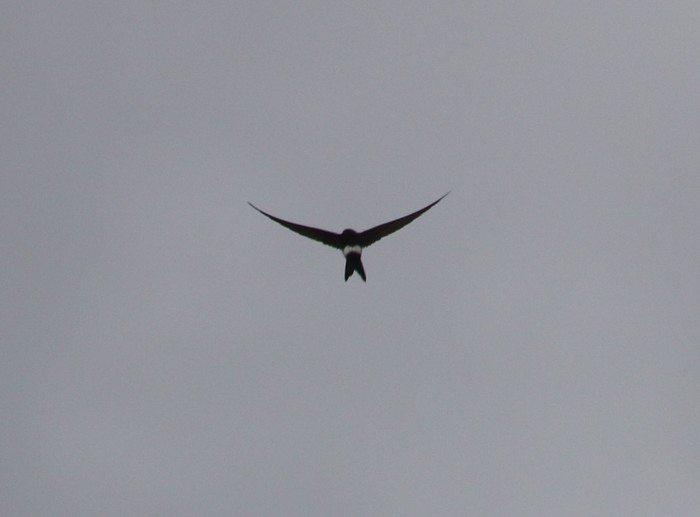
Rockabilly greaser Eddie Cochran lamented how there wasn’t ever a cure for the summertime blues, but presumably he didn’t see much birding action on his life on the road with Messers Holly, Valens and Bopper or else he’d have seen things from an entirely different perspective. Or not of course, but either way, there’s little room for the blues in a British summertime and the primary role call of honour for the season has already been attended to within the main body of this year’s “12 Rares…”. Just falling short (up against stiff opposition) was a belter of a rare that had been heavily cited as “one to watch” just before it appeared. An early July Sunday offered up the first Pacific Swift record for Scotland discovered just northeast of Cruden Bay, at Longhaven in Aberdeenshire. It was a species touted the week beforehand for two reasons ~ historically July has a decent track record for the appearance of the species and one had whizzed over Iceland just eight days previously. Indeed there was no reason to see this as being anything other than one-in-the-same, particularly given the two northerly locations, and it seemed entirely possible that it is also the very same individual that was first seen (and photographed) at Westkapelle, in the Netherlands, on June 12th. Again, it testament to the strength of other rarities logged this year that what was a national first (and an eighth record for Britain as a whole) is bumped to “best of the rest” territory but that shouldn’t detract from a brilliant find for Phil Bloor. Sadly for many contemporaries the debut record for Scotland didn’t linger for long but who knows, it may come back sometime in June or July this year.

The summer was bumbling along rather nicely as some really rare birds showed themselves through parts of June and early July. Almost unnoticed was a rather striking looking Phylloscopus warbler in the observatory garden on Fair Isle, an unseasonal lemon-faced thing with similarly-coloured underparts. It didn’t take too long for improbable thoughts of Green Warbler to follow, surely it wasn’t, was it? The wardens puzzled over the silent and often secretive bird, often lost in the surprisingly dense and lush patch of habitat through until July 7th. After a series of rather teasing in-field images raised more questions than answers and in-hand data taken offered further puzzles (for instance, the wing length was at the bottom of the range for Green but ok for Greenish). There was a bit of interest in the fact that the lower half of the eyering is yellow, suggested by some authors to be a diagnostic feature for nitidus but it was all a bit inconclusive, despite the gut-feeling of this being something exceedingly rare. On the bird’s last day came the most compelling in-field image so far for anyone in the pro-Green Warbler camp; it looked like a dead-ringer for the recent Unst bird, albeit with a more faded look (unsurprising given that it was July and not mid-May). Samples were sent to Martin Collinson and his team in Aberdeen and in early August came the response, it was a Green Warbler.
This will become the fourth British record and third for Shetland, all of which have come in very recent times. The Baltasound bird of May 2016 was usurped as Britain’s second by the recent acceptance of a bird on Foula from May 31st-June 4th 2014 (previously accepted locally as a Greenish). This amazing run of records from the Northern Isles represent the first here since the famous Garrison bird on St. Mary’s in September and October 1983 ~ this is a species on the up for some reason and each Greenish Warbler needs to be looked at rather carefully from now on.
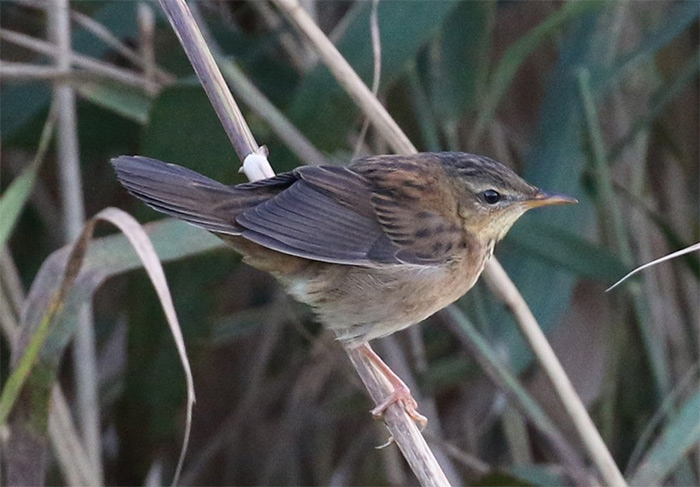
An attainable mainland Pallas’s Grasshopper Warblers is as rare as something akin to rocking horse doo-doo, so there was always going to be huge amount of interest in any discovered away from a remote Shetland isle and the “happening” along the generally rather tranquil north Norfolk coast in mid-September turned in to quite an event, interspersed with a hefty dollop of rancour. It had all started so quietly, a report of a possible PG Tips during the late afternoon of September 17th was steadily elevated during the early evening to a probable and then the hoped-for Mega Alert. The bird decided to perform for a spell on that Norfolk Sunday evening in a style seldom seen away from the Northern Isles (and Blakeney Point, twice) and given the immense rarity value of a non-island bird, the crowds descended.
A typically furtive game of cat-and-mouse ensued across the next day or two as numbers built on the bank. Building too was, seemingly, the pressure of dipping. Unseemly behaviour from some may have included a fence being snipped and certainly included a spat between a few birdwatchers, some local (I use that term loosely) and Holkham estate staff (one of whom is one of the county’s most consistent rarity finders) and it was all rather unedifying. Grown men should perhaps know better (I do wish there’d been about of all-in YouTube wrestling action featuring the Holkham luchadores, grappling some lippy lister…). Anyway. The bird did its own thing through it all, showing from time to time for a remarkable week long stay along the side of the seawall, beating the previous long-stay record by two clear days. Ten of the near-60 records have been seen on the British mainland but none has lingered as long as this). Most folks went home satisfied…
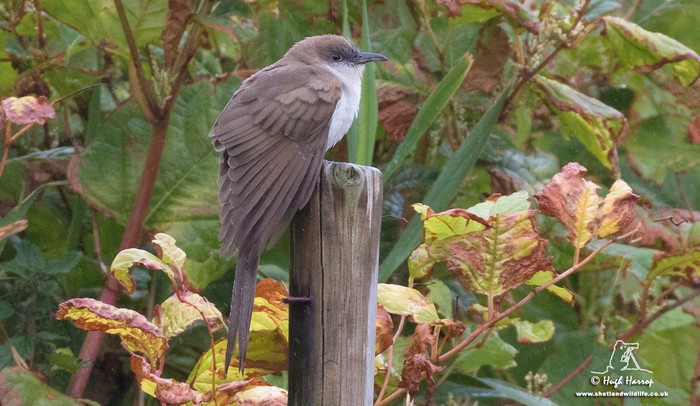
Anyone who reads the RBA Weekly roundups when I’m at the helm will perhaps remember and recognise that, being of a certain age now, I have a wistful habit of looking back to the days that used to be. A species that has certainly embodied that rather special archives feel has been, until the last couple of years, Black-billed Cuckoo but now after almost three decades of dormancy, its one that is in the process of reasserting itself in the minds of a new generation or two of birders as being firmly back on the agenda. Resurgence is the watchword for the bird which has now landed upon both western and northern isles in three of the last four years, each one in seemingly fine fettle. This year’s rather showy Transatlantic visitor spent a September afternoon gracing the Dale Of Walls area on the Shetland mainland, the first for the archipelago in 54 years (and just the second-ever there). After that famous gap of 24 years between the last Scilly record (of 1990) and the flighty arrival on North Ronaldsay in 2014, there was just 18 months to wait for the amazing spring Hebrides record from May 2016 and then only another 18 months until the Shetland ’17 individual. This is one mega that appears to be on the up…

…and this is one that, once upon a time, never warranted Mega Alert status, given the frequency of visits (an annual overshoot, albeit in small numbers) but it is now a sad indictment of where this species is heading. Shetland was on a roll and just after the Cuckoo came a bird once so typical of an autumn around the islands, Yellow-breasted Bunting. This year’s single was found on the infrequently cited Out Skerries on September 20th, showing in and around the iris beds at Housay and was warmly received by many birders, a new bird for most. Out of the 235 records recorded here, Shetland now boasts a whopping 151 in all but, tellingly, this was the first around the whole archipelago since 2011 (and only the second anywhere since then, the most recent British record was the juvenile on the inaccessible Brownsman Island in September 2013). Even in the early to mid 2000s there were “good” years for this drastically (dangerously) declining species ~ seven accepted in 2000, six accepted for 2003 and four in 2006, but there’ve been only seven since, up to and including September’s Skerries bird. The awful decline of this beautiful bunting has been well documented across the past 15 years as the alarm was sounded for the way in which numbers were plummeting. And now we’ve reached the stage where, in December 2017, the latest IUCN Red List has categorised Yellow-breasted Bunting as “critically endangered”, the western area decline has became swift and rapid across much of the rest of the range to the east, primarily due to illegal trapping. A desperately sad situation is running away from us; the species surely cannot survive at the current rate of population depletion if it was to continue at such a horrendous rate. Which makes records such as that on Out Skerries all the more poignant…

…let’s get back to talking species that are on the up and, in a hectic four-day September spell, Shetland pulled another one out of the bag just a handful of days after the BBC had done the right thing down on Mainland and the Skerries bunting got the ferry some extra income. This time it was all eyes on Unst where a female Siberian Thrush was in full-on daytripper mode ~ remarkably, the second on the same island within the space of under a full calendar year. This year’s bird was typically secretive and lurked in and around the gardens of Baltasound and showed off-and-on through the afternoon post a late morning discovery. There’s little doubt that Shetland has, in just a decade, established itself as the place to go to attempt to try your luck and see this once-mythical creature from distant eastern taiga forests; since the first for the vast island chain was recorded was on Foula in 2007, Shetland has now landed six in a row, including birds consecutively from 2014 to 2017, an astonishing run that has bumped the overall totals from eight (between 1954 and 2004) to fourteen in only a decade, something that would have seemed unthinkable once upon a time. All you need is the luck to be in the right place at the right time, and with the spread of Shetland birds from Unst, to Mainland, Foula and Fair Isle, you’ll still require a hefty dollop of it to be in with a chance. But there’s definitely a chance now.
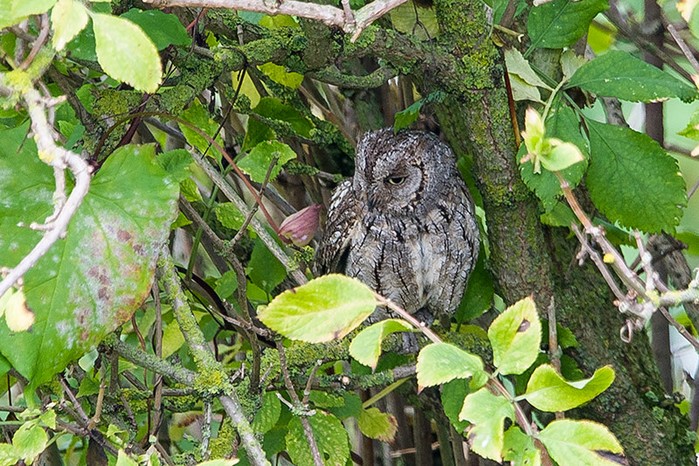
As east coast birders looked sadly and rather forlornly at a myriad of synoptic charts through shortening September days (charts that only ever brought hope to those in more westerly locations) the prospect of a goody or two anywhere from Lowestoft to Peterhead felt rather slender. It wasn’t happening and there was every indication that, after that surprise Norfolk warbler, it wasn’t going to happen at all. And then, guess what? It did happen! Despite not being a Mega in strictest numerical terms, the utterly delightful Scops Owl discovered in the unlikely confines of Ryhope, in County Durham quietly became one of the autumn’s most talked about and most appreciated rarities. It was 10 years ago that the returning sonar-songed Scops was noted in Oxfordshire and there were certainly 10 years worth of new listers who enjoyed this fabulous little owl as it roosted amongst the elders from September 27th through to October 6th (there were a handful of days where it went AWOL in that spell too). There may be over 100 accepted records on the books but birds that have performed to more than just a handful of birders, well, you could count them with the fingers (and thumb) of one hand. They are that rare (in twitching terms) and the appreciative hordes were right to pay homage to this exquisite cryptic cracker.

Not that there’s really a theme to any of this (not intentionally anyway), but its time for another big North American passerine that has long been seen as an entirely “old skool” mega but which has now, like Black-billed Cuckoo, suddenly transformed itself back into a rarity that seems as though it could be on the cards all over again every autumn. In actual fact, the past decade sees Scarlet Tanager starting to follow the example set by Siberian Thrush in terms of a mini-rush of records; after a barren and bereft 23 years, there have been five records since 2008, the most recent of which was the superb four-day female that showed brilliantly on Cork’s Mizen Head as October kicked off in some style. Ireland’s fifth, Cork’s fourth and the second in nine years there, it also boosted the combined total for Ireland and Britain to an even dozen. Famously, the early 1980’s saw a similar rush of records, singles for west Cornwall and Scilly (in 1981 and 1982) with two Cork birds within a week during the middle of 1985. And then…nothing. The wait went on and on until Cork delivered the Garinish male in 2008 and the west Cornwall/Scilly double kicked in with two birds in three days in 2011. Pop in the Barra bird from 2014 and it’s looking rosy for the Scarlet Tanager these days.

The slant towards the North American landmass is inevitable given the, at times, sensational weather systems that hurtled across the Atlantic through much of September and October (it still seems amazing that a Blue Robin can get here in an autumn like the one we just had) and, once again, we land on another hugely rare passerine from the west for our next port of call. The islands has already unleashed the Cuckoo upon the local and visiting birders but the next American attraction was rather more specialised as, bizarrely for a bird of such rarity, it only really appealed to Shetland listers. Who’d ever have imagined that about a bird as beautiful as White-crowned Sparrow before 2008? Anyhooooo…to Foula we go for another vagrant of the highest order that sought refuge on the most westerly outpost of the Shetland network. Lurking for four days from the start of the second week of October, this handsome first-winter had been preceded by a bird on Faeroe Islands only 24 hours ahead of touchdown on Foula. Sitting with the images of the two birds side by side, it was impossible to spot a difference and was actually rather straightforward to spot identical marks in some feather tracts. One in the same? Maybe so, yes, which is very cool in itself if right. We’re still not in to double figures with the species and this was only the second record for Shetland, the first arriving on Fair Isle just three days ahead of the male Myrtle Warbler in the spring of 1977.

For every Siberian Blue Robin and Yellow-billed Cuckoo, where the identification is instantaneous and automatic, there are others such as the already touched upon Shetland Lesser Kestrel which take a great deal more care to name. And, as if by magic, Shetland (where else?) offered up another properly taxing identification challenge in a busy old October for the islands as one of the best bits of field ID across the year was set in motion by local birder Dougie Preston. He managed to pin a name on to Britain’s first female (or juvenile male) White-winged Scoter, a pretty impressive call. Initially seen by visiting birders aboard the inter-island ferry at Belmont on Unst, it had been logged as a Velvet (perhaps understandably so). That’s a scarce species around the islands and it was two days later that Dougie encountered the bird near Gutcher, on neighbouring Yell. Something clicked, the tale of the previous sighting emerged and with it came some photos. It all looked rather good for a young White-winged Scoter (just as Dougie had called it) and the following day, the deal was sealed, there it was again, back at Belmont. Once again, like the aforementioned Sparrow, despite the phenomenal rarity (just the second specifically identified as deglandi here) it only really appealed to Shetland listers and interested parties, such has been the turnover of bodies at Blackdog in 2011, ’16 and, of course, ’17 as well. Big crowd or not, it didn’t matter as this was one heck of a bit of field work.
Apologies if there’s something missing from the loose ramble through a few more of the most talked about birds of 2017; this was never intended to be a review of the year, more of a casual saunter and gaze back at an assortment of species that have caught the imagination somewhere along the way in the 12 months that have just gone.
2018 could offer up a similarly diverse array of rarities, some will doubtless delight, some will disappoint, some will probably have the word “furore” somewhere close by too. There will almost certainly be a number of “oh wow!” moments too and let’s hope we’re all here to savour those in 12 months time.
Good luck and good birding.
Mark Golley
2 January 2018
More from 12 Rares of Christmas 2017 series
Day 1 - Blue Rock Thrush
Day 2 - Red-winged Blackbird
Day 3 - Black-browed Albatross
Day 4 - American Redstart
Day 5 - Siberian Blue Robin
Day 6 - Scilly megas
Day 7 - Amur Falcon
Day 8 - Yellow Warblers
Day 9 - Elegant Tern
Day 10 - White-throated Needletail
Day 11 - Eastern Orphean Warbler
Day 12 - Two-barred Greenish Warbler
Share this story