A mega on my island: the Bardsey Bunting from the warden's perspective
by Steve Stansfield
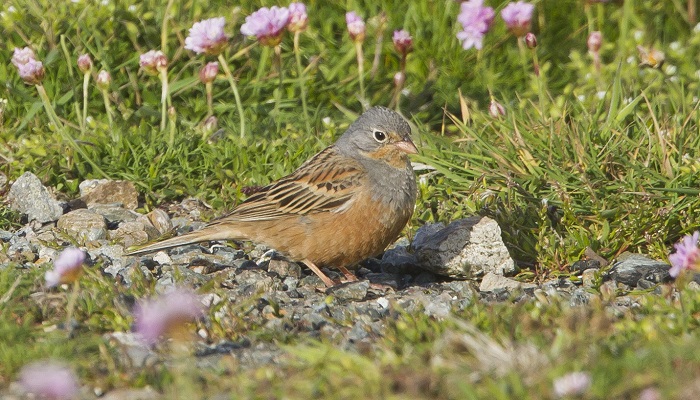
When Elfyn Lewis, a regular guest on Bardsey, said he had seen an Ortolan Bunting, something in the back of my head was saying ‘but it's June’. Within milliseconds of seeing the picture on the back of his camera, my mind went into overdrive. It's blue, it's orange…..it's a Cretzschmar’s!! .... My hands began to tremble and my heart began to race, a Cretzschmar's Bunting was within 100m of me right now! Being a follower of rare birds, I knew the enormity of his photo. Radio communications with the staff went mental, and everyone went racing towards the site where it had been seen.
“It hopped over the wall”, Elfyn had said. An hour later, and no sign of it, and all the obs staff and other birders on the island were getting a bit dejected. Two staff members who were monitoring seabirds on the eastern cliffs of the island had aborted their work and came to help find the bird. Steve Hinde stayed at the finding site whilst everyone else split up to cover the island.
‘All stations, all stations…the Bunting is back on the track’ boomed Steve Hinde’s voice over the VHF radio…. sprinting then ensued from all corners of the island. But seconds later it flew…and after lots of trudging there were only three happy observers, and 20 very glum birders on the island, as that was the last that was seen of the bird that day.
Thursday saw lots of trudging and the same glum faces feeling that their once in a lifetime chance had flown.
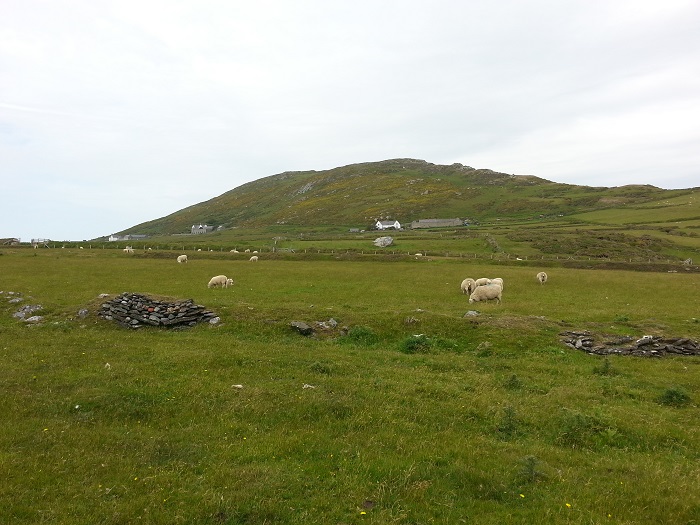
Friday morning saw Colin Evans, Bardsey’s boatman, chatting with the obs assistant, Steffan Walton, and myself about logistics in the 'unlikely' event of the bird re-appearing. Then we saw running, a birder running and shouting “the bunting is singing on the fence”. We ran, broadcasting the news on the hoof…
The next hour was painful, as the bird showed briefly in a number of places up to a mile apart, and then eventually I managed to see it… Oh my life… What a bird… Steffan collapsed in a heap on the floor with relief after seeing it, though in fairness, he had just run about a mile in about 3 minutes!
A plan was formulated with Colin and news was released that the bird was still here. By 1600 hrs the first birders arrived on the island and they searched high and low but alas the bird was not seen, and the birders departed at 2100 hrs.
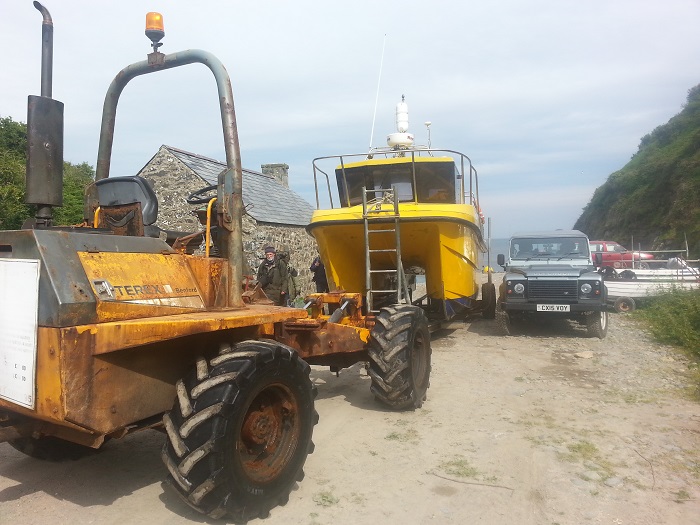
Saturday morning saw three boat loads of birders, from as far away as Norfolk make it across to the island, but again there was no sign of the bunting.
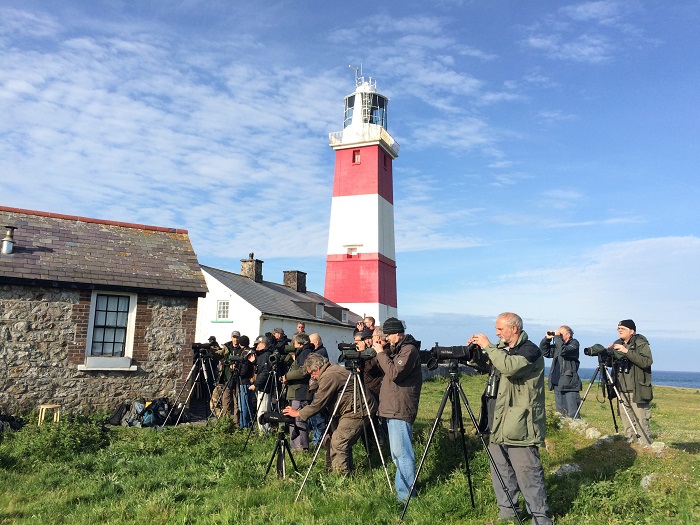
Sunday morning, Steffan stepped out of his front door, and the very first thing he saw was a bright orange bird fly from his doormat to the wall beside his house. The bunting was still here, perched on the wall at the base of the lighthouse and serenading him!! After all the highs and lows of the roller coaster ride of the previous few days I received the urgent message "Steve you're not going to believe this but the bunting is on Steffan’s doorstep at the lighthouse!"
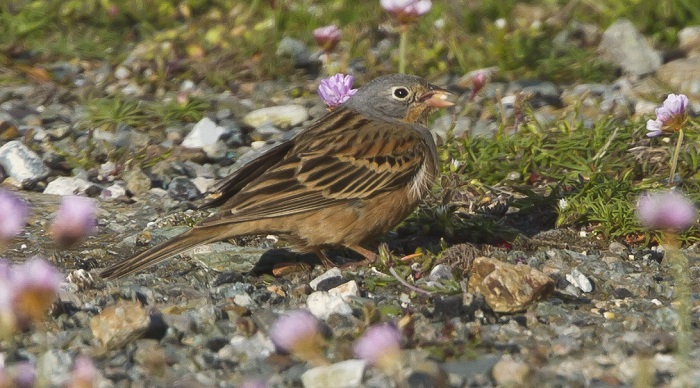
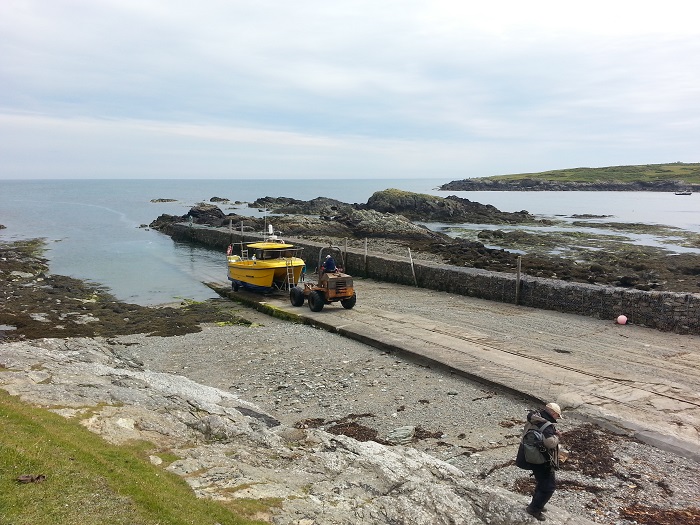
Again I made my way to the lighthouse and after a few brief but excellent views I returned to speak to Colin the boatman and formulate a plan for the day. News of boats from 1300 hrs went out and birders began to move towards the little fishing cove of Porth Meudwy.
The bird spent the next four hours singing from within the Lighthouse compound but completely out of sight, which was quite frustrating for the small group of us who were trying to see it. At about 11am the weather turned and rain began to fall. As it did, the few of us that were left decided to take shelter in the little building where Steffan lives. As we entered the building I turned around and noticed a bird in the lighthouse compound feeding on the ground…… The bunting was there, showing well, looking settled and in the open! After a few minutes the bird flew off, so I put out lots of bird seed hoping that it would come back to the area. It did, again and again and again. It was now reliably showing well about every hour and occasionally singing from the nearby gorse.
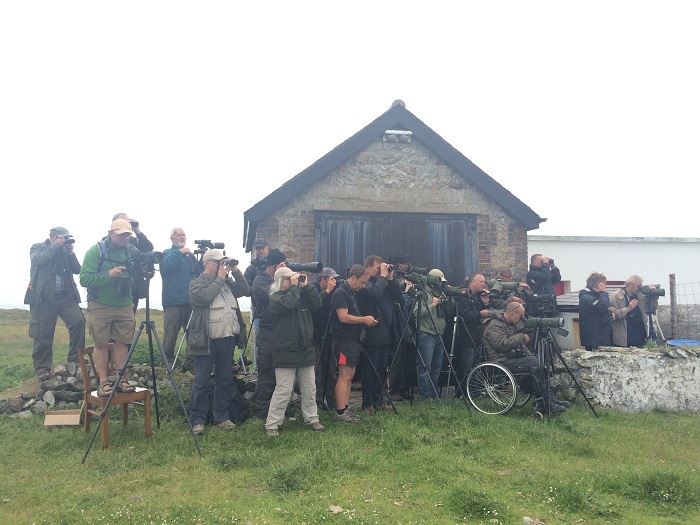
The first birders arrived at about 1330 hrs and the plan that we had put together to get them from the boat to the site, was put into place. Every boat was met by a member of staff, and the birders were guided to the very small viewing area at the base of the lighthouse. The bird was dropping into a small area, which was only viewable by a maximum of 36 people at once. The space where the bird could be viewed from was very tight so a schedule was put in place to get birders off the boat, see the bunting, and rotate the groups so that the next boat load could get priority viewing. Our aim was to give great views of the bird for as many people as possible.
News went out onto the information services that there would be boats from 0730 hrs the following day from Porth Meudwy, and birders would be brought to the island on a first-come, first-served basis. Monday morning saw about 105 birders waiting for the first boat, which can take 12 people at a time, so news was quickly put out that all boats for the day were full, and so stopping any more birders from having to travel unnecessarily.
As the boats came and went birders were guided to the viewing area, and the bird regularly visited the ‘bird-table’ - one of the concrete slabs on the open ground in the compound. Once the bird had settled into a routine, all birders who visited the island by the end of Monday got to see the bird.
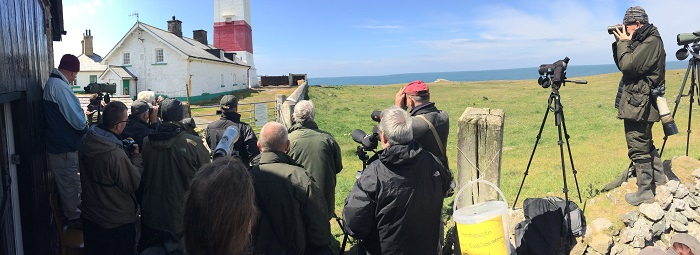
Colin asked one group of birders, who he did not have room for on his last trip to the island on Monday, to begin making a list of names as people arrived for Tuesday sailings. Tim Cleeves did the job for the first five boats, with Lee Evans taking over for the final two. News was put out throughout the night about how many spaces were left as each car full added their names to the list.
Tuesday morning saw the bird back on its pad and the twitch went off in style with seven boatfuls of happy birders leaving the island. Both the observatory and Colin were inundated with enquiries about booking a space on a boat rather than risk driving 300 miles to find that they were number 150 in line for 84 spaces! Not everyone was happy to camp out for the night at the risk of not getting a boat!
Forty birders slept rough here from 9pm last night, manxies calling all around us, great queuing banter! #5amboat pic.twitter.com/bsoTWM0qV0
— Mark Thomas (@Bucktonbirder) June 16, 2015@Bucktonbirder Couldn't resist photo of ure sleeping arrangements last night?? #BIRDERINABAG pic.twitter.com/SZQv05VVp8
— SATURDAY CATBIRD (@saturdaycatbird) June 16, 2015At this point Lee Evans offered to help Colin, and a booking system was set up via Twitter and Lee. From the Obs and Colin's viewpoint this worked very well. We were still inundated with calls, emails and tweets, but Lee filled up the boats in the order that people contacted him, this was very much appreciated by all the twitchers who were very grateful that Lee had offered to do the job and to Colin for getting them here. Unfortunately a couple of tweets were missed, as no system is perfect, but we simply couldn't have done it without these guys, it could have been chaos and far fewer people would have got to see the bird.
Unfortunately there were a few unfavourable comments on social media and on Bird Forum about the booking system, and that a first come first served basis would have been fairer. There are many considerations to be taken into account when organising such an operation. From the viewpoint of the person responsible for organising the twitch on a National Nature Reserve and in the world's fourth largest Manx Shearwater colony, I decided early on that if the bird was to stay near the Lighthouse then there would be no issues with birders causing problems to the island’s fragile wildlife and our 20,000 pairs of Shearwaters, however Colin and I also talked about potential problems at Porth Meudwy. The valley is a permissible route to the coast and not a public footpath. It is owned by the National Trust and the local fishermen pay a fee to use the cove. If Monday's scenes were anything to go by, with birders sleeping under boats, on tractors and even in the fishermen’s land rovers, and with more birders arriving all the time, chaos may well have ensued at the bottom of the track. It would have only taken one fisherman to make a complaint to The National Trust, or Bardsey Island Trust (the island’s owners and our landlords), and I could have been asked to call the whole operation off. Fortunately once a booking system was in place, and birders were arriving at staggered intervals, the potential for issues was alleviated and the twitch went extremely well with excellent feedback from all parties. This was Bardsey’s first major twitch, and thanks to the patience and cooperation of all the birders that visited the island and the many favourable comments that we received I am certain that if a Bimaculated Lark should appear on the island in the autumn then another twitch will be arranged!
This was a great opportunity for so many birders to finally get across to Bardsey, many thought it was just not possible, and many had been trying to get here for years! Things have now changed with a bigger, better boat service, and this very successful twitch has now shown it can be done, and the 500 birders that made the crossing and connected with such a fantastic bird will vouch for the ease that it was done. It was such a fantastic time, with lots of very happy faces leaving the island. Day trips to the island run throughout the spring and summer, and into autumn with Colin, visitors get 4 hours on Bardsey. Longer stays are available at the Bardsey Lodge and Bird Observatory costing £157 per week on a self-catering basis.
I would like to thank all the birders who kindly donated to the 'bucket', and helped raise just over £2000 for the Observatory, which is a small independent charity that relies heavily on donations.
Steve Stansfield
Warden of Bardsey Bird Observatory
30 Jun 2015


Write for Rare Bird Alert
Do you have a birding story you would like to share? From foreign birding trips to your local patch, finders accounts and more, we would love to hear from you.
All our articles are free for anyone to view and we include them in our weekly newsletter which goes out to thousands of birders every Wednesday. We also share them on our Twitter and Facebook pages, making sure your article will get read by as many people as possible.
If you would like to write an article please for us please get in touch with your ideas, thank you.
The RBA team