|
|||||
|
Diary of a WWT Warden |
|||||
|
|
|||||
|
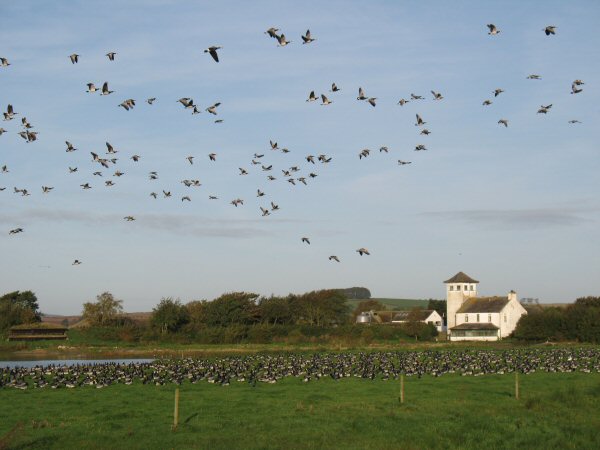
Barnacle Geese at Caerlaverock WWT (© Brian Morrel) |
|||||
|
|
|||||
|
|||||
| Caerlaverock WWT | |||||
|
Situated on the north shore of the Solway Firth, a few miles south of Dumfries
in south west Scotland. The 726ha reserve is comprised of both grazed and
ungrazed merse (saltmarsh), improved grasslands for wintering geese and other
habitats including wet grassland, unimproved grasslands, hedgerows and shallow
pools and scrapes. |
|||||
| Barnacle Geese | |||||
|
Today over 35,000 Svalbard Barnacle Geese winter on the Solway Firth,
with thousands feeding at WWT's Caerlaverock Wetland Centre. Their story is
one of an incredible recovery, since the dark days of the late 1940s, when no
more than 300 remained. |
|
||||
|
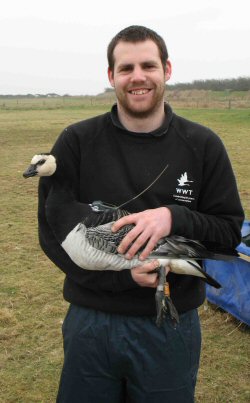
over land and sea has helped WWT assess the potential threat of wind farm developments both onshore and offshore along the Scottish and Norwegian coasts. |
|||||
| The winter so far | |||||
|
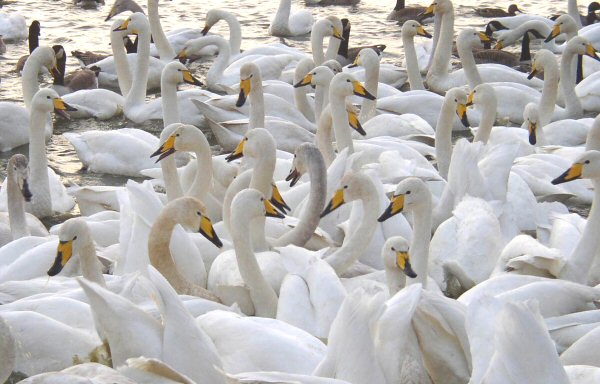
This winter, if that’s what you choose to call it, has been very unseasonal with mild conditions in comparison to the recent year (2010/11 temps -18), and also a very wet winter, with December being the wettest on record here at Caerlaverock. The whole year has been very wet (second wettest year on record) leading to all of the fields completely saturated. Given these conditions there have been so much natural food around the birds have not come in, in as big a numbers as usual. I will rewind a little to the end of autumn before the Whooper Swans, Barnacle Geese and wintering wildfowl turned up. Given the wet year, come harvest time all the local farmers tried to make the most of a break in the weather and harvest their crop however, during this time the rains came back down and the farmers rushed to get the crop in. During this rush a lot of grain was spilt in all the stubble fields and this combined with the rain knocking grain off the crop, the fields were therefore completely laden with excess feed. When the first Whooper Swans arrived back it didn’t take them long to realise this and all the swans would be feeding in all the local stubble and only turning up to roost on the reserve. To try and counter this we placed tons of grain on the back of the Folly Pond so that when the Whooper Swans woke up they didn’t head straight off to the grain fields. Sadly though we couldn’t do this every day so the typical swan feeds mainly consisted of Wigeon and Mallards. As the winter continued to present day a lot of swans still remain in the local agriculture fields around the areas, using old potato crops, turnips, stubble, and grass fields. The swans are now however coming in for the feeds on a daily basis and you could typically expect to see around 150 Whooper Swans in for the swan’s feeds which occur at 11am and 2pm. We do also lead guided walks after each swan feed led by one of our wardens or our learning manager. |
|||||
 |
|||||
|
Whooper Swans during feeding session (© Brian Morrel) |
|||||
|
Our Barnacle Geese came in relatively late this year and still to this day not
all the birds have actually turned up on the reserve. The highest count of
this winter is 14,000 but on a typical day you could expect to see between
5,000 - 9,000 birds feeding on the grass fields on the reserve. Over this
winter period we have also had the return of the adult Ross’s Goose which we
believe has followed the Barnacle Geese north on their migration and also on
the same day we also found a Lesser Canada Goose of the race taverneri . This
bird was later seen in the end of January with a large flock of Barnacle Geese
just off the reserve, and the Ross’s Goose was located for the second year in
Rockcliffe Marshes, Cumbria. We also had good numbers of Eurasian
White-fronted Geese arrive at Caerlaverock over the winter. This is unusual
for here as we tend to find the Greenland race a more common visitor. In
January a Red-breasted Goose was found with the Barnacle Geese and remained at
Caerlaverock on and off for a week, but there were no further sightings of
this bird in February. |
|||||
|
Wintering wildfowl numbers have remained constant this winter with good
numbers of Teal (1,200) and Wigeon (1,500) in with the Teal we have had two
American Green-winged Teal. We also have good numbers of Shelduck
on the
saltmarsh with counts of up to 1,200 on high tides. Greater Scaup also have
been recorded in good numbers off the saltmarsh with the peak count at around
1,600 but numbers of Shelduck and Scaup have started to drop away over the
last month. Gadwall numbers have remained at 13 individuals, all confined to
the Teal Pond, bar a single adult which is on the Whooper Pond and was a
ringed as a juvenile 5 years ago at Caerlaverock. |
|||||
|
Red-breasted Goose (© WWT Caerlaverock) |
|||||
|
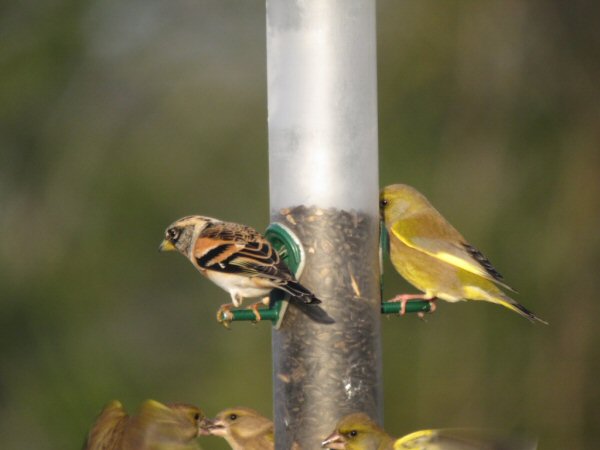
Passerine numbers have been low in terms of counts of Reed Bunting, Yellowhammer and Brambling. The maximum counts of two Brambling were observed in the car park feeder and a single male has been present on and off all winter on the feeding stations. Yellowhammers were very late to arrive into Caerlaverock this winter. Last winter the harsh conditions enabled us to get maximum counts of 120 but currently this winter counts have rarely exceeded 30 individuals. Reed Buntings numbers have also followed the same trend with numbers around half of what we saw last year. |
|||||
 |
|||||
|
Brambling on feeders at Caerlaverock WWT (© Mike Youdale) |
|||||
|
|
|||||
|
Mike Youdale |
|||||
 |
|||||