Use of bird-friendly glass saves birds' lives
A University of Mississippi ornithologist and researcher is working to make the windows on campus safer for birds.
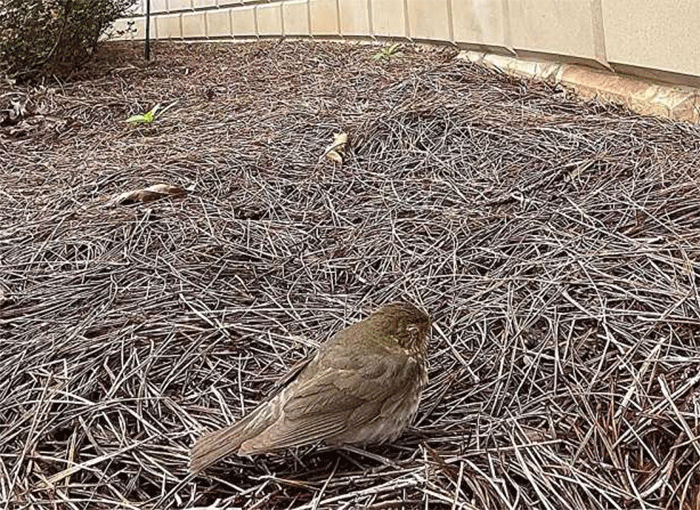
While they help us see more of the world, windows are the No. 1 human threat to birds. According to the U.S. Fish & Wildlife Service, more than 1 billion birds a year collide with glass in the U.S. alone. Jason Hoeksema, professor of biology, has compiled surveys of the number of birds killed by flying into glass windows across campus.
Students in his ornithology class surveyed 11 Ole Miss buildings daily and found 69 dead birds - including wood thrushes, yellow-billed cuckoos, and Tennessee warblers - over a five-week period this spring.
"The problem with most windows is that they reflect," Hoeksema said. "They act as mirrors. They reflect habitat, they reflect trees, they reflect the sky, and birds fly full speed right into them."
Though birds collide with glass throughout the year, it happens the most when they are on the move during spring and fall migrations, according to the U.S. Fish & Wildlife Service.
Modern construction often features large windows and other glass areas to provide more natural lighting. An unintended consequence of that has been an increase in the number of birds flying into the windows.
A promising solution in new construction is fritted glass, which has small dots etched at regular intervals into the panes, Hoeksema said. Similarly, existing windows can be covered with decals that have a dot pattern.
The dots help birds recognize the glass as a solid surface and repel more than 90% of birds flying toward them.
The concept has been proven through a collaboration with the School of Law. When an initial survey was completed in 2020, an alcove on the south side of the Robert C. Khayat Law Center emerged as a particularly dangerous spot on campus because of its large windows, Hoeksema said.
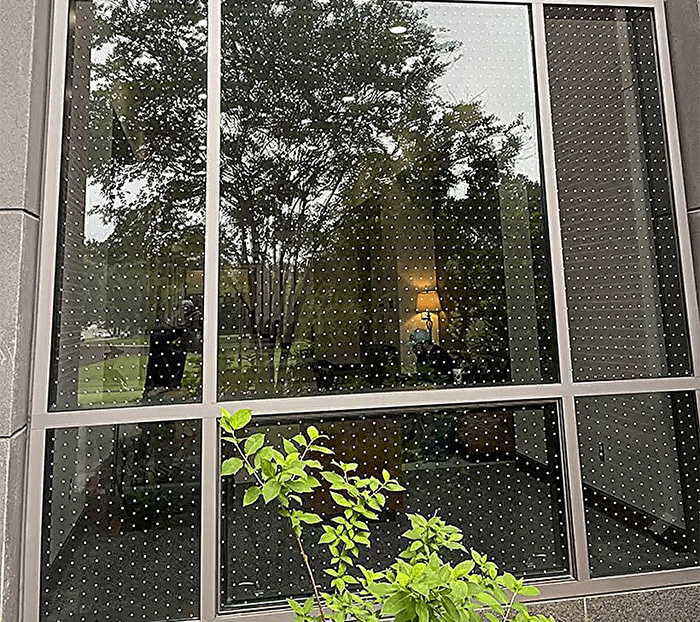
Law school leadership worked with the Facilities Management Department to add dot decals to the window to repel birds.
During the spring survey, students found no dead birds around that window.
Besides the test window at the law school, the only campus location outfitted with bird-friendly glass is the new Jim and Thomas Duff Center for Science and Technology Innovation.
Bird strikes are a global phenomenon but university officials hope to make a difference, said Chad Hunter, university architect.
"As we plan for the future of our campus, we're increasingly mindful of how design choices affect the environment," Hunter said. "The use of fritted or patterned glass is one of several approaches we're exploring to help reduce bird collisions while preserving daylight, visibility and energy efficiency.
"Projects like the Duff Center and the law school give us valuable insights as we look at future opportunities across campus."
Academic buildings are not alone in posing a threat, Hoeksema said. Large commercial buildings and even residential windows can also be deadly for birds.
"My own house; we've had tragic bird mortality on some of our windows," Hoeksema said. "There are products you can buy that aren't too expensive - dot patterns, line patterns or external screens - that can make a big difference."
June 2025
Share this story