Seabirds threatened by trawl fisheries
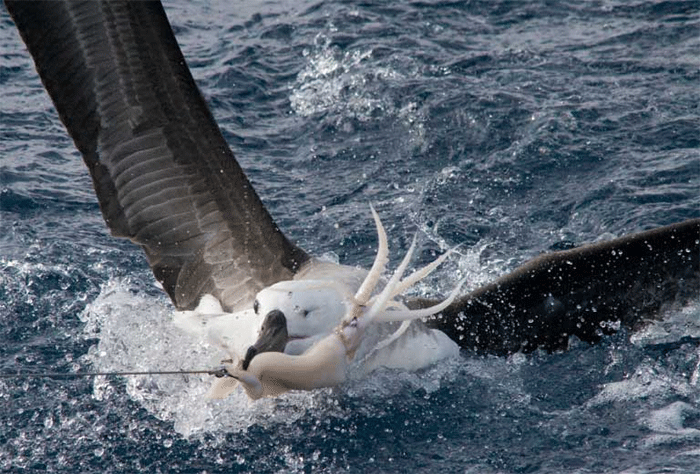
Seabirds are among the most threatened creatures globally, often due to incidental mortality (bycatch) in fisheries. Several hundreds of thousands of seabirds are thought to be killed worldwide each year by two of the three main types of fishing gear, gillnets and longlines. However, the extent of global mortality in trawl fisheries has remained largely unknown - until now.
A new study published this month (July 2024) in the journal Biological Conservation reveals alarming statistics. The team from British Antarctic Survey (BAS) and RSPB combined bycatch totals from cable strikes and net captures from 25 monitored trawl fisheries and discovered that at least 44,000 seabirds are killed each year.
Lead author Professor Richard Phillips, a seabird ecologist at British Antarctic Survey, says: “This is an eye-watering statistic. Our findings show that ten trawl fisheries catch in the order of hundreds of birds, seven fisheries caught thousands, and one fishery caught tens of thousands of birds annually. The total bycatch from all monitored fisheries amounts to around 44,000 birds per year but as many fisheries are unmonitored or poorly monitored, the actual global mortality in trawl fisheries will be far higher.”
The most bycaught species were the iconic albatrosses and large petrels, many of which are threatened, in the Southern Hemisphere, and gannets in the Northern Hemisphere. The good news is that a small number of long-term studies indicate that mitigation measures, particularly strategic offal management (particularly avoiding the discarding of fish waste and unwanted catch during trawling), and bird-scaring lines, effectively reduce bycatch rates.
Co-author and bird ecologist Oli Yates from RSPB says: “The long-term solution to this devastating impact has to be more innovative fishing vessel design to effectively manage discards, but in the short-term we need to see companies commit to a rapid adoption of simple, economical and highly effective measures like bird-scaring lines as already championed by a small number of responsible fisheries.”
Urgent action is required. Improved regulations, rigorous monitoring of compliance, and accurate bycatch rate assessments are essential to prevent trawl fisheries from continuing to decimate vulnerable seabird populations.
30 July 2024
Share this story