


Salvin's Albatross Rescued After Ingesting Four Fishing Hooks
Incident highlights global by-catch risks for vulnerable seabirds and the vital role of fisher-reporting and mitigation tools
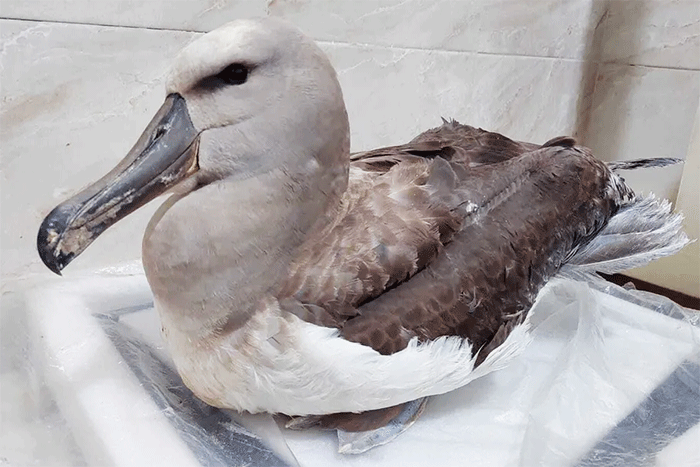
A narrow escape at sea
One of the world’s least-studied albatrosses, the Salvin’s Albatross, has made a successful recovery after undergoing surgery to remove four large fishing hooks and attached line it ingested off the coast of Ecuador. The bird was found grounded in the port of Anconcito by a local artisanal fisherman who recognised the problem and alerted wildlife authorities. The hooks were removed, the bird rehabilitated, and it was successfully released in late October.
This incident brings into sharp relief the global issue of by-catch – the unintended capture or injury of non-target marine species by fishing gear – and shows how even highly mobile seabirds that spend most of their lives at sea face dangerous interactions with fisheries.
From deep oceans to shallow trouble
While Salvin’s Albatross breeds on remote sub-antarctic islands south of New Zealand and Australia, after the breeding season it migrates thousands of kilometres to forage off the Pacific coast of South America. It was during this journey that the albatross must have encountered baited hooks, likely from a mahi-mahi fishery. The hooks removed included one that had injured the bird’s oesophagus – a sign of serious internal damage and a very narrow path to survival.
The species’ life history makes it especially vulnerable: it lays only one egg per year, reaches breeding age at around 11 years, and its global population has declined from about 88,000 breeding pairs in the 1970s to roughly 50,000 today.
Working across borders to reduce risk
Because seabirds like this albatross roam vast oceanic regions and interact with fisheries in multiple countries, international collaboration is crucial. In this case, the incident prompted coordination among local fishers in Ecuador, the NGO American Bird Conservancy (ABC), and researchers in New Zealand and Peru to improve knowledge of the species, monitor its movements, and promote gear modifications.
One key mitigation tool is the “NISURI device,” which causes baited lines to sink more rapidly, reducing the window of time seabirds have to access them – and therefore the risk of hookings.
Implications for conservation
This albatross’s survival is a success story, but also serves as a warning. The hook ingestion incident illustrates the kinds of threats that can feed into long-term population declines even for wide-ranging species. Because Salvin’s Albatrosses breed late, lay only one egg, and have long lifespans, any increase in juvenile mortality can take decades to manifest as population decline.
Seabirds are among the most threatened groups of birds globally. Fisheries interactions – including by-catch, ingestion of gear or bait, and entanglement – remain a major cause of seabird mortality, alongside pollution, climate change, and habitat loss.
Call to action for fisheries and bird conservation
Conservation practitioners emphasise that no fisher wants to harm threatened seabirds, and that taking preventive steps is in everyone’s interest. The incident underscores the importance of:
- Timely reporting by fishers of injured or grounded seabirds.
- Development and deployment of safer fishing gear and techniques, such as rapidly sinking lines and bird-scaring devices.
- International collaboration and data sharing, since seabirds cross many national jurisdictions during their life cycle.
In this case, the key moment was the local fisher’s alertness. “Thanks to the timely report from an artisanal fisher, we were able to rescue this Salvin’s Albatross,” said Giovanny Suárez Espín of ABC’s Ecuador seabird by-catch programme.
Looking ahead
For the Salvin’s Albatross and similar seabird species, the message is clear: fewer hooks in the sea and smarter gear mean better chances of survival. Each saved bird counts not just as an individual victory, but as a contribution to the long-term health of a species under threat.
November 2025
Get Breaking Birdnews First
Get all the latest breaking bird news as it happens, download BirdAlertPRO for a 30-day free trial. No payment details required and get exclusive first-time subscriber offers.
Share this story





