



RBA Annual Birding Roundup 2022: Part 2
Autumn

Early autumn saw popular Rollers in Lincolnshire near Woodhall Spa on 24th-27th August and in Devon at Bere Ferrers on 4th-24th September, an adult Steppe Grey Shrike in Gloucestershire at Chipping Sodbury on 29th August, an adult Northern Brown Shrike in Aberdeenshire at Bullers of Buchan on 8th-10th September, a Franklin's Gull in County Cork at Lissagriffin on 18th September, and in Kent on 11th September a Short-toed Eagle - only the sixth for Britain - passing over South Foreland to reach Ash Level, and yet another Eleonora's Falcon, at Worth Marsh; the second of the year at that location..
Short-toed Eagle at South Foreland this morning with @jarpartridge - first in Kent and sixth for Britain. Still totally numb after the whole experience. Jamie messaged me on the drive down 'it feels like a raptor day', the lad weren't half right. pic.twitter.com/ZUHSDKPmdU
— Rich Bonser (@bonser_rich) September 11, 2022
The first Nearctic landbird of the season occurred out of the blue inland in Oxfordshire on 26th September, a Common Nighthawk in Wantage, where it roosted in full view on a garden fence until dusk.
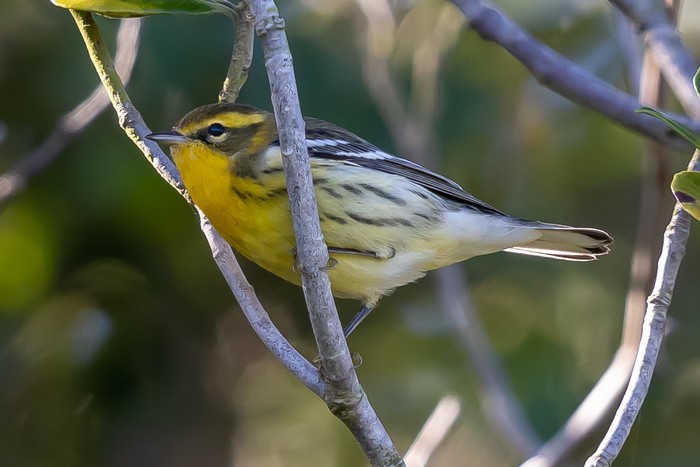
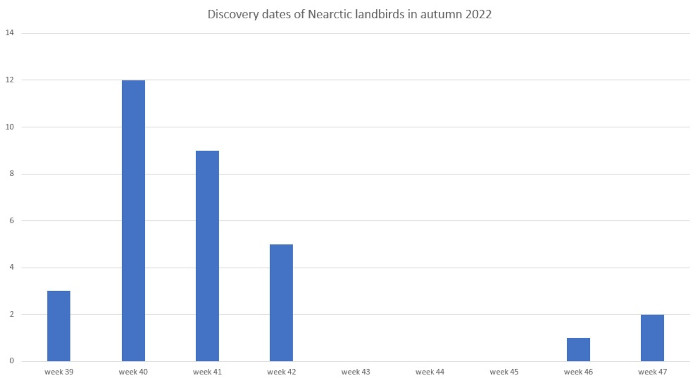
2022 went on to be bumper autumn for Nearctic landbirds with Atlantic depressions aiding a total of 32 individuals of 13 species across Britain and Ireland by 25th November most notable of which were the fourth ever - and first twitchable - Blackburnian Warbler on the Isles of Scilly on Bryher, the first Tennessee Warbler for Wales on Skokholm, Pembrokeshire, an adult Baltimore Oriole in Devon on Lundy, and influxes of four Myrtle Warbler, five Swainson's Thrushes, and nine Red-eyed Vireos.
Nearctic landbirds in Britain and Ireland in autumn 2022, as it happened
26th September
- Common Nighthawk Wantage, Oxfordshire

28th September
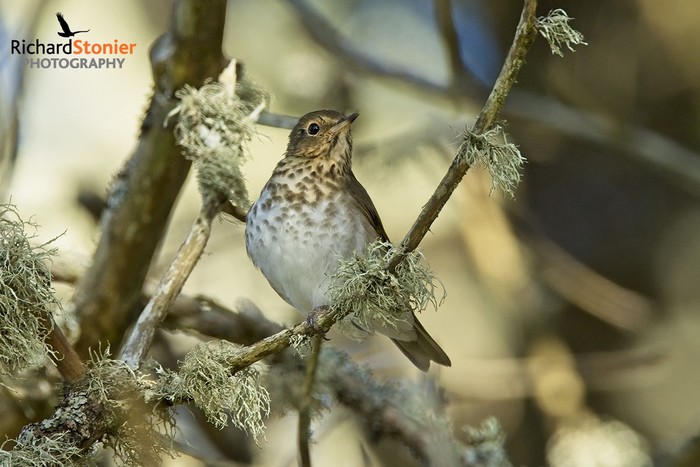
- Swainson's Thrush Barra, Western Isles
29th September
- Swainson's Thrush Yell, Shetland, until 1st October
1st October
- Red-eyed Vireo Kilbaha, County Clare
- Red-eyed Vireo Inishmore, County Galway
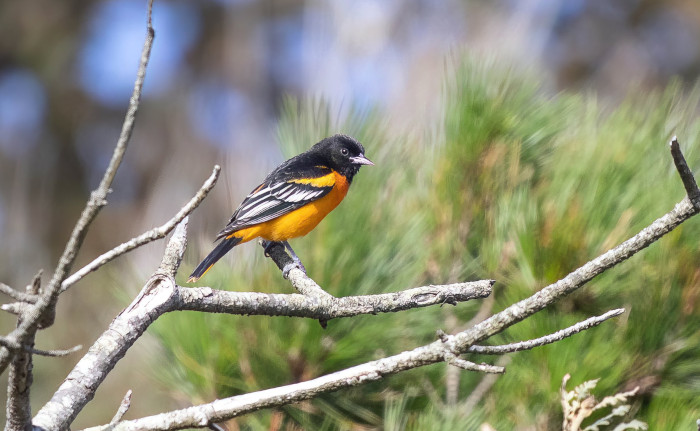
- Baltimore Oriole Kilbaha, County Clare, until 2nd October
- Bobolink Garinish Point, County Cork
2nd October
- Red-eyed Vireo Kilbaha, County Clare, until 3rd October
- Blackpoll Warbler Nanjizal, Cornwall
4th October
- American Buff-bellied Pipit St Kilda, Western Isles
5th October
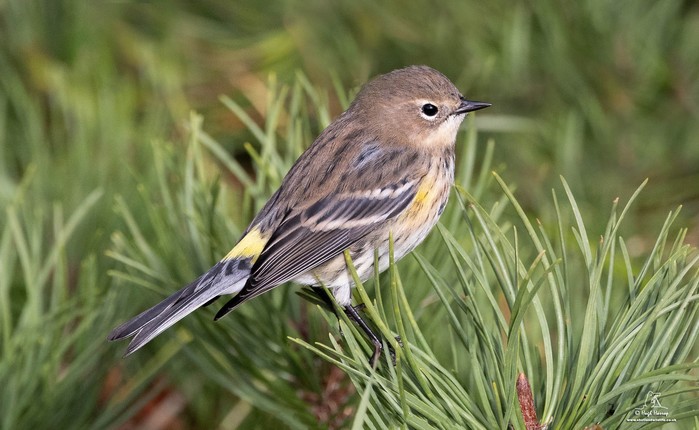
- Myrtle Warbler Ellister, Shetland, until 7th October
6th October
- Swainson's Thrush Tresco, Scilly, until 12th October
7th October
- Myrtle Warbler Bigton, Shetland, until 10th October
- Swainson's Thrush The Mullet, County Mayo
- American Buff-bellied Pipit North Ronaldsay, Orkney
8th October
- Baltimore Oriole Lundy, Devon
- American Buff-bellied Pipit St Mary's, Scilly, until 29th November
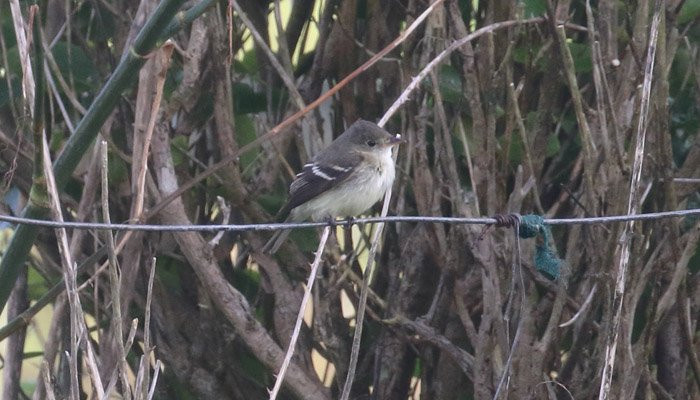
- Alder Flycatcher Inishbofin, County Galway, until 11th October

9th October
- Red-eyed Vireo Kilbaha, County Clare

11th October
- Red-eyed Vireo St Mary's, Scilly
12th October
- Myrtle Warbler Kilbaha, County Clare, until 22nd October
- Tennessee Warbler Skokholm, Pembrokeshire

13th October
- Blackburnian Warbler Bryher, Scilly, until 28th October
14th October
- Red-eyed Vireo Firkeel, County Cork, until 29th October
15th October
- Red-eyed Vireo Tregeseal, Cornwall
- Red-eyed Vireo Boulmer, Northumberland
16th October
- Blackpoll Warbler Inishbofin, County Galway
- Swainson's Thrush North Uist, Western Isles, until 17th October
17th October
- Red-eyed Vireo Mizen Head, County Cork, until 21st October
16th November
- Grey-cheeked Thrush Newcastle, County Wicklow

24th November
- Myrtle Warbler St Mary's, Scilly, until 28th October
25th November
- White-throated Sparrow Northwich, Cheshire, until the year end
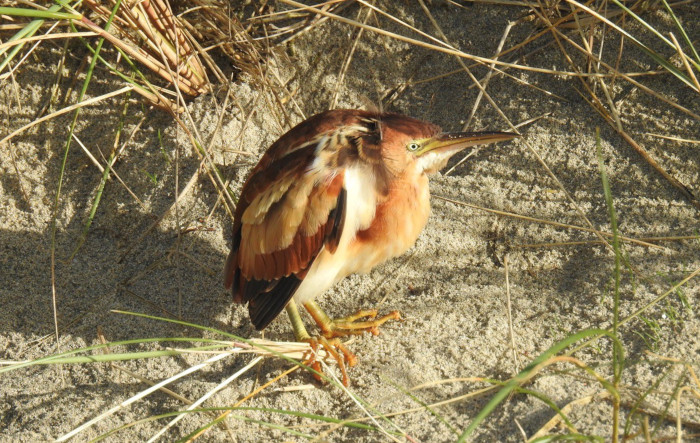
The same Atlantic storms brought a Least Bittern to Shetland at Scousburgh, Mainland on 7th October; a new bird for Britain. Clearly exhausted the bird was soon taken into care and sadly died overnight.
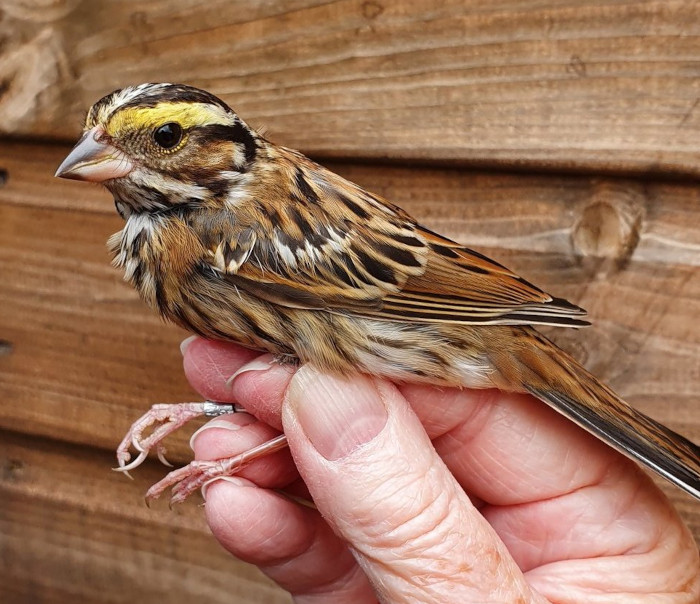
Three mega rarities on the English mainland evaded all but their finders and closest associates: a Yellow-browed Bunting trapped in Kent at Sandwich Bay on 10th October was the first in Britain since 1998 and only the sixth ever, an American Purple Gallinule videoed by tyros in Somerset at Dunster 15th-16th November but had disappeared before any birders arrived, and a Black-faced Bunting trapped and ringed in Cornwall at Nanjizal Valley on 19th November; the eigth record for Britain.

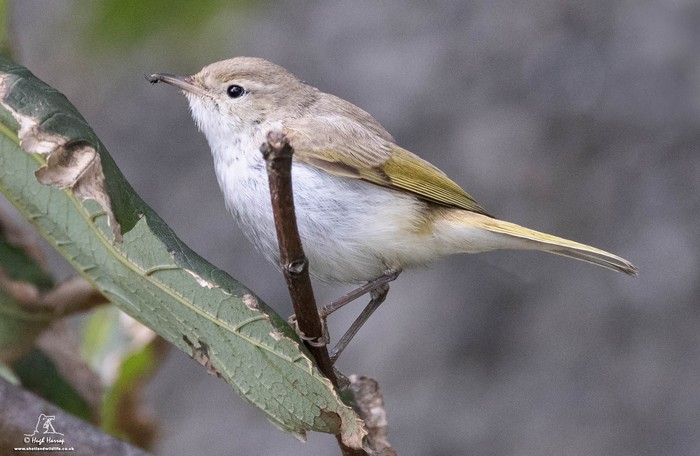
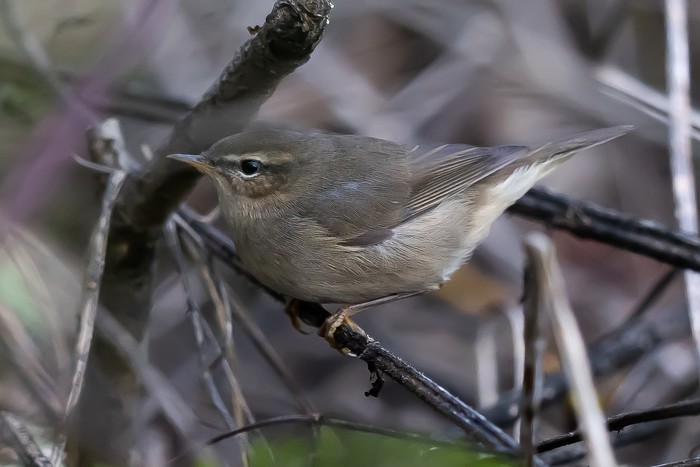
Rare Old World warblers included an Eastern Olivaceous Warbler in County Dublin at Howth Head on 12th-17th September, a genetically confirmed Turkestan Lesser Whitethroat on Orkney on North Ronaldsay on 23rd-27th October - a typical date, the majority of British records of this subspecies have occurred in late October - two Pallas's Grasshopper Warblers, four Lanceolated, five each of Paddyfield, Booted, and Subalpine Warbler species, seven Western Bonelli's, 10 Aquatic, 13 Hume's, 23 Greenish, 27 Blyth's Reed, 28 Arctic, 32 Radde's, and 41 Dusky Warblers.
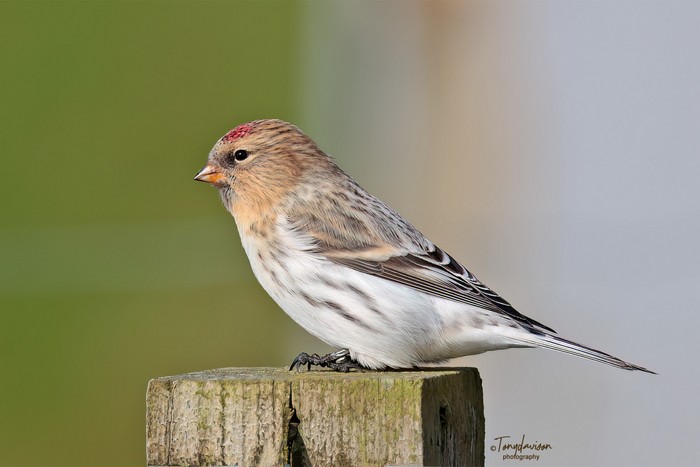
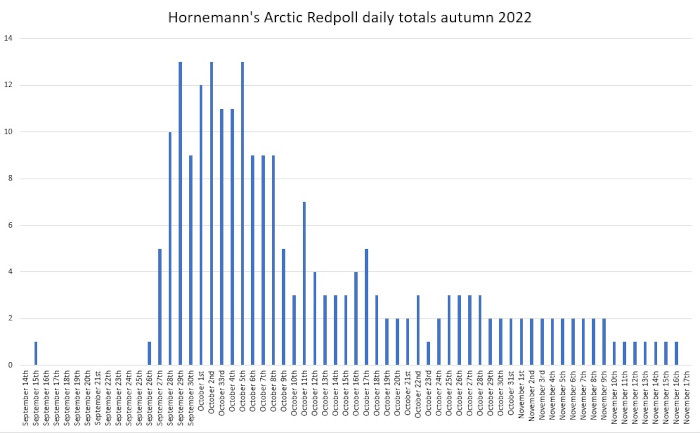
A record influx of Hornemann's Arctic Redpoll began on 15th September on Fair Isle, Shetland with at least 49 individuals located by the 25th October.
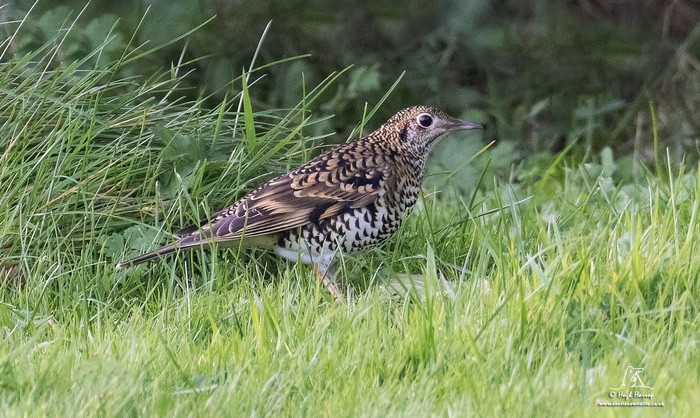
Rare thrushes from Eurasia started with a Siberian Thrushes found dead on Orkney on Papa Westray on 27th September with another found alive on Shetland on Yell on 1st October, White's Thrushes were on Orkney on North Ronaldsay on both 27th September and 23rd October, and on Shetland in Lerwick on 9th-10th October, a Blue Rock Thrush in Norfolk at Winterton-on-Sea on 20th October, a Dusky Thrush in Lothian at Dunbar on 21st October, and a Black-throated Thrush in Orkney on North Ronaldsay 9th November.


Pipits and wagtails comprised three Pechora Pipits including one briefly on St Mary's, Scilly on 19th October, six Eastern Yellow Wagtails including the first for Yorkshire at Kilnsea on 27th-28th October, 12 Red-throated Pipits, 23 Citrine Wagtails, and 37 Olive-backed Pipits.

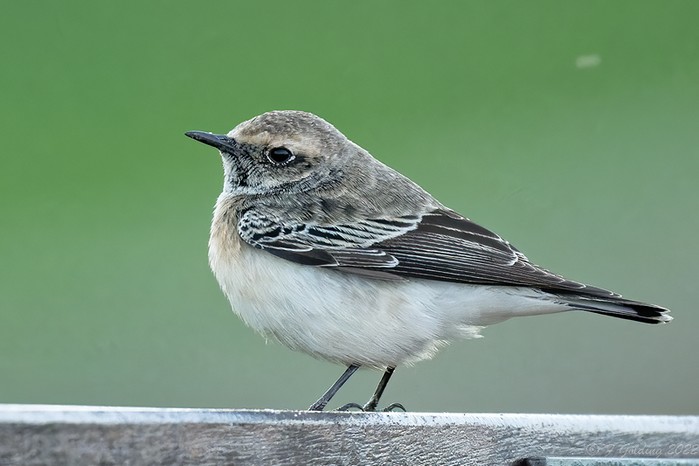
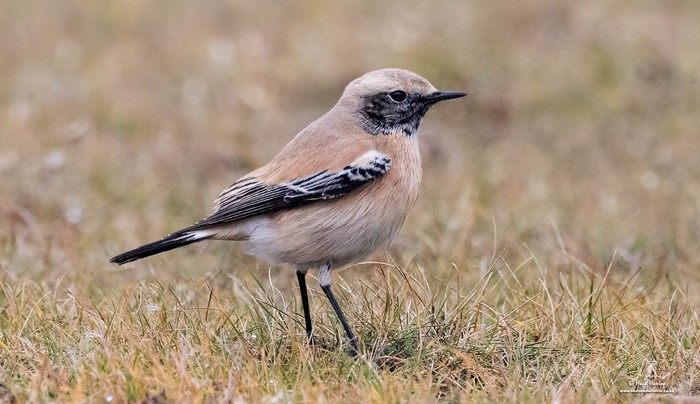
Robins and chats included a Siberian Rubythroat on Shetland at Quendale, Mainland on 20th October, an Eastern Black Redstart on Orkney on North Ronaldsay 23rd October-1st November, a Pied Wheatear in Northumberland at Whitley Bay on 1st-12th November, three Isabelline Wheatears, four Desert Wheatears, eight Eastern Stonechat species including two on Shetland and one in Kent genetically confirmed as Siberian Stonechat, and a Stejneger's Stonechat in Fife at Crail on 22nd-25th October, and a total of 25 Red-flanked Bluetails.

The rarest of seabirds as this time were a Swinhoe's Petrel seen from land at Ballycotton, County Cork on 11th October, a Black-browed Albatross off Stromness, Orkney Isles on 14th October, and a Brown Booby in County Dublin at Dublin Port 20th October; the later presumably having completed its journey there onboard a boat.
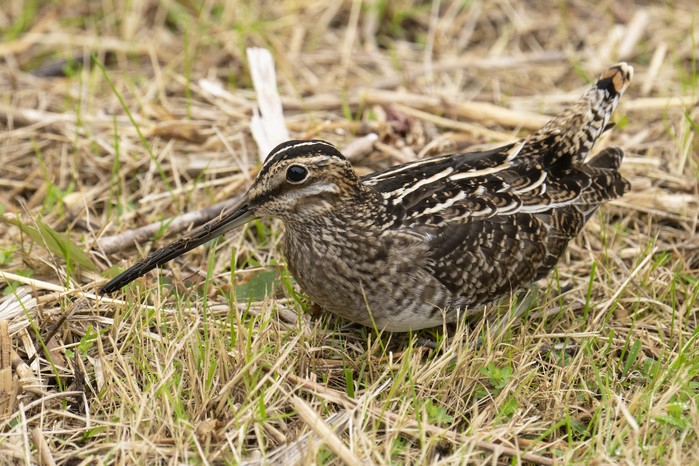
Late autumn waders were headlined by a Wilson's Snipe on the Isles of Scilly on St Mary's between 11th October and 25th November, a Collared Pratincole tracked between Northumberland and Gloucestershire between 12th and 31st October, a Black-winged Pratincole in Cheshire at Ince on 22nd October, two each of Pacific Golden Plover and Wilson's Phalarope, three Spotted Sandpipers, four Semipalmated Sandpipers, six Great Snipe split between Orkney and Shetland and including up to three on Fair Isle between 10th-17th September, six White-rumped Sandpipers, 10 each of both Baird's Sandpiper and Lesser Yellowlegs, 12 Long-billed Dowitchers, and two apparent Eastern Bar-tailed Godwits on Fair Isle on 30th October, the latter potentially the first records for the Western Palearctic of the subspecies pair baueri/menzbieri.
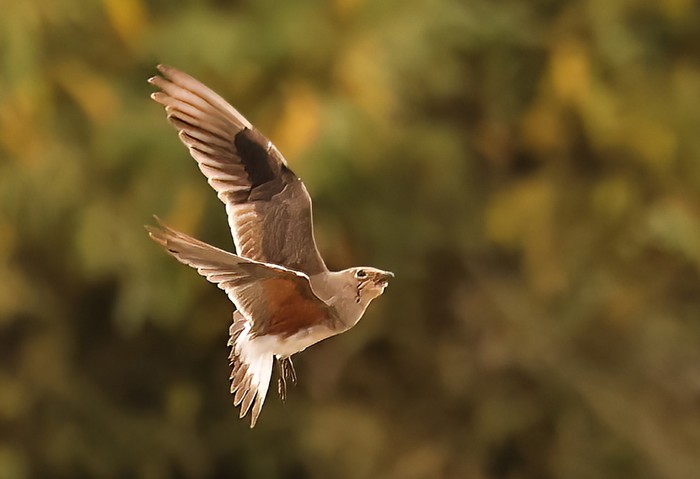
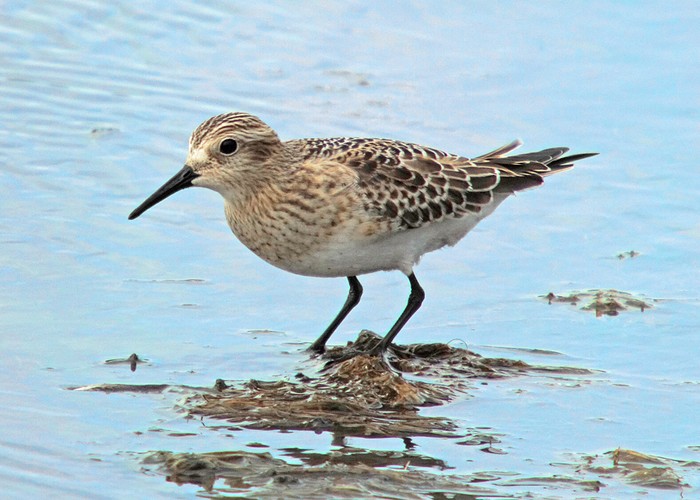
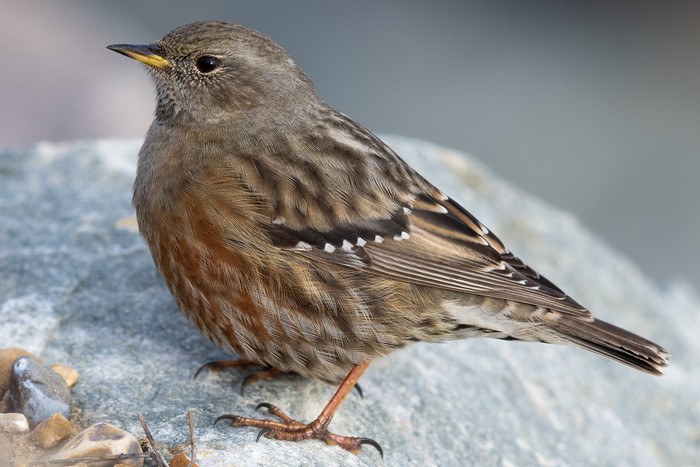
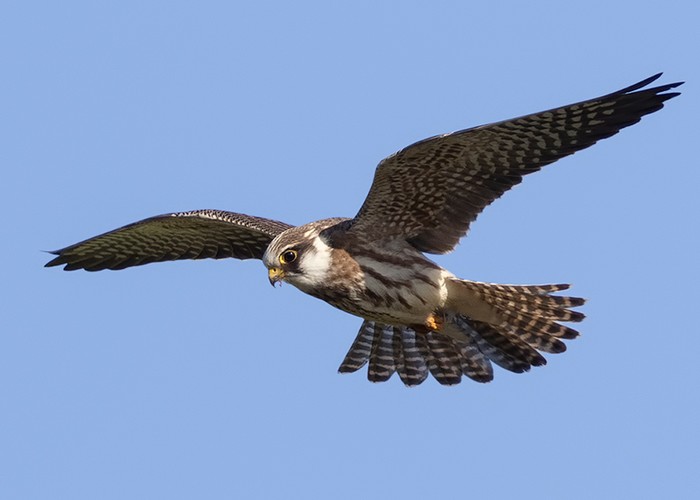
Other headline birds of the autumn were a white morph Gyr on the Western Isles on Lewis on 27th September, a juvenile Whiskered Tern in Angus at Loch of Forfar on 16th-24th October, a juvenile Rufous Turtle Dove on Shetland at Quendale on 24th-28th October, well-received Alpine Accentors in Suffolk at Slaughden on 27th-29th October and Norfolk at Blakeney Point on 30th October-3rd November, (just) three Rustic Buntings, three Azorean Yellow-legged Gulls in Ireland, four Blue-winged Teals, an unprecedented influx of 10 juvenile Red-footed Falcons between 30th August and 9th October, and a total of 19 Pallid Harriers.

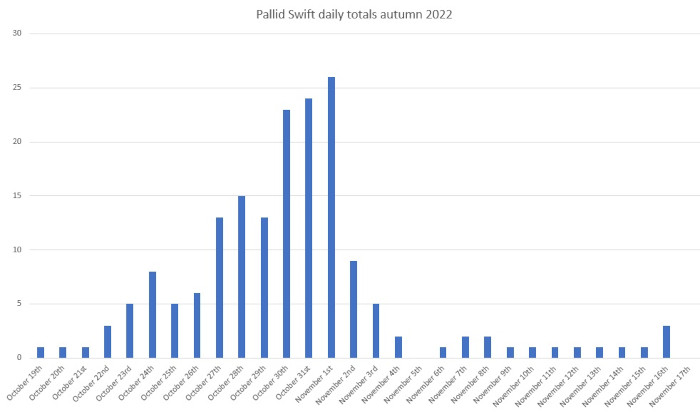
A truly remarkable influx of Pallid Swifts began on 21st October and lasted until 16th November with 116 identified during this period whilst many more sightings of unidentified swift species most likely to have been Pallid Swifts also. An associated product of the warm southerly winds at this time was a Little Swift in Somerset at Brean Down on 30th October.

Winter
Seaduck dominated the late winter period with a Stejneger's Scoter - a potential first for Britain - suspected in Lothian at Gullane Point on 10th December and logged again there and a nearby Longniddry intermittently until 20th December. However, it always kept its distance and some of the inevitable record shots taken on the 11th appear anomalous for adult male Stejneger's Scoter due to the distribution of colour on the bill being closer to that of White-winged Scoter; an adult male of which has been visiting the Lothian coast since at least 2018 and has since even been present at Longniddry on 2nd-3rd January 2023, earlier it had again been offshore at nearby Musselburgh Lagoons on 25th October-9th November. News of a Harlequin Duck in Argyll on Coll on 22nd December broke too late for people to react but the first White-winged Scoter for Ireland, a first-winter female, discovered in County Mayo at Tonatanvally, Achill Island from 29th December was well twitched, male Black Scoters returned again to County Kerry and Northumberland, and four King Eiders were logged.

Two Buffleheads together in County Mayo at Carrowmore Lake on 12th November gave credence to the adult male Hooded Merganser present in County Mayo at Rosadune from 19th November until the year end, although a parallel occurrence of another adult male Hooded Merganser at a similar west coast tidal inlet in adjacent County Galway in autumn 2018 was a ringed escape. The second Black Duck of the year to be suppressed was in Glamorgan at Llanrhidian Marsh on 20th-21st December, seven Lesser Scaups were identified, and seven Ferruginous Ducks including a remarkable four together in the Norfolk Broads. Rare geese were represented by single Red-breasted Geese with Barnacle Geese both on the Western Isles on North Uist on 25th-29th October and at Anthorn, Cumbria from 27th December, and a total of 10 Richardson's Cackling Geese including four in Argyll.
Other returning rarities back in-situ were the Kentish Plover in Somerset at Burnham-on-Sea from 24th September, the female Northern Harrier in County Offaly at Lough Boora Parklands on 27th October-3rd November, American Coot in County Kerry at Cromane on 17th November, and a Pacific Diver reported again in Cornwall at Gerrans Bay on 17th December.

Rare waders were headlined by a Greater Yellowlegs in County Waterford at Tallow from 15th December and three Spotted Sandpipers including one at Hanningfield Reservoir, Essex from 18th November-11th December. Gulls included perhaps as many as seven different Bonaparte's, a third-winter Azorean Yellow-legged Gulls in Shropshire at Ellesmere on 10th-12th November, a brief first-winter Ross's Gull on the Shetland Isles at Loch of Spiggie on 18th November, and a first-winter American Herring Gull in Cornwall at Drift Reservoir from 29th December; the latter the last new species to be found during the year.

Passerines included the first ever over-wintering Isabelline Wheatear, in Devon at Colyford Common from 20th December where it was joined by an Eastern Yellow Wagtail from Christmas Day, a Sardinian Warbler suppressed in Lancing, West Sussex from November, two Black-throated Thrushes in Scotland in December with a male in Lothian in Haddington on 9th-15th and another in Dunblane, Forth on 16th-17th December, whilst three Arctic Redpolls were identified during that month: in Lincs at Gibraltar Point on 5th, in Essex at Grays on 6th, and most notably of all at Dunilly, County Antrim from 30th. At least 11 different Penduline Tits were located in the late winter period from 3rd November onwards comprising up to five together in East Sussex at West Rise Marsh from 19th November, a pair in Kent at Elmley, and singles in each of Cheshire, Devon, Greater Manchester, Norfolk, and the Isles of Scilly.


Finale
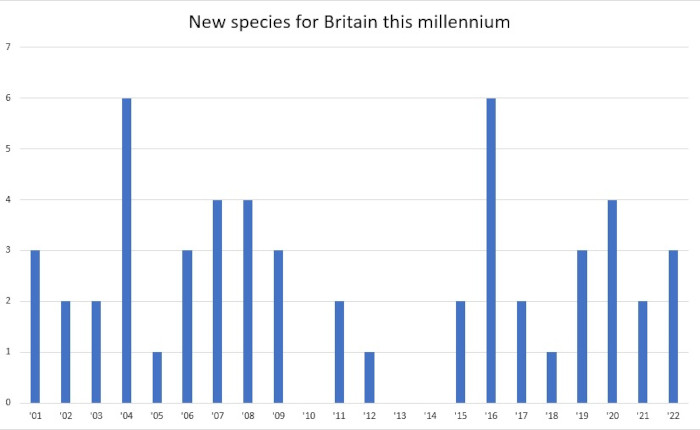
2022 closed with 453 species recorded across Britain and Ireland of which 412 were twitchable to some extent. Just one new species for the region was recorded - the Kelp Gull in Cambridgeshire in August - making it the poorest year for firsts since 2018.
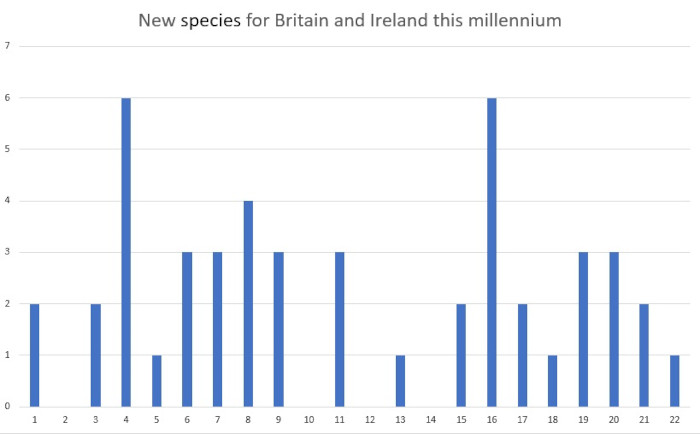
However, two further firsts for Britain were the Least Bittern on Shetland in October and the Stejneger's Scoter in Lothian in December. Ireland recorded four potential national firsts with Eastern Black-eared Wheatear in County Clare in June, Scopoli's Shearwater off County Cork in August, Alder Flycatcher in County Galway in October, and White-winged Scoter in County Mayo in December.
Notable omissions this year, with no records, were Two-barred Crossbill, Ivory Gull, Great Spotted Cuckoo (now not twitchable for three years), Blyth's Pipit (not readily-twitchable for four years), and Pine Bunting.
There now hasn't been a twitchable Marsh Sandpiper, Terek Sandpiper or Slate-coloured Junco for three years, a Forster's Tern in Britain for six years, a twitchable Lesser White-fronted Goose or Spanish Sparrow for ten years, and Sharp-tailed Sandpiper and Baltimore Oriole have not been readily twitched for eleven years, all will be welcomed in 2023 when perhaps one or more of Lanceolated Warbler, Siberian Rubythroat, Mourning Dove, or possibly Pine Grosbeak will finally give themselves up on the British Mainland, and yet again a dearth of Ring-billed Gulls with perhaps just nine in Britain all year four of which were returning adults (in Clyde/Perth and Kinross, Cornwall, Hampshire, and Lothian).
Chris Batty
January 2023
Many thanks to everyone who contributed photos and videos throughout 2022
Share








