


North Sea windfarms reducing Red-throated Diver populations
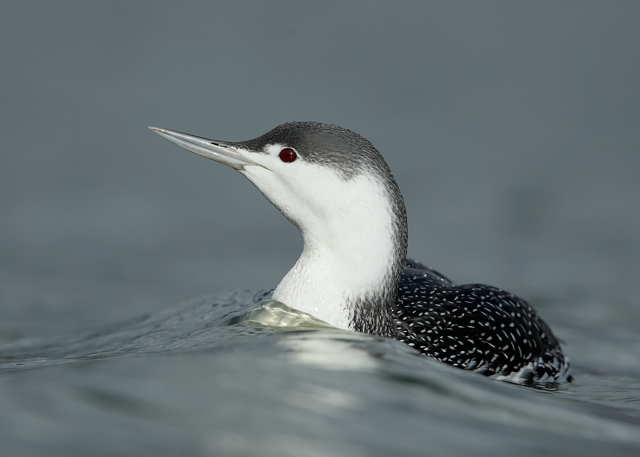
Offshore wind farms in the North Sea have reduced the population of divers by 94% within a one-kilometre zone, according to new research published in Scientific Reports. The findings highlight the need to minimise the impact of offshore wind farms on seabirds, while balancing this effort with the demand for renewable energy.
Previous research has found that different seabird species respond to offshore windfarms differently - they may avoid the area which can lead to habitat displacement or they may be attracted to the area which can increase mortality via collisions with the turbines. However, it is difficult to estimate the long-term population impacts of offshore windfarms on seabird populations.
Stefan Garthe and colleagues investigated how Red-throated Diver abundance changed before and after the construction of five offshore windfarm clusters in the southeastern North Sea dubbed BARD/Austerngrund, Dan Tysk, Butendiek, Helgoland, and North of Borkum. The authors used data on diver numbers from ships, aircraft, and digital aerial surveys collected during March and April between 2010 and 2017. They modelled how the density of diver populations changed within the area up to and beyond ten kilometres away from the windfarm.
The authors report that distribution and abundance of divers changed significantly after the windfarms were built, with a low abundance of divers in the immediate vicinity of the turbines creating a "halo effect." Diver numbers decreased by 94% within one kilometre of the windfarms, and 54% within ten kilometres. In particular, divers completely disappeared from the vicinity of BARD/Austerngrund and North of Borkum windfarm clusters.
The birds instead congregated at high densities in an area to the north west of the Helgoland windfarm cluster. Overall, the total population estimate of divers fell by 29.24% from 34,865 individuals before windfarm construction to 24,672 birds after construction. The authors report that no other seabirds had such a significant negative reaction to the presence of the windfarms.
The authors suggest that the construction of the offshore windfarms will have affected how the divers forage for fish, as their movements are now restricted to smaller areas. They recommend increasing the study of cumulative effects of windfarms throughout the year across the entire region of farms.
18 April 2023
Share this story






