


Moths are more efficient pollinators than bees
by Butterfly Conservation
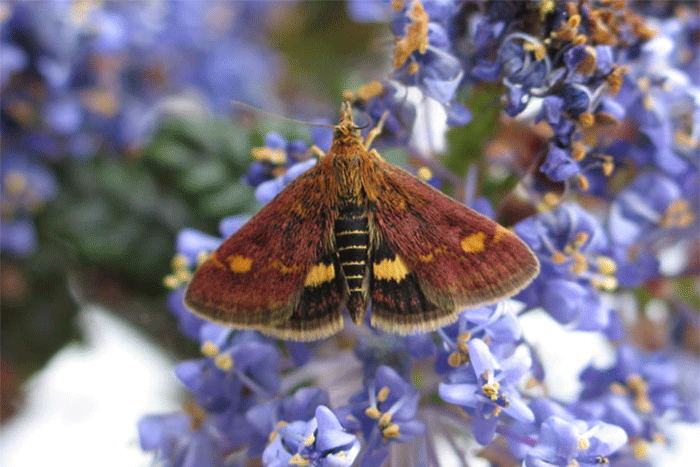
Moths are more efficient pollinators at night than day-flying pollinators such as bees, new research from the University of Sussex has found.
Amid widespread concern about the decline of wild pollinating insects like bees and butterflies, researchers from the University of Sussex, including Dr Max Anderson, Butterfly Conservation's South West Landscape Officer, have discovered that moths are particularly vital pollinators for nature.
Studying 10 sites in the south-east of England throughout July 2021, the Sussex researchers found that 83% of insect visits to bramble flowers were made during the day. While the moths made fewer visits during the shorter summer nights, notching up only 15% of the visits, they were able to pollinate the flowers more quickly.
As a result, the researchers concluded that moths are more efficient pollinators than day-flying insects such as bees, which are traditionally thought of as 'hard-working'. While day-flying insects have more time available to transfer pollen, moths are making an important contribution during the short hours of darkness.
Professor Fiona Matthews, Professor of Environmental Biology at the University of Sussex and co-author of this latest research says: "Bees are undoubtedly important, but our work has shown that moths pollinate flowers at a faster rate than day-flying insects. Sadly, many moths are in serious decline in Britain, affecting not just pollination but also food supplies for many other species ranging from bats to birds. Our work shows that simple steps, such as allowing patches of bramble to flower, can provide important food sources for moths, and we will be rewarded with a crop of blackberries. Everyone's a winner!"
Researchers studied the contribution of both nocturnal and non-nocturnal insects to the pollination of bramble. They monitored the numbers of insects visiting flowers using camera traps, and worked out how quickly pollen was deposited at different times of day by experimentally preventing insects from visiting some flowers but not others.
Additionally, the study indicates the importance of bramble, a shrub widely considered as unfavourable and routinely cleared away, but which is in fact critical for nocturnal pollinators.
Dr Max Anderson, South West Landscape Officer for Butterfly Conservation, was a PhD student working alongside Professor Matthews on the paper. Max says: "Moths are important pollinators, and they are greatly under-appreciated and under-studied. The majority of pollination research tends to focus on day-flying insects, with little understanding of what happens at night.
"Now we know that moths are also important pollinators, we need to take action to support them by encouraging some bramble and other flowering scrub plants to grow in our parks, gardens, road verges and hedgerows."
Pollinating insects are a vital part of many ecological communities and a very important part of the life-cycle. Pollinators allow plants to fruit, set seed and breed. This in turn provides food and habitat for a range of other creatures. So, the health of our natural ecosystems is fundamentally linked to the health of our bees and other pollinators. However, due largely to climate change and intensive agriculture, there is widespread decline in wild populations.
This research shows that both night-flying and day-flying pollinators need to be protected in order to allow natural ecosystems to flourish. As a result, researchers are also calling for the UK public to do their bit to protect moths by planting wild flowers, growing patches of scrub and rough grass, and turning off lights at night.
2 May 2023
Share this story






