Italy's largest Red-footed Falcon colony reaches new record
The country's biggest breeding population of Red-footed Falcons has grown again in 2025, setting a new high in northern Italy
A stronghold in the Po Valley
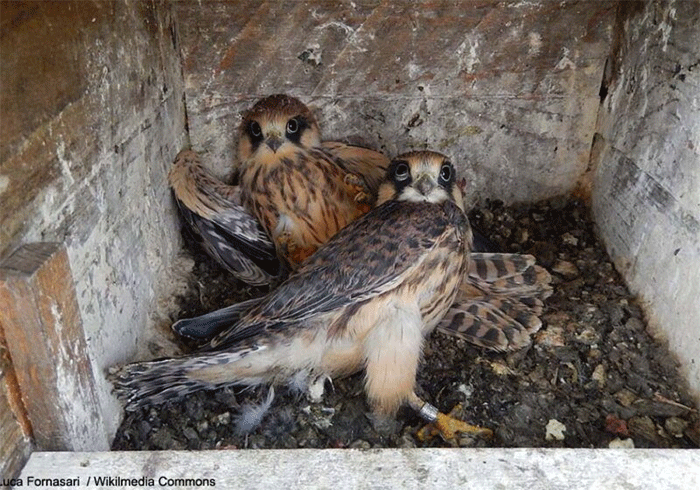
Italy’s most important breeding population of Red-footed Falcons has reached a new record in 2025, according to a report highlighted by Ornithomedia. The colony, located in the province of Parma, is now confirmed as the largest in the country and continues its steady expansion.
The latest breeding season has produced the highest number of occupied nests and breeding pairs ever recorded at the site, reinforcing Parma’s status as a national stronghold for this striking migratory falcon.
A sociable falcon of open country
Unlike many other European falcons, Red-footed Falcons often breed in loose colonies, typically using old corvid nests in tall trees. They favour open landscapes for hunting, feeding on large insects, small mammals and other prey over farmland and meadows.
The success of the Parma colony reflects the availability of suitable nesting trees combined with productive surrounding farmland. Open agricultural land provides rich feeding opportunities during the breeding season, especially where fields, grassland and scattered trees create a varied mosaic.
From local rarity to growing population
In Italy, Red-footed Falcons have traditionally been scarce and localised breeders. The continued growth of the Parma colony marks a significant shift, demonstrating how the species can respond positively when nesting sites are protected and feeding habitats remain favourable.
The 2025 record suggests that recent years have offered stable conditions for breeding, allowing the colony to build on previous gains.
Farmland as an opportunity
The expansion also highlights the role that agricultural landscapes can play for certain bird species. While intensive farming can pose challenges for wildlife, mixed farmland with suitable trees and abundant insect life can provide important habitat.
The Parma site shows how a working countryside can support a thriving breeding colony when key features – nesting trees and prey-rich fields – are maintained.
Securing the future
With numbers at an all-time high, attention will now turn to ensuring that the conditions underpinning this success are safeguarded. Protecting nesting trees and maintaining suitable foraging habitat will be crucial if the colony is to continue growing.
The new record is a welcome boost for a species that remains vulnerable in parts of its European range – and a reminder that, given the right landscape, even a once-rare breeder can flourish.
February 2026
Get Breaking Birdnews First
Get all the latest breaking bird news as it happens, download BirdAlertPRO for a 30-day free trial. No payment details required and get exclusive first-time subscriber offers.
Share this story