Spotted Flycatchers surge in Scotland as crash continues in England
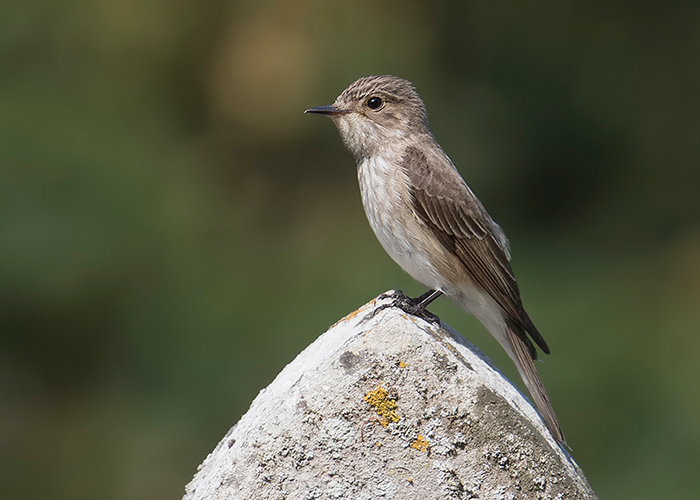
The latest survey results show that Spotted Flycatchers and Willow Warblers are thriving north of the England-Scotland border, whilst struggling south of it.
The latest Breeding Bird Survey (BBS) report, published today, shows a 66% increase for Spotted Flycatcher during 2011–2016 and a 21% upturn for Willow Warbler in Scotland over the last 23 years. In England, both of these birds are in trouble.
Since the start of the BBS in 1994, the UK has lost over a third of its breeding Spotted Flycatchers, and the decline in England has been a whopping 65%. The species is Red-listed and of the highest conservation concern, based on its longer-term decline. The Willow Warbler has fared better, with 9% of the UK breeding population being lost since 1994 - but the decline in England has been a worrying 40%.
The upturn in both of these long-distance migrants in Scotland, and the stark contrast with their fortunes in England, has been tracked thanks to record levels of coverage undertaken by volunteer recorders. A fantastic 2,814 people took time to survey birds during the breeding season in their allocated survey squares across the UK, allowing scientists at the British Trust for Ornithology (BTO) to build a very accurate picture of just how our bird populations are doing.
The BBS Report gives long-term trends for 117 common and widespread bird species, providing vital evidence to underpin the conservation of the UK’s birds.
Sarah Harris, BBS Organiser, at the BTO, said, “The BBS is a fantastic example of a citizen science project. We are delighted that coverage was at an all-time high in 2017. We owe these skilled volunteers a huge thank you, without them we wouldn’t be able to monitor what is happening to our breeding birds so closely and there are still squares available for skilled volunteers, able to identify bird species by sight and sound, to get involved.”
Dr Mark Eaton, Principal Conservation Scientist at the RSPB Centre for Conservation Science, said “Many of the birds which breed in the UK but migrate to spend the winter in sub-Saharan Africa are in decline. We need to understand more about the threats these birds face, and what lies behind patterns of changes that include welcome increases in Scotland but continuing losses in England for these and other species such as Cuckoo and House Martin.”
The BBS is a partnership between the British Trust for Ornithology (BTO), Joint Nature Conservation Committee (JNCC) and the Royal Society for the Protection of Birds (RSPB) and reports annually on how Britain’s widespread breeding birds are faring.
27 April 2018
Share this story