


Avian Influenza as disease killing thousands of inland gulls
by British Trust for Ornithology

Avian Influenza is killing large numbers of Black-headed Gulls at inland and coastal breeding colonies across central and northern England, prompting fears among scientists that a new wave of the disease could be building.
Researchers from the British Trust for Ornithology (BTO) want members of the public to help track the spread of Avian Influenza by reporting all dead birds through both the BirdTrack app and to Defra. In Northern Ireland, dead birds should be reported both through BirdTrack and DAERA.
More than 1,500 Black-headed Gulls are thought to have been killed by Avian Influenza at Marsh Lane Nature Reserve near Coventry, while around 800 are feared to have died at RSPB St Aidans, near Leeds, and around 250 at Rutland Water. The majority of sick or dying Black-headed Gulls confirmed to have Avian Influenza have been reported from sites between Buckinghamshire and Yorkshire, with cases also reported in Surrey and Montgomeryshire.
Although only a relatively small number of dead birds are tested for Avian Influenza, current sampling suggests very large numbers of Black-headed Gulls are already affected. All dead and sick birds of any species should be reported to BirdTrack, which allows researchers to follow the disease’s geographical spread and rapidly assess potential impacts on populations, and to Defra, so that if needed, dead birds can be collected for testing. These sources indicate that more than 4,000 Black-headed Gulls have died in just the past few weeks, and that the mortality rate is increasing.
This figure suggests that over 1% of the 140,000 pairs of Black-headed Gull thought to breed in the UK each year have died in the last few weeks - this in a normally long-lived species with a typical lifespan of 11 years is concerning. Worryingly, the breeding population has already been in decline for a number of years, and the species was placed on the Amber List of Birds of Conservation Concern in 2021. The impact Avian Influenza will have on this already struggling species remains unclear, but if the current rate of mortality continues it has the potential to have a large impact on this familiar and charismatic species. Black-headed Gulls nest alongside other species, such as Common Tern, Sandwich Tern and Avocet: there are concerns that these too might be affected.
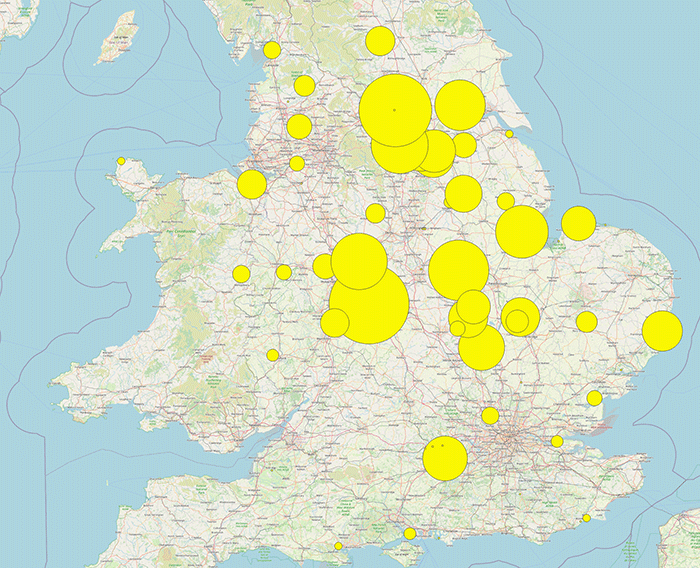
Similar mortalities among Black-headed Gulls were reported in France earlier this year, followed by birds in the Low Countries, Italy and Germany. Data from bird ringing show that Black-headed Gulls that breed in the UK often spend the winter in western continental Europe before migrating north, indicating a possible route of transmission. Large numbers of dead birds are now also being reported at breeding colonies in Belgium, the Netherlands, Germany, Denmark and Poland. Such widespread impacts across Europe would be likely to significantly reduce the number of wintering birds that return to the UK next autumn and winter.
Members of the public are reminded not to touch dead or sick birds and to keep dogs on leads to prevent them from scavenging on carcasses.
Professor James Pearce-Higgins, BTO Director of Science, said: “Last year saw Avian Influenza kill tens of thousands of seabirds at the UK’s internationally important coastal breeding colonies. The latest news about Black-headed Gulls shows that the virus is now impacting inland colonies, too. Black-headed Gulls breed at a wide range of inland water bodies, which makes them much more obvious to members of the public. Everyone can help us to understand more about the ongoing outbreak of this very worrying disease by reporting any dead birds they do see via BirdTrack and to Defra’s online portal.”
Professor Phil Atkinson, BTO Head of International Research said: “The first reports of large mortalities started in the last week of March with, for example, dozens of dead birds being reported at Rutland Water and Marsh Lane Nature Reserve. Since then, the numbers of sick and dead birds has increased rapidly with reports coming in from across central England. By late April and early May, BirdTrack received the first reports of coastal sites being affected and the spread is likely to increase to other parts of the UK.”
16 May 2023
Share this story






