


A new damselfly species is sharing habitat with UK natives
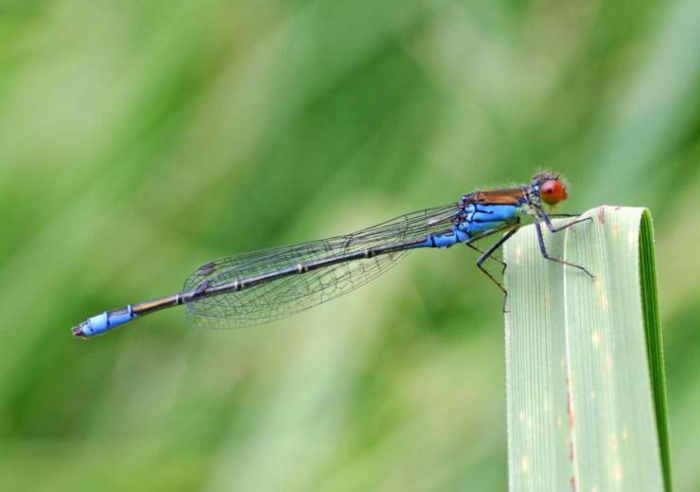
A damselfly species that came to the UK from Europe poses a minimal risk to native damselflies and dragonflies, new research shows.
As tens of thousands of species shift their "range" (the areas they live in) due to climate change, the small red-eyed damselfly has spread northwards from the Mediterranean. It was first observed in the UK in 1999 and has since established itself.
The new study—by the University of Exeter and the UK Centre for Ecology & Hydrology—used data from the British Dragonfly Society to see if it had caused native damselflies and dragonflies to decline. It is published in the journal Insect Conservation and Diversity.
The results showed most native dragonflies and damselflies were either found more often or were unchanged in areas colonized by the small red-eyed damselfly.
However, two damselfly species might have been negatively affected, and more research is needed to investigate this.
"With range-shifting increasing globally, we need to understand what impact newly arrived species have on ecosystems," said Dr. Regan Early, of the Centre for Ecology and Conservation on Exeter's Penryn Campus in Cornwall.
"In this case, it seems the small red-eyed damselfly has established itself in the UK without harming similar species. It may be establishing itself most strongly in areas with good habitats, and these biodiverse sites could be important for increasing numbers of range-shifters in the future."
Dr. Early stressed the difference between range-shifters, which arrive naturally from nearby areas (in this case mainland Europe), and invasive species. Range-shifters have typically evolved in similar ecosystems to those they arrive in, and the existing native species have usually encountered similar species before.
Invasive species arrive by human transportation, often from an entirely different part of the world, and can therefore bring behaviors and diseases that threaten native species (e.g., gray squirrels in the UK).
Citizen science
Using British Dragonfly Society records from almost 50,000 site visits from 2000-2015, the new study focused on sites where each of 17 native UK dragonflies and damselflies were found in each year. Researchers then estimated whether the arrival of small red-eyed damselflies had affected these native species.
"Our approach allows rapid assessment of how range-shifters are affecting native wildlife," said Dr. Jamie Cranston, also from the University of Exeter. "It shows how citizen science can be really powerful, in this case by providing an 'early warning system' about possible threats to UK wildlife."
Of the two damselfly species that have declined where small red-eyed damselflies have established, one is closely related to the new arrival. Dr. Early suggests that similarities between their habitat preferences and flight season could cause the small red-eyed damselfly to outcompete its sister species.
However, damselflies eat a wide variety of foods, so competition should be low unless conditions caused severe food shortages. Additionally, the UK has a relatively small variety of these species compared to the rest of Europe, so there may be "vacant niches" for new arrivals to exploit.
14 February 2023
Share this story






