12 Rares of Christmas 2017: Day 4
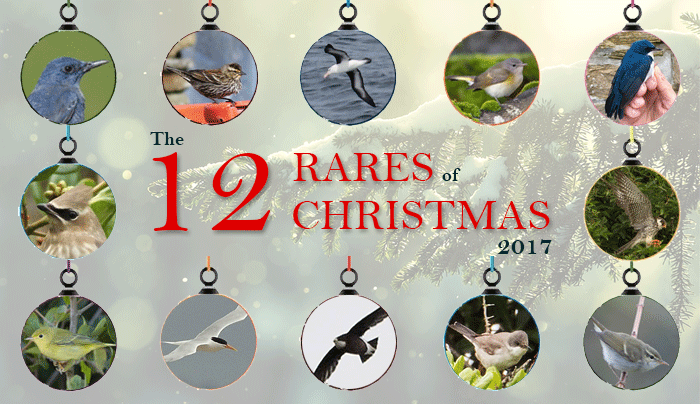
Birding and the assorted highs and lows that accompany a rarity hunters action packed 12 months are always jam-packed with surprises.
Think back to when you were a kid and you gazed in to the Christmas present laden pillowcase at end of the bed; there, amongst the Cadbury’s selection box would be something that you’d longed for, something which, for what seemed like an eternity, you’d never get but then, out of the blue, there it was…
This was undoubtedly the story for the early days of September as some marvellous Atlantic weather lined up to great effect to yield what was, for all those who ventured aboard another island-hopping express, the top contender for “Bird of the Year”.
Yes, we’re Stateside for today’s offering ~ not an oddball wintering Rock Thrush or “dowdy” Blackbird or errant, unsociable seabird; here was dazzling little North American wood-warbler that was as rare as she was glamorous.
Barra is one of the most southerly inhabited islands in the Hebridean island chain, perched below the vastness of Lewis and Harris and the increasingly skinny bottle-necks of North Uist, Benbecula and South Uist.
Famed for those beautiful white sandy beaches that are so much a feature of the island chain, touching down on the shoreline on your scheduled flight from the Scottish mainland, the scenery and deep history are reasons a plenty to break from the norm and pay a visit.
And then there’s the birds…
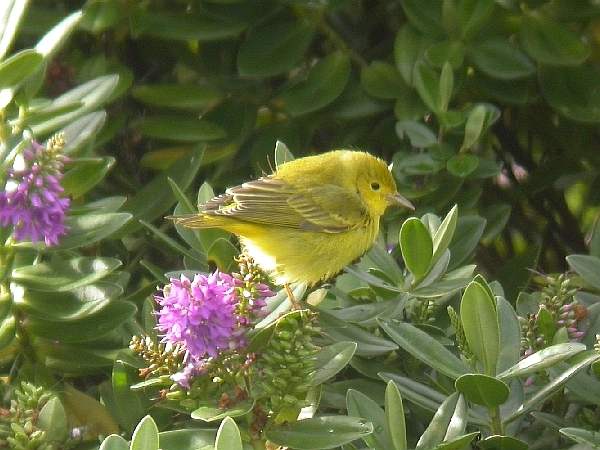
For some, the “Barra Birders” mainly, the allure and thoughts of what autumn Atlantic treasure may be lurking around the 23 square miles of Outer Hebrides territory has been a driving force for continued trips for many years. The emergence of the island as a decent Nearctic landfall prospect was first noted when a Yellow Warbler at Breibhig in October 2004.
The rarities got better and better too across the following decade or so ~ Ovenbird in October 2011, Scarlet Tanager in October 2014 and the Eastern Kingbird of September 2016.
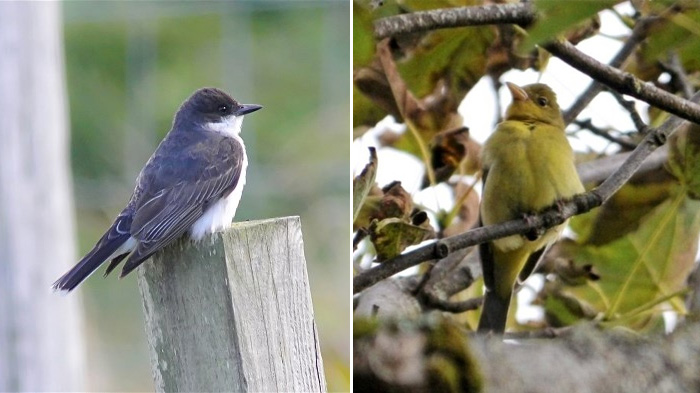
This year, despite not having the outrageous rarity value of the recent Kingbird, came an absolute monster of an autumn mega; desperately rare, full of both character and field marks, a beguiling beauty from deep inside a deciduous forest 3000 miles away.
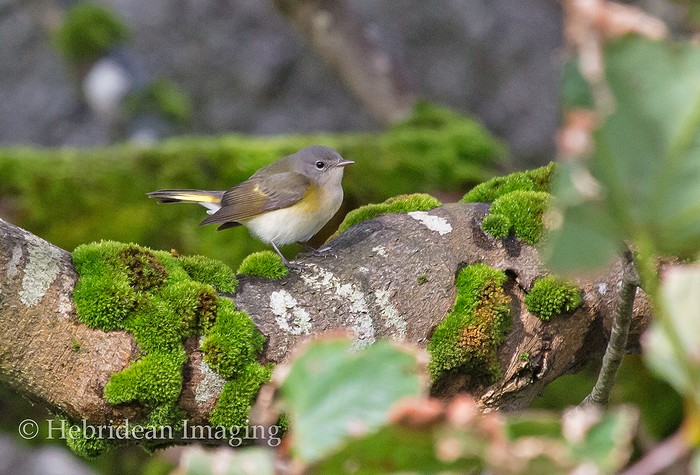
American Redstart.
Wow.

There’s so much joy to be had in a bird such as this showy female that spent 10 days entertaining travellers from near and far in and around the churchyard at Eoligarry. For those who scored this year, it was a mighty fine new bird (one of not so many across the last 12 months) and for those of a certain vintage (45 and above) who admired the host of images from the confines of a computer screen, it would have (should have…) brought back the fondest of memories ~ such is the broad appeal of a classic, vintage “old skool” rare.
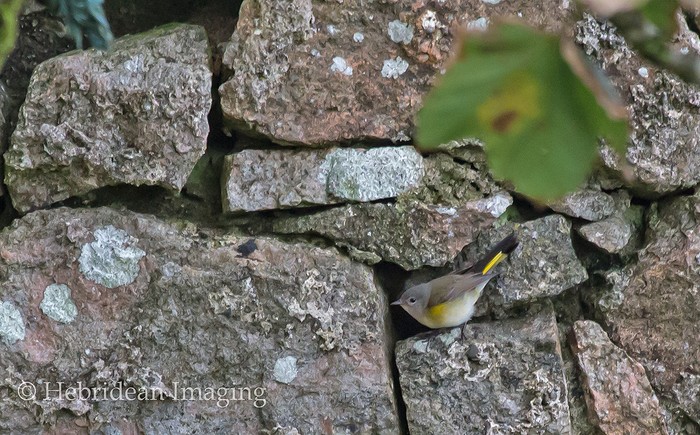
Before the dewey-eyed reminiscence, some more meat on the bones. The likelihood of further North American passerine vagrants was high in the extreme as the second week of September began. The Jet Stream had slipped to a position that saw a direct line established from the Eastern Seaboard to “our bit” of western Europe. A deadly triumvirate of hurricanes, Irma, Jose and Katia, tore their way through the Caribbean and on towards the coast of Florida or the Gulf of Mexico. Despite their southerly impact points, the impact was felt broadly across the east coast of America and for those who study the World weather in depth with eyes focused firmly on ornithological impact here, conditions seemed more than favourable.
Conditions looked good then, but few would have predicted that September’s first big bird would be an American Redstart. Few saw that one coming, such was the gap since the last set of occurrences, but Barra birder Bruce Taylor put the cat well and truly amongst the pigeons with his fantastic find on showery, wet and windy Hebs day on September 7th.
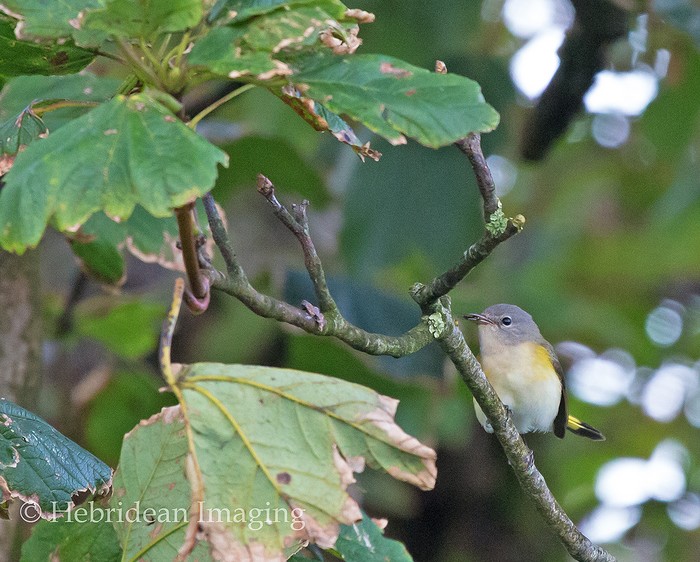
Within almost a stone’s throw of the spot where the Kingbird had sat less than 12 months previously, Bruce had provided the year’s very best “Unlocking the Blocker Locker” moment ~ a massive 32 year gap between twitchable American Redstarts was about to be closed.
Britain’s first record was found 50 years ago, in the willows above Porthgwarra’s boggy moorland by Keith Allsopp, on October 21st 1967. Ireland’s first would follow less than 12 months later, a male discovered on Cape Clear Island on October 13th 1968. Fourteen years would elapse until the next records and then three came along within 12 months; November 1982 saw a one-day female arrive on Islay and Britain’s first twitchable bird followed less than a week later, bringing a whole heap of attention on itself with an almost month-long stay at Gibraltar Point at the bottom end of Lincolnshire’s southern coast.
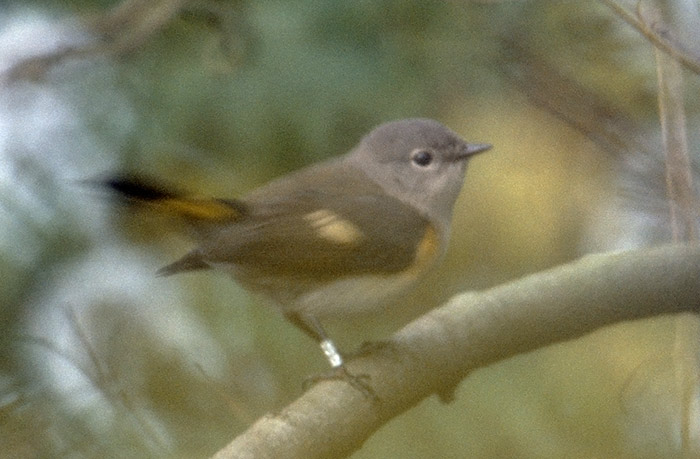
A 12 day first-winter male performed to all-comers along the valley at Kenidjack, near St. Just in mid-October 1983 and, the fourth and fifth within three years alighted in Hampshire and Cork in the middle of the epic, still-classic American land bird year of 1985.
And then…nothing. Nothing at all.
Not a whiff of another American Redstart in the remaining years of the 80’s, ditto the whole of the 90’s and 00’s. Nothing until Bruce Taylor landed the mini-Motherlode of the highest quality Americana this September.
…and it came on a spectacularly early date for such a prized asset too.
Those first images of this year’s exquisite tail-flicker whisked me back to the Kenidjack Valley in an instant. 1983 was a heady first year of full-on twitching for the 15 year old me and a dizzying start to October had already proffered up Robin Chittenden’s one-day Tresco Northern Parula on a day-tripping Scilly dip of Green Warbler.
Further top notch American landbirds were to follow later in the month, but none was more special than that Kenidjack Redstart. A sunny October Sunday in the valley with the eternally entertaining Black Country exile Phil Davey had seen us head down from west Devon for dawn at St. Just. Despite having been present for a few days, the crowd was still sizeable but the views were superb. As the day progressed, we wandered elsewhere, investigating elsewhere and decided to end with more Redstart time.
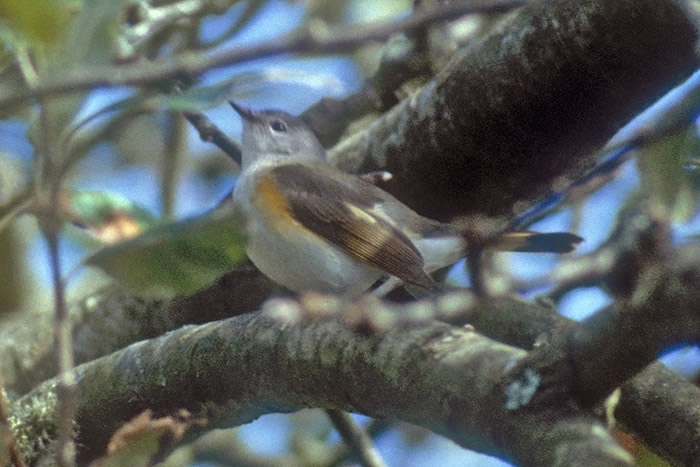
The valley was empty and Phil and I took up station at a rusted wrought iron gateway, close to the old shed, that was nestled right beside a small blackthorn thicket, enveloped by a stunted sycamore stand. Within a moment, there was a flash of the brightest lemon yellow as a distinctive tail flicked in front of us. For an exquisite ten minutes, this show-stopper cavorted through golden and rust autumnal Cornish leaves, barely six feet from the pair of us. A magical scene, played out to a tiny audience by a genuine ornithological superstar.
Mesmerising and memorable right through to now, 34 years on…
…and that’s why some of those exquisite images from Barra this autumn raised such a broad smile in my little corner of north Norfolk, whisked back to times when my birding path was being formulated with every lift of the binoculars.
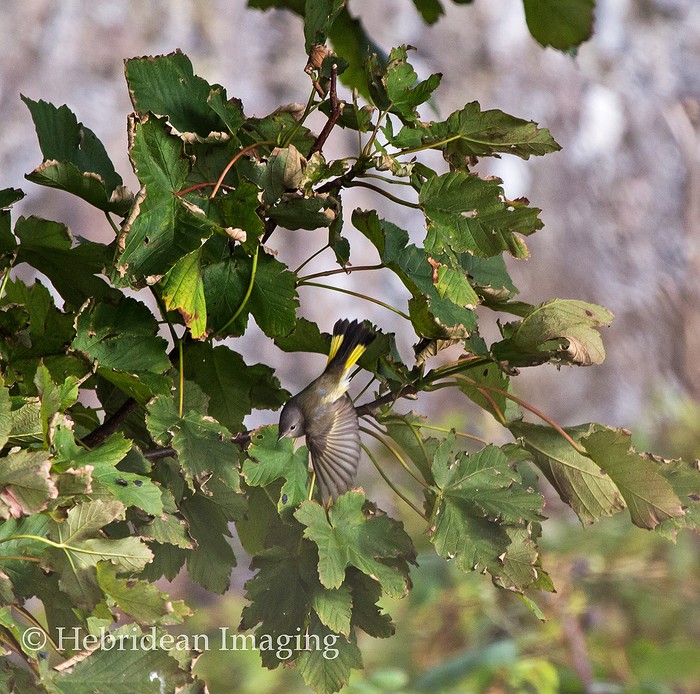
Bruce Taylor’s engaging and funny Finders-in-the-Field account account perfectly encapsulated his own magic moment with an American Redstart ~ the daydream element of the exciting story being one that so many rarity finders can genuinely empathise with. Those rarity hunters who took the plunge and ventured to Barra during the 10-day stop-over will be eternally grateful to the due diligence employed in the discovery of the latest of the island’s top-notch North American vagrants.
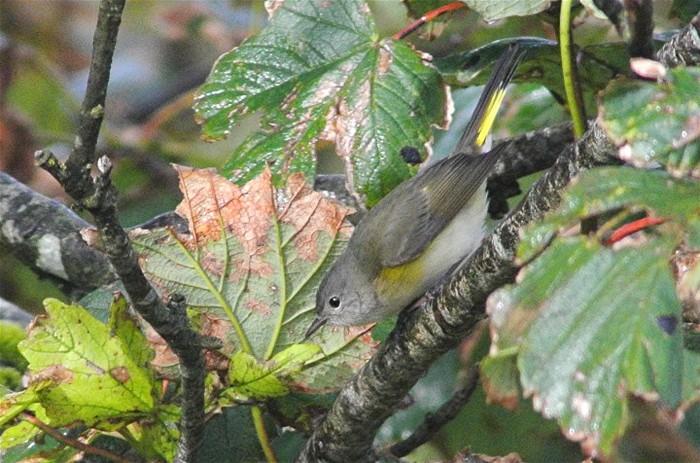
The role-call of honour continues to grow and grow on Barra and you wonder whatever could be next?
What’s next for us is arguably the autumn’s (and 2017’s) most exquisite and exceptional occurrences, one that had everyone slack-jawed at what they saw on social media.
So Christmas Day brings us a jewel that may never be bettered. For the second time this year, North Ronaldsay takes centre stage...
Mark Golley
24 December 2017
Many thanks to Tim Loseby for his archive photos.
More from 12 Rares of Christmas 2017 series
Day 1 - Blue Rock Thrush
Day 2 - Red-winged Blackbird
Day 3 - Black-browed Albatross
Day 4 - American Redstart
Day 5 - Siberian Blue Robin
Day 6 - Scilly megas
Day 7 - Amur Falcon
Day 8 - Yellow Warblers
Day 9 - Elegant Tern
Day 10 - White-throated Needletail
Day 11 - Eastern Orphean Warbler
Day 12 - Two-barred Greenish Warbler
Share this story