Bee-eaters fledge on the Isle of Wight
Four bee-eater chicks have fledged on National Trust land on the Isle of Wight thanks to a joint protection operation by the National Trust, the RSPB and Isle of Wight naturalists. It is the first time the birds, who usually nest in southern Europe, have bred successfully in the UK for 12 years.
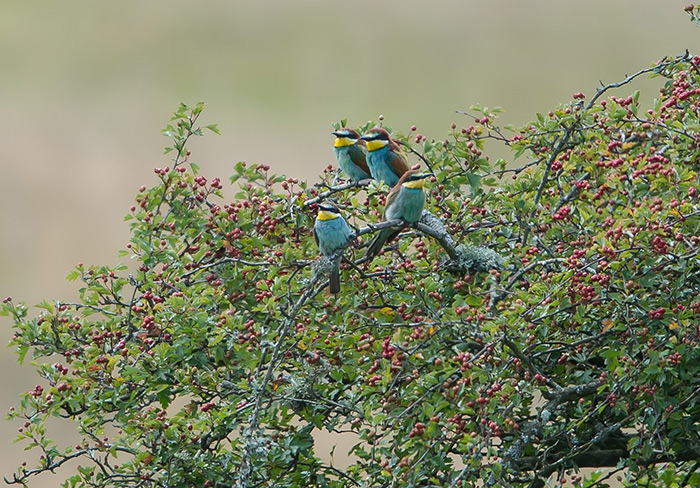
Three of the chicks fledged last week and the fourth has tried out its wings in the last couple of days. If these survive, this will be the most successful ever bee-eater breeding attempt in the UK. The last successful attempt, which resulted in two chicks, was in county Durham in 2002, the first for 50 years.
The bee-eaters made their nest (a hole in the ground) on the Isle of Wight more than a month ago on the National Trust’s Wydcombe estate. National Trust ranger and birder, Ian Ridett, noticed the bee-eaters were active on the island at a time they ought to be nesting. The nest was located and the joint 24-hour protection operation, “Operation Bee-eater” was launched.
“We are thrilled that the bee-eaters have managed to breed successfully on the Isle of Wight, “said Keith Ballard the site manager at the RSPB’s Brading Marshes reserve near Bembridge.”It has been an amazing year for exotic species breeding on the island.
“Working with the National Trust has been very rewarding and the RSPB has been able to utilise its protection experience to make sure the birds were not disturbed and to minimise the threat from predators and egg thieves.
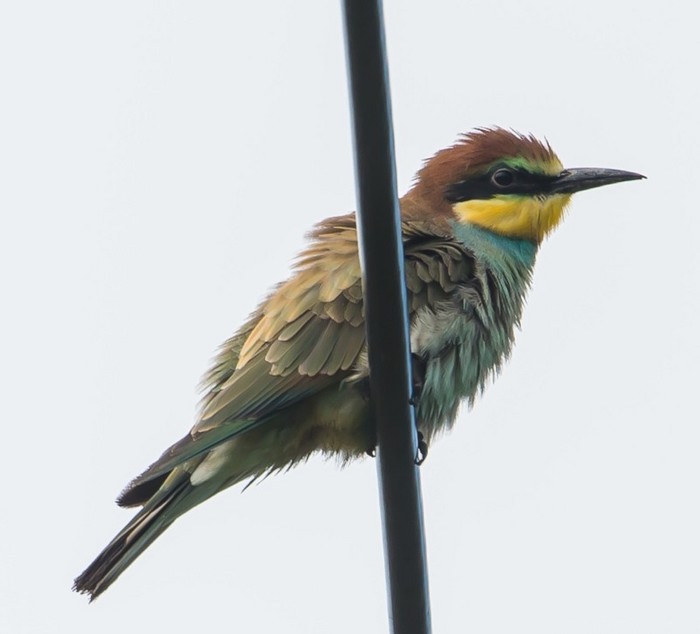
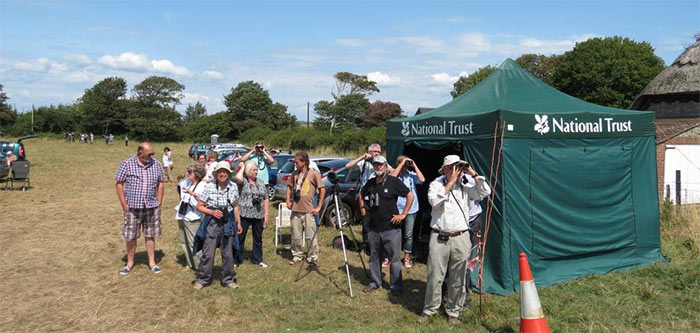
Ian Ridett said: “We are delighted to see the juveniles are out and progressing well. We’ve worked day and night with a team of over 60 volunteers and staff from the National Trust, RSPB and Isle of Wight Ornithological Group to monitor the site and provide a supervised viewing area for visitors.
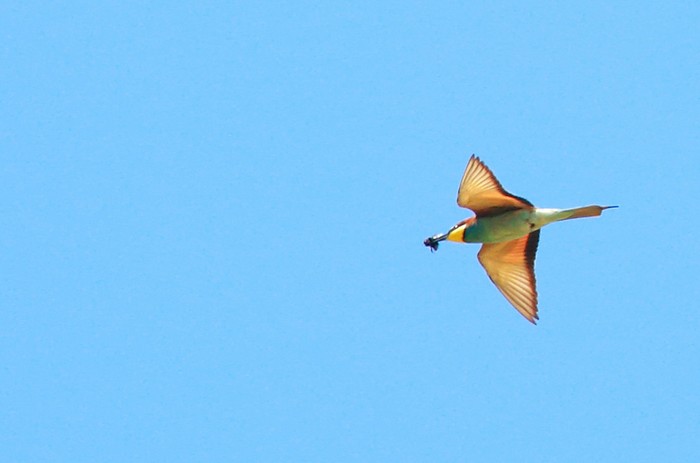
“Around 3000 people from around the UK have been rewarded with views of the adults catching bees and dragonflies. The question that everyone is asking is, ‘will they return next year?’ However, it all depends on the weather and a degree of chance.
“With changing weather and climate, this is just one of the examples of birds and butterflies that are starting to spread north and west into the UK. The Isle of Wight has some great habitats and is in pole position for events like this to re-occur.”
Matthew Oates, National Trust wildlife and butterfly expert, has described the Isle of Wight bee-eaters as the “most amazing birds I’ve ever seen in the UK”.
August 27th update At least eight young have now fledged, bringing the total number of birds present to 12!
RSPB
August 2014