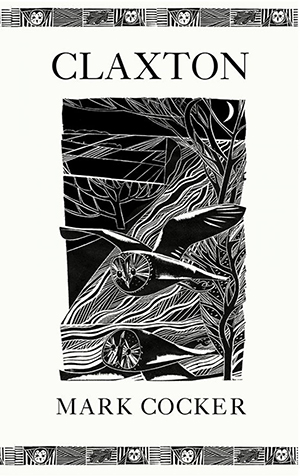
Claxton: Field Notes from a Small Planet
Mark Cocker
will be donated to Spoon-billed Sandpiper conservation
What we today call ‘nature writing’ has a long history, beginning in our own country with the gentle enquiries of Gilbert White and then, in the New World, with the somewhat less gentle provocations of Henry David Thoreau. Today, the genre is experiencing a major and ever more diverse resurgence but here, in Mark Cocker’s new book, we see a return to its twin roots - the chronicling of life in a small and apparently unremarkable piece of countryside.
The short essays in ‘Claxton’ were originally written for a variety of publications, notably ‘The Guardian’. Of these pieces, 140 have been assembled here (and some rewritten) to present a natural diary of the author’s home village and its surroundings. This represents a return to roots for Cocker too. After the global reach of ‘Birds and People’ we are back to the modest landscape first introduced to us in the pages of ‘Crow Country’.
Unlike the forays of White and Thoreau around Selborne and Concord, these essays are not confined exclusively to the ‘home patch’. Here the net of experience is cast more widely, reaching Derbyshire, Cornwall, Scotland and even the desert fringe of Morocco. Even when away, though, one senses the presence of home and sudden connections with what has been left behind. The essay on Morocco finishes with an encounter with migrant Chiffchaffs, birds which, notes Cocker, will soon be “singing from the treetops in Claxton”. It is as though one has been jerked back home by a piece of elastic.
The essays introduce us to the essential components of Claxton’s annual cycle - the winter trumpeting of Bewick’s Swans, the song of newly-arrived Willow Warblers and the autumn gatherings of Swallows. The latter are particularly prominent actors in the diaries, as are the area’s birds of prey - its Sparrowhawks, Hobbies and Peregrines. This is surely no accident - these are amongst the most visible and alluring components of any landscape.
However, Cocker’s real focus is not on these ‘high profile’ inhabitants of Claxton but on the much more intimate detail of his surroundings, on the world literally at his doorstep and at his feet. The major characters in Claxton’s annual drama are, it turns out, its insects - its spiders and ants, moths and butterflies, hoverflies and bees. Cocker shows us that beauty and wonder can be found not just in the large and the dramatic but also in what is small and humble.
Though rooted in small and humble things, Cocker’s vision is sweeping, moving suddenly but seamlessly from the tiny and the seemingly inconsequential to the global and the universal, from the examination of the scales on a butterfly’s wing or the dew on a spider’s web to a bold exposition of how these things flow through an intricate and ultimately unfathomable chain of ecological connections. Viewed in this context, the Swallows are not just birds. They are the reinvention in avian form of the insect world, the ultimate, joyous expression of a barely imaginable abundance of life.
‘Claxton’ therefore transcends mere natural history identification and recording, articulating the author’s aesthetic as well as scientific responses to his surroundings. We read here not just of observations but of discovery, of wide-eyed delight and wonder, not just seeing but experiencing. I was reminded of the the ecocritic Scott Slovic’s characterisation of much of the best American nature writing as a search for ‘awareness’. Though the science underlying the essays is sound, ‘Claxton’ is in reality a personal exploration, a study of the human imagination.
And there is more here too. Some essays, such as those on the persecution of our native raptors and the (now shelved) plans to reintroduce White-tailed Eagles to East Anglia, are much more political in their stance. The overall result, therefore, is a well-balanced mix of art, science and advocacy.
Published: Oct 2014
Jonathon Cape
Pages: 256
ISBN: 9780224099653
Hardcover RRP: £14.99
SPECIAL OFFER: Pay just £10.49 when you quote discount code RBA59
Please read before ordering: When ordering via WildSounds, the value of the voucher will be deducted from your order when the order is processed. The total displayed on your shopping basket excludes the value of the promo but this will be applied before final payment is taken.

From the outset one is, of course, struck by the quality of the writing. This is, above all, a lyric and literary rather than a documentary endeavour. As we have come to expect from Cocker, this is beautifully-sculpted, elegant prose, clean and precise, never over-done. The diary format clearly helps, its compression requiring a precise weighing of every word and line. Many of the essays have a carefully calibrated cadence and rhythm, more poem than prose. Take as an example this musing on Claxton’s Swallows: “One wonders if Swallows can taste the different places in the flavour of the insects. Warm and dark, perhaps, over East Anglian loams, but bitter and astringent as they float over the Saharan ergs.”. Or this interpretation of a Stonechat’s presence: “It manages somehow to find the interstices not only in our attention, but also in those tiny creases in winter’s dreary expanse that lead eventually to spring.”
I was inevitably reminded of other authors for East Anglia is fertile ground for today’s generation of nature writers and much of their work is rooted in the same dark soils and great skies. It is, for example, difficult to read the passages on Peregrines and other birds of prey without feeling the presence of J. A. Baker. But there are transatlantic resonances here too - the childlike wonder and exuberance of Annie Dillard, the almost painful lyricism of Peter Matthiessen and the lean austerity of Barry Lopez (indeed might the book’s title be a nod to Lopez’s own ‘Field Notes’?) I was, however, always drawn back to White and Thoreau and the thought that the region might now, in Claxton, have found its very own Selborne or Walden Pond.
Andy Stoddart
21 October 2014

Commission for Conservation
Rare Bird Alert does not profit from the sale of books through Wildsounds. Instead we are part of their Commission for Conservation programme where a percentage of every sale made through RBA helps supports BirdLife's Spoon-billed Sandpiper Fund.